Urban Future
The concept of the Urban Future is no longer a distant vision; it is actively unfolding on the streets, inside the skyscrapers, and across the transit networks of the world’s greatest metropolises. For modern travelers, relocating professionals, and ambitious entrepreneurs, navigating a major city today requires more than just a subway map. It demands a deep understanding of how technological hubs, housing regulations, green architecture, and mobility policies are rewriting the rules of metropolitan life.
Using New York City as the ultimate laboratory for urban evolution, this comprehensive guide explores the invisible machinery that powers a modern metropolis. Whether you are aiming to launch a tech startup, secure an affordable apartment, or simply understand why your office building might soon become a residential complex, grasping these urban dynamics is essential for successfully navigating the cities of tomorrow.
Navigating the New Entrepreneurial Ecosystems
The urban future is deeply intertwined with innovation. Major cities are shedding their traditional corporate skins to become sprawling incubators for startups. However, breaking into an established ecosystem—especially without local connections—requires strategic positioning and an understanding of the unwritten rules of the local venture capital landscape.
Funding and Networking in the City
Choosing the right neighborhood for your headquarters can significantly impact your seed funding. For instance, the ongoing debate between establishing a base in traditional financial districts versus emerging tech triangles often boils down to access and culture. While a Manhattan address might offer prestige, tech-focused boroughs often provide the creative density and collaborative energy that modern investors seek.
To effectively network in highly competitive environments like Silicon Alley, founders must look beyond generic mixers. Success comes from identifying the highly curated events where angel investors actually show up, and timing your pitch according to the seasonal calendar that dictates venture capital deployment. Overlooking these rhythms is a common trap for newcomers.
Legal Structures and Cash Burn Management
For foreign founders looking to establish a foothold, the urban future offers specific legal pathways. Choosing the right corporate structure is not merely a tax decision; it is a critical step that can drastically simplify visa applications and attract local investment. Conversely, poor financial planning remains the primary reason new ventures fail.
- Overestimating early revenue: Relying on projected income to cover immediate fixed costs.
- Excessive office leasing: Paying premium rent before achieving product-market fit.
- Premature scaling: Hiring aggressive sales teams before the core product is perfected.
Reimagining the Concrete Jungle: Real Estate Metamorphosis
One of the most fascinating aspects of the urban future is the physical transformation of the cityscape. As remote work fundamentally shifts daily routines, commercial real estate is undergoing a historic metamorphosis. Empty office towers are not being left to decay; they are being reimagined as high-density residential spaces.
The Office-to-Residential Revolution
Transforming a commercial high-rise into apartments is vastly more complex—and often more expensive—than building from scratch. This challenge is primarily due to the deep floor plate problem. Imagine a massive, square cake: while the edges get plenty of icing (natural light and fresh air), the center remains dense and dark. Office buildings were designed for cubicles under artificial lights, not for bedrooms that legally require windows.
Architects solve this by carving out massive central courtyards or repositioning core utilities, a process that requires immense capital and navigating strict building codes. For renters looking at these converted spaces, it is crucial to review the lease carefully, paying special attention to HVAC configurations and soundproofing standards, which often differ from purpose-built residential buildings.
Zoning Tweaks and Future Hotspots
To facilitate this architectural evolution, city planners are implementing recent zoning tweaks that allow for unprecedented residential density in traditionally commercial midtown areas. By observing these legislative shifts, savvy urbanites can predict which sterile commercial districts will blossom into the next highly sought-after residential zones in the coming decades.
The Quest for Accessible Urban Living
As cities grow more desirable, the cost of living inevitably skyrockets. In response, municipalities have developed complex systems of affordable housing lotteries. However, for the average applicant, navigating these systems can feel like an impossible lottery heavily guarded by bureaucracy.
Decoding the Housing Lottery System
Winning an affordable housing allocation is rarely about pure luck; it is about understanding the algorithmic logbook that actually picks the winners. The system operates on rigid income brackets, leading to the infamous over-income trap. Earning just a fraction more than the bracket limit—even via a small seasonal bonus—can instantly disqualify an applicant from a life-changing apartment.
Overcoming Bureaucratic Hurdles
The journey from the initial application to finally turning the key in the lock is notoriously long, often taking several years. To survive this marathon, applicants must prepare a comprehensive paperwork bunker long before they even apply.
- Financial Auditing: Gather years of tax returns, pay stubs, and bank statements.
- Credit Optimization: Monitor credit reports meticulously. Knowing how to quickly fight a rejection letter based on a clerical credit score error is a vital survival skill.
- Document Readiness: Keep all files digitized, updated monthly, and ready to upload within a 24-hour notice window.
Mobility and the Cost of Urban Transit
The urban future is fundamentally reshaping how we move. To combat gridlock and reduce emissions, major metropolises are rolling out aggressive traffic management policies. The most notable of these is congestion pricing, a system that charges drivers a premium to enter designated urban cores during peak hours.
The Economics of Congestion Pricing
This policy forces a rapid recalculation of the daily commute. The math of commuting under the new rules often tips the scales heavily in favor of regional train tickets over paying daily tolls. However, the ripple effects extend far beyond the daily commuter.
For example, service professionals—such as plumbers, electricians, and contractors—must absorb these tolls, inevitably passing a surcharge onto the resident. Furthermore, navigating the complex web of hardship exemptions requires a deep understanding of local municipal guidelines, as very few demographics automatically get a pass.
Adapting Daily Logistics
To adapt to this new mobility landscape, both residents and businesses are changing their behaviors. Urban dwellers are discovering park-and-ride secrets, leaving their vehicles just outside the toll zones. Meanwhile, the logistics industry is shifting heavily toward nocturnal operations, scheduling deliveries at night to avoid exorbitant peak-hour surcharges.
Sustainable Architecture and the Green Metropolis
The most critical pillar of the urban future is sustainability. Modern cities must drastically reduce their carbon footprints, leading to a surge in green certifications and eco-friendly building standards. But do these high-tech, green living spaces actually deliver on their promises?
Living in High-Tech, Green Buildings
Residing in a LEED Platinum building or a space built to Passive House standards offers significant environmental and personal benefits. The airtight insulation and filtered air systems of a Passive House provide dramatic health benefits compared to traditional open-window ventilation, effectively blocking out urban smog and noise pollution.
However, these advanced living spaces come with a steep learning curve. When smart thermostats fail or complex HVAC systems require maintenance, the reliance on highly specialized technicians becomes apparent. Furthermore, residents must adapt to features like greywater systems, understanding that slightly cloudy toilet water is a perfectly safe and necessary step toward water conservation.
The True Value of Sustainable Certifications
Does going green actually pay off? From a real estate perspective, the resale value of properties with sustainable certifications is consistently higher. Buyers are willing to pay a premium for guaranteed lower utility bills and a reduced ecological footprint.
The ultimate challenge, however, lies in retrofitting the past to meet the future. While new constructions can easily adopt these technologies, upgrading a century-old pre-war co-op to achieve net-zero emissions involves painstaking architectural ingenuity, proving that the urban future is not just about building new, but brilliantly reinventing what already exists.
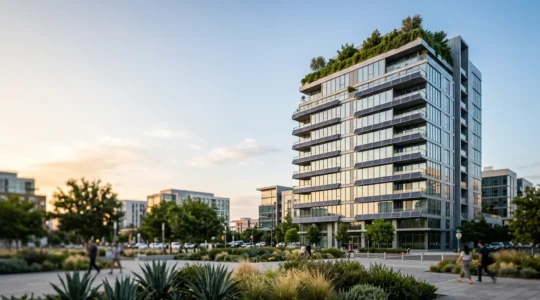
Beyond the Badge: Do LEED Platinum Buildings Actually Lower Your Utility Bills?
The promise of utility savings in a LEED building isn’t a guarantee; it’s a complex equation where occupant behavior and technology quirks can easily erase the advertised benefits. Certification demonstrably boosts resale value, but the payback period on features like…
Read more
NYC Congestion Pricing: The Commuter’s Strategic Playbook to Navigate the New Rules
NYC’s congestion pricing is more than a toll; it’s a new economic system for commuters that requires a strategic, not emotional, response. The daily cost of driving involves a complex calculation of tolls, parking, and hidden fees passed on by…
Read more
Why “Affordable Housing” Lotteries in New York Feel Impossible to Win?
The NYC housing lottery feels impossible not because of bad luck, but because it’s a system of strategic disqualification that most applicants aren’t prepared for. Your application is tested against rigid income brackets, asset limits, and paperwork deadlines designed to…
Read more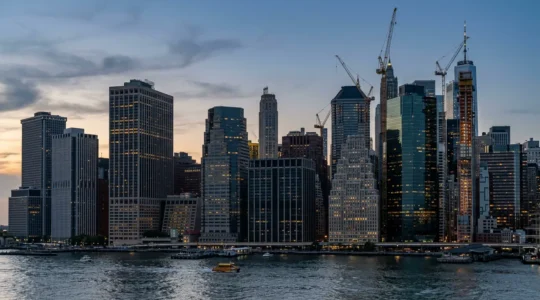
The Great Conversion: How Remote Work Is Remaking NYC’s Skyline from the Inside Out
The transformation of NYC’s office towers isn’t just a construction trend; it’s the emergence of a new real estate asset class defined by high risks and unique rewards. Success hinges on navigating costly structural challenges embedded in a building’s “DNA”…
Read more
How to Launch a Tech Startup in New York’s Ecosystem Without Local Connections?
Breaking into NYC’s tech scene isn’t about knowing people; it’s about mastering a specific strategic playbook that turns your outsider status into an advantage. Prioritize a visa-friendly legal structure over a generic VC-focused one from day one. Focus on capital…
Read more