
NYC’s congestion pricing is more than a toll; it’s a new economic system for commuters that requires a strategic, not emotional, response.
- The daily cost of driving involves a complex calculation of tolls, parking, and hidden fees passed on by service providers.
- Significant savings are possible through strategic use of exemptions, park-and-ride locations, and off-peak travel.
Recommendation: Instead of focusing only on the toll, perform a full “Commuting Calculus” to analyze your personal costs and identify the most financially sound travel strategy for the long term.
For hundreds of thousands of commuters, the drive into Manhattan is a daily ritual governed by traffic, time, and cost. With the introduction of NYC’s new congestion pricing policy, a fourth, powerful variable has been added to this equation. Many see it as just another tax, a punitive measure designed to make an already expensive commute unbearable. The headlines focus on the base toll, the political debates, and the general goal of reducing traffic. But this surface-level view misses the fundamental point.
This policy isn’t simply a fee; it’s a complete restructuring of the daily economic game of getting into the city’s core. Viewing it as a simple penalty is a strategic error. The key to navigating this new reality is not to fight the rule, but to understand the game it creates. There are new costs, but there are also new loopholes, strategic advantages for those who adapt, and significant financial consequences for those who don’t. This is no longer just about the fastest route; it’s about the smartest and most cost-effective one.
This guide moves beyond the platitudes. We will not just tell you to take the train. Instead, we will provide a strategic playbook for you, the commuter from the outer boroughs or suburbs. We will deconstruct the real financial impact, expose the hidden economic ripple effects, and reveal the practical workarounds. By the end of this analysis, you will have the tools to make calculated decisions, turning a financial burden into a manageable part of your commuting strategy.
To help you master this new landscape, this article breaks down the essential strategies and considerations. We will cover everything from the direct cost comparisons to the long-term lifestyle choices you may now face, providing a clear roadmap for your journey ahead.
Summary: Navigating the New Era of NYC Commuting
- Tolls vs. Train Tickets: The Math of Commuting Under the New Rules
- Why Your Plumber Will Charge You $50 More for a Service Call
- Who Gets a Pass? Navigating Hardship Exemptions for Congestion Pricing
- Park-and-Ride Secrets: Where to Leave Your Car Outside the Zone
- How to Schedule Deliveries at Night to Avoid Peak Surcharges
- Commute from Jersey or Rent in City: Which Saves More After 5 Years?
- Penn Station vs. Grand Central: Which Hub Offers a Better Quality of Life?
- How to Survive the Midtown Manhattan Commute Without Losing Your Sanity?
Tolls vs. Train Tickets: The Math of Commuting Under the New Rules
The first step in adapting to congestion pricing is to move beyond emotional reactions and engage in a clear-eyed financial assessment. This is what we call the “Commuting Calculus”—a detailed breakdown of your true daily travel costs. The decision is no longer a simple choice between the convenience of a car and the price of a train ticket. It’s now a complex equation where the new toll is just one of several variables. Under the new policy, driving a passenger car with an E-ZPass into the zone during peak hours requires a significant outlay, which is set to increase over time.
For instance, an initial peak toll for cars is just the starting point. When you add daily parking, fuel, and other existing bridge or tunnel tolls, the real cost of driving skyrockets. This must be weighed against the cost of a monthly rail pass, which offers unlimited trips and eliminates parking-related stress and expenses. A detailed comparison reveals the stark financial realities of this new system for different types of commuters and vehicles.
The following table, based on the MTA’s toll structure and data from the NYC Public Advocate, provides a clear framework for your Commuting Calculus. It lays out the direct costs associated with different travel methods, but remember to factor in your own specific costs for parking and fuel to get a truly personal estimate. An analysis of the MTA’s phased toll structure shows an initial $9 peak toll for cars is planned, with future increases.
| Commuting Method | Peak Period Cost | Overnight Cost | Monthly Estimate (20 trips) | Additional Factors |
|---|---|---|---|---|
| Passenger Car (E-ZPass) | $9.00 | $2.25 | $180 | + parking ($25-$50/day), gas, tolls |
| Motorcycle (E-ZPass) | $4.50 | $1.05 | $90 | + parking, gas |
| Tolls by Mail (no E-ZPass) | ~$13.50 | ~$3.38 | $270 | 50% surcharge vs E-ZPass |
| MTA Monthly Rail Pass | Varies by zone | N/A | $100-$300 | Unlimited trips, no parking cost |
| Taxi/Uber per-trip charge | $0.75-$1.50 | $0.75-$1.50 | $30-$60 (40 trips) | Per-trip passenger surcharge only |
Why Your Plumber Will Charge You $50 More for a Service Call
The most misunderstood aspect of congestion pricing is its economic ripple effects. The policy doesn’t just charge the commuter driving to an office; it charges every commercial vehicle that enters the zone to perform a service. Your plumber, the delivery truck bringing supplies to your local cafe, and the electrician repairing an outage—all will face new daily operational costs. Unlike large corporations, many small businesses and independent contractors lack the scale to absorb these fees and will have no choice but to pass them directly on to consumers.
This isn’t a hypothetical. The toll schedule explicitly targets commercial vehicles with significant fees during business hours. As outlined in the MTA’s toll schedule, there is a $14.40 peak toll for small trucks and $21.60 for large trucks. A plumber making several service calls within the zone in a single day could see their daily expenses increase dramatically, forcing them to add a “congestion surcharge” to every invoice just to break even. This means residents and businesses inside the zone will see the cost of essential services rise.
Case Study: Baldor Food Distributor’s Proactive Strategy
In response to the new tolls, Baldor, a major food distributor for NYC restaurants, demonstrates how a large-scale operation can adapt. The company completely reconceived its delivery routes to avoid multiple toll charges when trucks circle for parking. More importantly, Baldor committed to absorbing the congestion toll costs itself rather than passing them on to its restaurant clients, opting instead to find internal operational efficiencies. This case highlights a key divide: while large businesses may have the resources to restructure and absorb costs, smaller operators often do not, making it more likely that clients will see higher prices.
Who Gets a Pass? Navigating Hardship Exemptions for Congestion Pricing
While the congestion pricing system is designed to be broad, it’s not without its exceptions and discounts. For the savvy commuter, understanding these “loopholes” is a critical part of minimizing costs. The program includes full exemptions for specific groups, such as individuals with disabilities and qualifying emergency vehicles, as well as significant discounts for low-income drivers. However, accessing these benefits requires proactive navigation of the application process. These are not automatic; you must apply and be approved.
For example, a 50% discount on peak-period tolls is available for residents with a federal adjusted gross income of $50,000 or less, but this only applies after the first 10 trips of the month. Additionally, there are smaller but still useful benefits, such as a crossing credit program that provides up to a $3 credit for passenger vehicles entering the zone via the Lincoln, Holland, Queens-Midtown, or Hugh L. Carey tunnels. Successfully leveraging these programs can substantially reduce the financial sting of the new policy.

The process for securing these exemptions, particularly for low-income individuals, requires careful preparation and adherence to specific documentation requirements. It is a bureaucratic but ultimately worthwhile endeavor for those who qualify.
Your Action Plan: Applying for the Low-Income Discount
- Verify Eligibility: Confirm your federal adjusted gross income was $50,000 or less last year, or that you are enrolled in a qualifying program like SNAP or SSI.
- Obtain E-ZPass NY Account: You must have an active E-ZPass New York account linked to your vehicle before you can apply for the discount.
- Gather Documentation: Prepare your proof of income (such as a tax return) or official verification of your enrollment in an assistance program.
- Submit Online Application: Go to the MTA website and complete the application, uploading all necessary documents.
- Understand the Discount Structure: Remember that the 50% discount only kicks in after your first 10 peak-period trips each calendar month.
- Apply Early: Submit your application well in advance of your travel dates to ensure your license plate is registered and you avoid being charged the full toll.
Park-and-Ride Secrets: Where to Leave Your Car Outside the Zone
For many suburban commuters, the most effective strategy will be to avoid bringing their car into the congestion zone altogether. This is the “Zone Boundary Strategy,” a tactical approach that leverages park-and-ride facilities located just outside the congestion pricing boundary (south of 60th Street in Manhattan). The goal is simple: drive to a strategic point, park your car for a reasonable fee, and complete the final leg of your journey via a more cost-effective mode like the subway, train, or ferry. This hybrid approach can offer the best of both worlds: the flexibility of a car for the suburban part of the trip and the cost savings of public transit for the most expensive part.
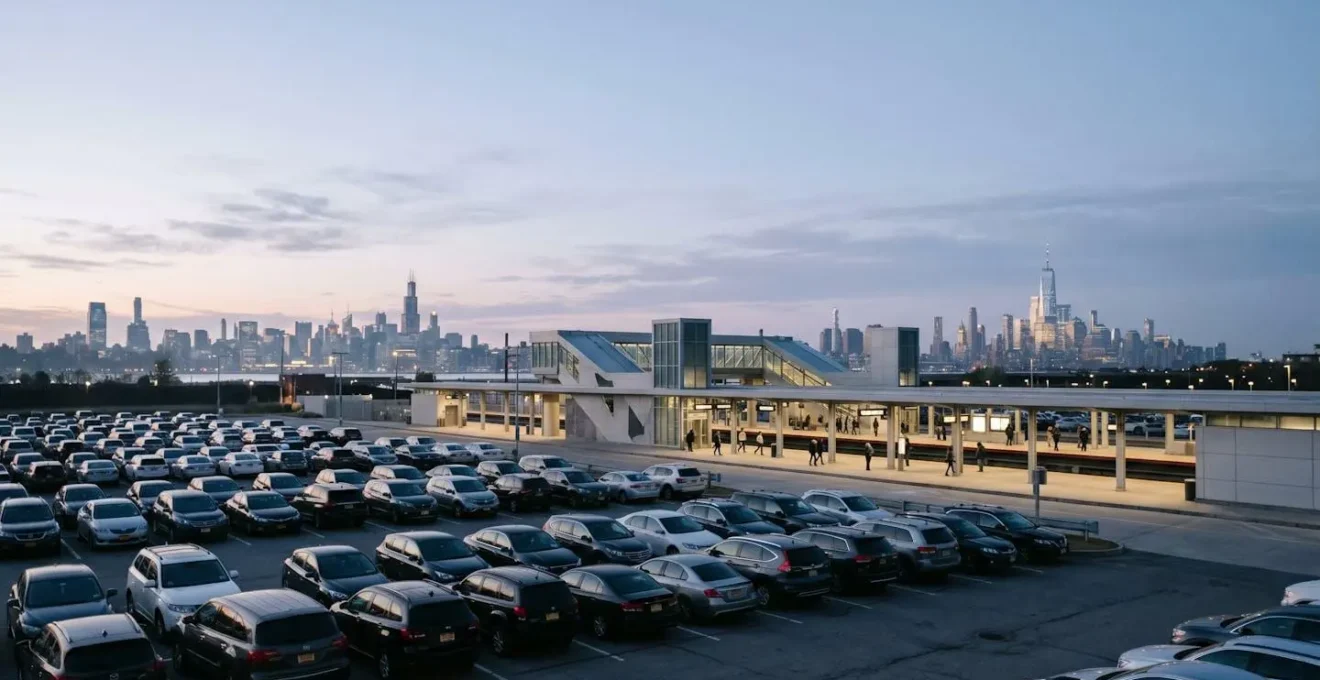
The key to this strategy is knowing the “secrets”—the most convenient and cost-effective locations. While many drivers from New Jersey are familiar with major hubs, there are numerous garages and lots strategically positioned near PATH stations and ferry terminals that offer competitive rates, especially when parking is reserved in advance. For those coming from the outer boroughs, the strategy involves identifying neighborhoods just north of 60th Street with accessible street parking and direct subway connections, though this requires careful attention to street cleaning schedules.
Here are some of the most effective park-and-ride locations to consider for your Zone Boundary Strategy:
- Penn Station Newark (NJ): A major hub with ample parking options nearby. Reserve in advance to guarantee a spot and access both PATH and NJ Transit trains into Manhattan.
- Port Imperial (NJ): Ideal for those needing 24-hour or overnight parking. It’s located right at the NY Waterway Ferry landing and is also served by NJ Transit buses.
- Jersey City PATH Stations: Parking near the Newport, Exchange Place, or Grove Street stations provides access to frequent PATH service, with a quick 10-11 minute ride to Manhattan for just $2.75.
- Hoboken (NJ): Offers abundant parking garages with fast access to Manhattan via either the PATH train or the NY Waterway ferry.
- Outer Borough Street Parking: For commuters from within NYC, explore neighborhoods in Upper Manhattan, the Bronx, or Queens just outside the zone with good subway line access. Always verify local parking regulations.
How to Schedule Deliveries at Night to Avoid Peak Surcharges
One of the most direct ways to mitigate congestion pricing costs is through “Time-Shifting Arbitrage”—strategically moving travel and business activities to off-peak hours to take advantage of significantly lower tolls. The MTA has created a powerful incentive for this behavior by offering deep discounts for travel during overnight hours. For businesses that rely on deliveries and individuals who have flexibility in their schedules, this represents a massive opportunity for savings.
The financial incentive is substantial. Under the MTA’s overnight pricing structure, there is a 75% discount on overnight tolls, which applies from 9 PM to 5 AM on weekdays and 9 PM to 9 AM on weekends. For a commercial truck, this can mean the difference between paying a toll of over $20 and paying just a few dollars. This encourages a shift in logistics that benefits both the business, which saves money, and the city, which experiences less truck traffic during the day’s busiest hours.
This isn’t just a theoretical benefit; it’s a strategy being actively promoted by the city. Government-supported programs are in place to help businesses make this transition, recognizing that shifting supply chains to off-peak hours is a win-win for traffic flow and operational costs.
Case Study: NYC DOT’s Off-Hours Delivery Program
As a direct mitigation effort for congestion pricing, the NYC Department of Transportation (DOT) has expanded its Off-Hours Delivery Program with $5 million in funding. This initiative actively helps businesses shift their supply chain operations to overnight hours by providing both financial incentives and crucial logistical support. The program’s goal is to reduce daytime truck traffic by making it easier and more cost-effective for companies to receive goods between 7 PM and 7 AM. This government-backed initiative shows how time-shifting is not just a workaround but a key component of the city’s broader strategy to manage congestion.
Commute from Jersey or Rent in City: Which Saves More After 5 Years?
For many commuters, congestion pricing is the catalyst for a much bigger question: does it still make financial sense to live outside the city? This new, recurring cost forces a “Lifestyle Cost-Benefit Analysis” that weighs the long-term expenses of commuting against the high cost of renting or owning in Manhattan. A five-year projection can reveal surprising truths. On one hand, the daily costs of commuting are now much higher. The congestion toll is just the beginning; you must also factor in the often-exorbitant cost of parking.
According to NYC parking cost analysis, commuters can expect to pay $25 to $50 per day for parking in the congestion zone. Over a year, this alone can amount to over $10,000, before even considering tolls, gas, and vehicle maintenance. When you add the new congestion toll, the annual cost of a car commute can easily approach the price of a down payment on a small apartment in some parts of the country. This makes the high price of a city rental seem more competitive, especially when you factor in the time saved and the quality-of-life benefits of a shorter (or non-existent) commute.
Complicating this decision is the fact that demand for being in New York City is not waning; it’s accelerating. This makes the choice even more critical, as housing costs are unlikely to decrease. As Governor Kathy Hochul noted in a report on the policy’s impact:
New York City became the first major American city to exceed pre-pandemic office traffic in July 2025, with office leasing activity up 9.2 percent year over year, exceeding pre-pandemic levels and on track for the highest volume since 2002.
– Governor Kathy Hochul, Governor’s Office First Anniversary Congestion Pricing Report
This data confirms that the economic and social pull of Manhattan remains incredibly strong. Therefore, the decision to commute from afar or live locally is no longer just a lifestyle choice, but a major long-term financial strategy that every commuter must now seriously consider.
Penn Station vs. Grand Central: Which Hub Offers a Better Quality of Life?
For those who choose public transit, the “Commuting Calculus” doesn’t end with the train ticket purchase. The quality of the commute itself is a major factor in overall well-being, and in New York, that experience is largely defined by your arrival hub: Penn Station or Grand Central Terminal. For decades, Grand Central has been celebrated for its soaring architecture, natural light, and sense of civic grandeur, while Penn Station has been lamented as a cramped, confusing, and stressful environment. This “quality of life” difference is a real, albeit intangible, cost or benefit of your chosen commute.
Congestion pricing aims to funnel more people onto public transit, which in turn puts pressure on the MTA to improve the commuter experience. The good news is that the reinvestment of toll revenue is already leading to tangible improvements in the system’s core function: reliability. Recent data shows that the major rail lines feeding these hubs are performing at their best levels in years, which can help mitigate the stress of the station environment itself.
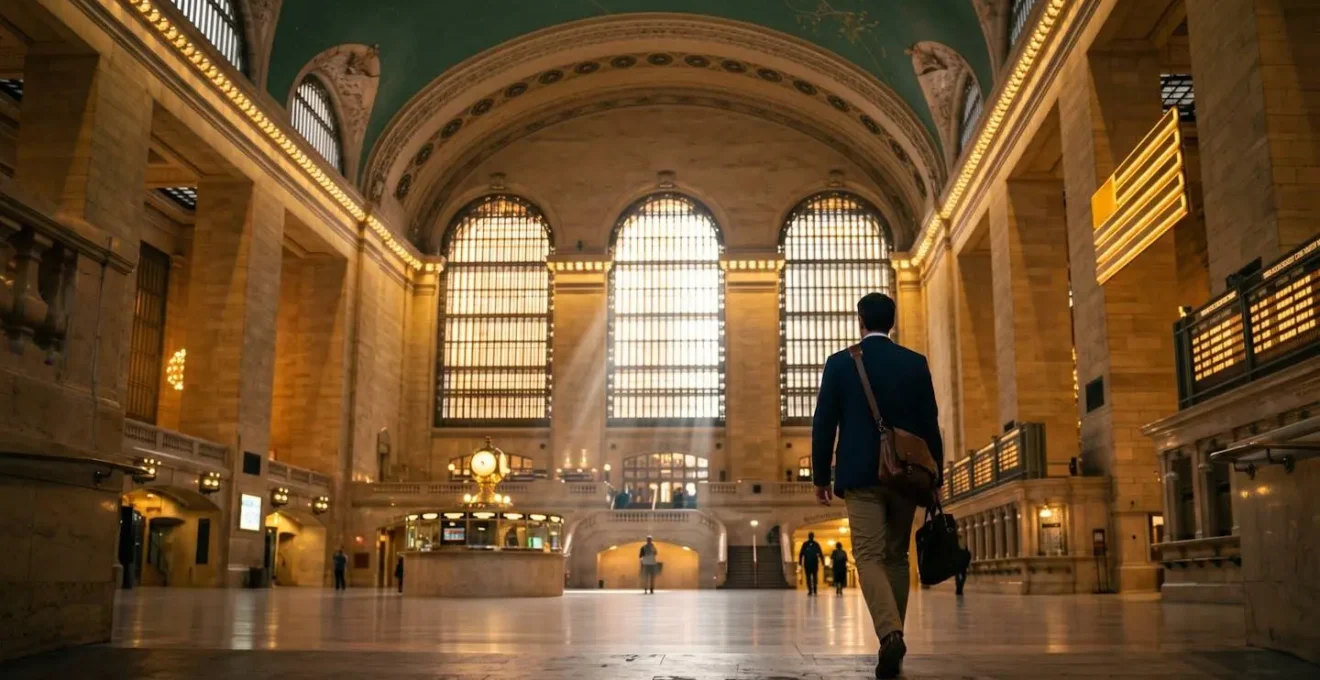
As reported in the MTA’s 2025 performance data, commuters are benefiting from 97-98% on-time performance for LIRR and Metro-North. While Grand Central still offers a demonstrably superior environment, the underlying reliability of the services at both hubs is improving. As you choose your commuting route, consider not just the cost and time, but also the daily psychological impact of the station you’ll be navigating. The ongoing renovations at Penn Station aim to close this quality-of-life gap, but for now, the choice of hub remains a significant part of the commuting experience.
Key Takeaways
- The true cost of driving into Manhattan is a complex “Commuting Calculus” of tolls, gas, and soaring parking fees, not just the base toll.
- Look for “economic ripple effects” in your budget, as service providers like plumbers and electricians will likely pass their new toll costs on to you.
- Adaptation is key: strategically use park-and-ride facilities, off-peak travel discounts, and all available exemptions to minimize the financial impact.
How to Survive the Midtown Manhattan Commute Without Losing Your Sanity?
The daily commute into Midtown can often feel like a battle for survival. The stress of traffic, the crush of crowds, and the constant race against the clock take a mental and physical toll. While congestion pricing introduces a new financial stressor, one of its primary, and often overlooked, goals is to reduce the very chaos that makes the commute so draining. By discouraging driving, the policy is designed to create a less congested, more predictable, and ultimately more “sane” environment for everyone, including those who still choose to drive.
The data from the initial phase of the program suggests this is more than just a theory. The reduction in vehicle volume has led to a direct and measurable improvement in traffic flow. According to NBER research analyzing Google Maps data, there has been a 15% speed increase from 8.2 to 9.7 mph in the Manhattan CBD, with even greater improvements during peak times. This translates into real time savings. Other analyses have shown that some commuters are saving significant time on their trips into the city’s core.
This means that while your wallet may be lighter, your commute could become faster and less stressful. The key to surviving—and even thriving—in this new era is to shift your mindset. Instead of viewing the commute as an unavoidable chore, see it as a strategic challenge. Use the tools and tactics outlined in this guide to optimize your route, your timing, and your costs. Whether it’s by mastering the park-and-ride system, shifting your schedule to take advantage of off-peak rates, or finally committing to public transit, the power to create a better commute is now, more than ever, in your hands. The new rules of the game are set; success depends on how well you play.
Now that you have the strategic playbook, the next step is to apply it. Begin today by calculating your own true commuting costs and exploring the alternative strategies outlined here to design a more efficient and cost-effective journey into Manhattan.