The transformation of NYC’s office towers isn’t just a construction trend; it’s the emergence of a new real estate asset class defined by high risks and unique rewards.
- Success hinges on navigating costly structural challenges embedded in a building’s “DNA” that often make conversions more expensive than new builds.
- Recent zoning changes, particularly the “City of Yes” initiative, are the primary catalyst, unlocking density and making previously unviable projects profitable.
Recommendation: Investors and tenants must look beyond luxury finishes to analyze a building’s conversion history, its Certificate of Occupancy, and its location’s potential to evolve into a true 24/7 neighborhood.
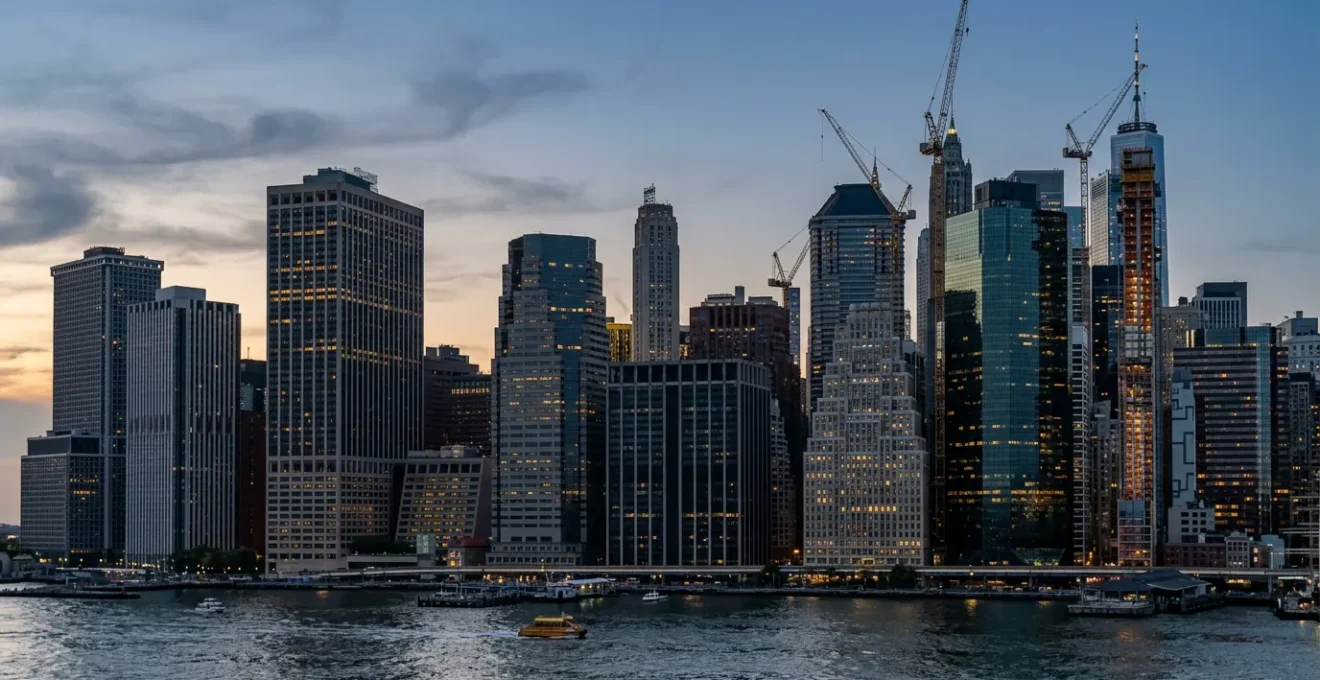
The iconic New York City skyline, long a symbol of commercial might, is undergoing a quiet but radical transformation. As the dust settles from the remote work revolution, a new architectural and economic reality is taking shape. The change isn’t happening with new glass-and-steel spires reaching for the clouds, but from within the existing canyons of Manhattan. Vacant office floors, once buzzing with the 9-to-5 rhythm, are now the raw material for the city’s next residential chapter. This is more than just a renovation trend; it’s a paradigm shift.
Most discussions focus on the obvious: turning empty desks into bedrooms. They mention the high costs and zoning hurdles as generic roadblocks. But this surface-level view misses the real story. The true future of New York real estate is being written in the complex interplay between outdated building structures and groundbreaking new regulations. It’s a high-stakes game of “structural arbitrage,” where immense value is unlocked by those who can master the art of turning architectural constraints into unique residential assets.
This analysis moves beyond the headlines. We will dissect the visionary calculus that developers, investors, and even future tenants must understand. We won’t just look at what is being built, but why it’s more complex than starting fresh, how zoning catalysts are rewriting the rules of density, and where the next vibrant, 24/7 residential zones will emerge from the husks of corporate districts. This is your guide to understanding the birth of a new NYC asset class, forged in the crucible of post-pandemic change.
This article explores the critical facets of this transformation, providing an analytical framework for investors and future residents to navigate this new landscape. From the financial complexities and architectural solutions to identifying the most promising districts, we will chart the course of New York’s great internal reshaping.
Summary: The Future of NYC’s Converted Skyline
- Why Converting an Office Tower to Apartments Costs More Than Building New
- How Recent Zoning Tweaks Allow for More Residential Density in Midtown
- The Risks of Renting in a Converted Office Building: What to Check in the Lease
- Which Commercial Districts Will Be the Next Hot Residential Zones by 2030?
- How Architects Solve the “Deep Floor Plate” Problem in Office Conversions
- Brooklyn Tech Triangle or Manhattan: Which Location Maximizes Your Seed Funding?
- Penn Station vs. Grand Central: Which Hub Offers a Better Quality of Life?
- Is Buying a Condo in a “Luxury” High-Rise Actually a Good Investment?
Why Converting an Office Tower to Apartments Costs More Than Building New
The logic seems simple: an empty building is a blank canvas, surely cheaper to repurpose than building from the ground up. This is the first, and most expensive, misconception in the world of adaptive reuse. The reality is that converting a mid-century office tower into a desirable residential building is an exercise in wrestling with a structure’s very DNA—a process fraught with unforeseen costs and compromises. Ground-up construction offers predictability; conversions offer a series of expensive surprises.
Office buildings, especially those from the pre-war and mid-century eras, were not designed for human habitation. Their skeletons are optimized for wide-open commercial floors, not the compartmentalized, plumbing-intensive needs of apartments. Moving or replacing building cores, rerouting decades-old HVAC systems, and adding the intricate web of plumbing required for hundreds of kitchens and bathrooms are all surgically complex and costly endeavors. As developers consistently find, office conversions always run into unexpected issues and unexpected costs.
This inherent difficulty creates a fundamental tension. As ZD Jasper’s Vice President, Jasper Wu, explains, the process is a battle against the building’s nature. This sentiment is a core truth for developers in this space, as he noted in CoStar News:
With these kind of conversions, you always run into unexpected issues and unexpected costs. So you go through all this trouble, and you end up with not a high-efficiency product and not a high-efficiency building.
– Jasper Wu, CoStar News
The result is that the “conversion alpha”—the potential for outsized profit—is not guaranteed. It must be earned by navigating a labyrinth of structural, mechanical, and financial challenges that simply don’t exist on a clean construction site. The high cost is the entry fee for accessing prime locations that would otherwise be unavailable for new residential development. Investors who underestimate this complexity are likely to see their projected returns evaporate in a series of costly change orders.
How Recent Zoning Tweaks Allow for More Residential Density in Midtown
For decades, the single greatest barrier to office-to-residential conversion wasn’t cost or engineering, but law. New York’s intricate and often archaic zoning regulations made most projects financially unfeasible or legally impossible. However, a seismic shift is underway, led by a new generation of zoning catalysts designed to directly address the city’s housing crisis by unlocking the potential of its underutilized commercial building stock. This legislative overhaul is the primary driver making the current conversion boom possible.
The centerpiece of this movement is the “City of Yes for Housing Opportunity” amendment. Approved in late 2024, this landmark reform fundamentally changes the conversion calculus. Previously, eligibility was largely restricted to buildings constructed before 1961 in many prime areas. “City of Yes” extended this cutoff to buildings built before 1991, instantly making a vast new portfolio of 80s-era office towers viable for adaptive reuse. This single change expanded the pool of potential conversion projects exponentially, with the city aiming to add an estimated 80,000 housing units over the next 15 years.
The case study of this zoning reform reveals even more powerful financial incentives. The amendment introduced a Universal Affordability Preference, granting developers a 20% density bonus for including affordable housing units. It also eliminated costly parking requirements in transit-rich areas and, most critically, lifted the long-standing 12 Floor Area Ratio (FAR) cap. This allows converted residential buildings to reach a FAR of 15 to 18, enabling them to add floors and build significantly larger, more profitable projects than was ever possible before.
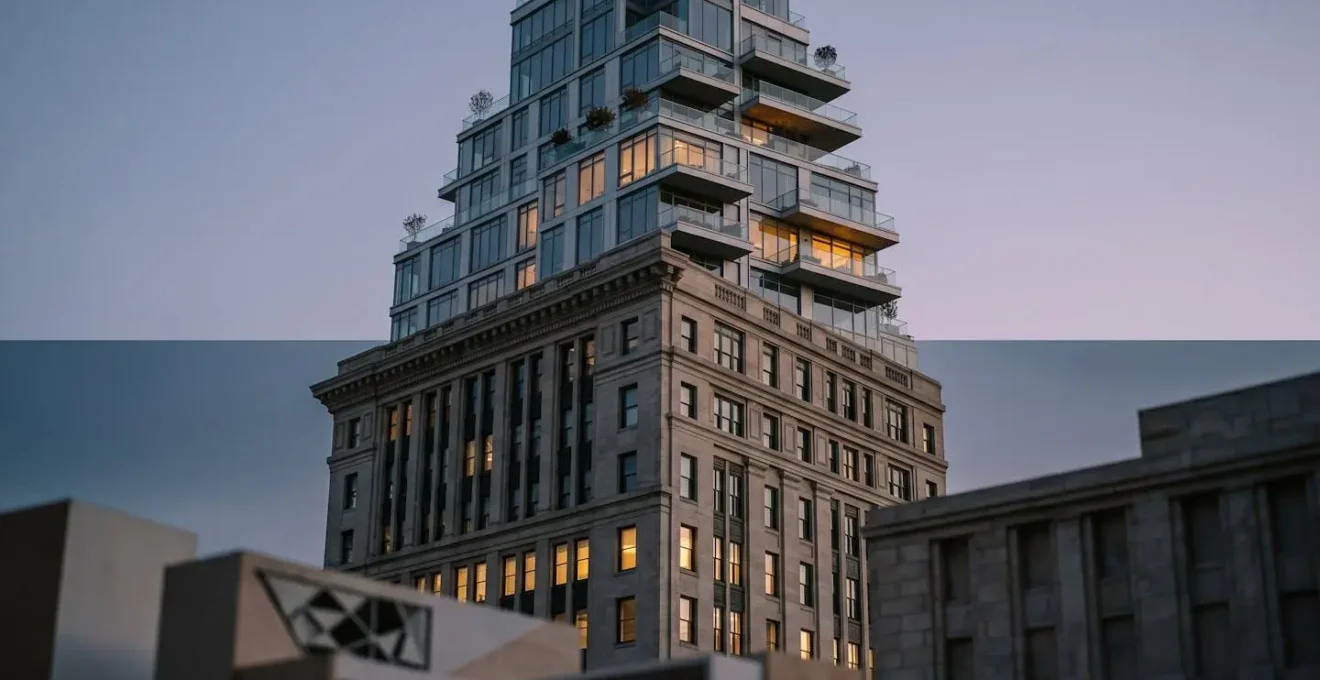
This visual representation of a density bonus shows how these zoning tweaks translate into physical reality. The ability to add new, modern residential floors atop an existing commercial structure is the architectural embodiment of the new FAR rules. These regulatory changes are not just minor adjustments; they are powerful financial catalysts that directly enable developers to overcome the high costs of conversion by allowing them to build more sellable or rentable square footage on the same lot.
The Risks of Renting in a Converted Office Building: What to Check in the Lease
For a prospective tenant or buyer, the allure of a brand-new apartment in a historic Art Deco tower is powerful. The marketing promises luxury amenities and unique layouts. However, living in a converted office building comes with a distinct set of potential risks rooted in its non-residential DNA. These are not always apparent during a walkthrough, and the lease agreement is the primary document where these compromises may—or may not—be revealed. Due diligence is not just advisable; it’s essential.
The most critical issues stem from compromises made to meet residential codes within a commercial framework. Problems can range from the legal to the experiential. A Temporary Certificate of Occupancy (TCO) might seem like a minor administrative detail, but it could signal unresolved construction issues that impact habitability. Similarly, the acoustic separation between units can be a significant concern. Office floors were designed for the ambient hum of a workplace, not for containing the sounds of a neighbor’s life. HVAC systems designed to serve vast open floors can sometimes create unintended noise or odor pathways between apartments.
Light and air, fundamental to residential quality of life, are another area of frequent compromise. To make deep floor plates work, developers often create interior “home offices” or “dens” that lack windows and may not meet the legal definition of a bedroom. Prospective residents must be vigilant about understanding exactly what they are renting. To navigate these potential pitfalls, a systematic check is required before signing any lease or contract.
Your Pre-Lease Audit for Converted Office Buildings
- Verify the Certificate of Occupancy (C of O): Distinguish between a Temporary and Permanent C of O. A TCO can leave you vulnerable to potential habitability issues or even, in rare cases, vacate orders if the developer fails to complete final requirements.
- Assess Acoustic Separation Quality: Listen carefully. Check for noise transmission through shared HVAC vents, thin walls, or raised flooring systems not designed for residential soundproofing. Ask about the soundproofing methods used between units.
- Inspect Light and Air Reality: Understand NYC’s legal bedroom requirements. Verify that any room marketed as a ‘home office’ or ‘den’ is not an illegal, windowless bedroom. Assess the true quality of life in spaces with limited or distant windows.
- Review Building Code Compliance: Ensure habitable rooms meet the NYC Building Code requirement that any part of the room be no more than 30 feet from a window. This is a key challenge in deep office floor plates.
- Investigate Conversion History: Research if the property used legal exceptions, such as Section 277 of the Multiple Dwelling Law, which allows for more relaxed light and air standards. This can significantly impact the long-term livability of interior-facing units.
Which Commercial Districts Will Be the Next Hot Residential Zones by 2030?
The future of residential New York is being forged in districts once defined by their daytime-only, 9-to-5 character. The key to identifying the next “hot” residential zone is not just about locating empty office buildings; it’s about finding where conversion projects are reaching a critical mass, creating the gravity needed to pull in the retail, dining, and cultural amenities that transform a business district into a vibrant 24/7 neighborhood. Today, all eyes are on Midtown, but the playbook was written downtown.
The transformation of the Financial District (FiDi) serves as the blueprint. A decade ago, FiDi was a ghost town after 6 PM. The game-changer was the conversion of iconic towers like One Wall Street. This colossal project didn’t just add 566 luxury condos; it served as an anchor for essential residential infrastructure. The development brought in the area’s first full-scale supermarket (a Whole Foods), a massive Life Time Fitness club, and high-end retail. This created a positive feedback loop, making the entire neighborhood more viable and attractive for further residential investment and development.
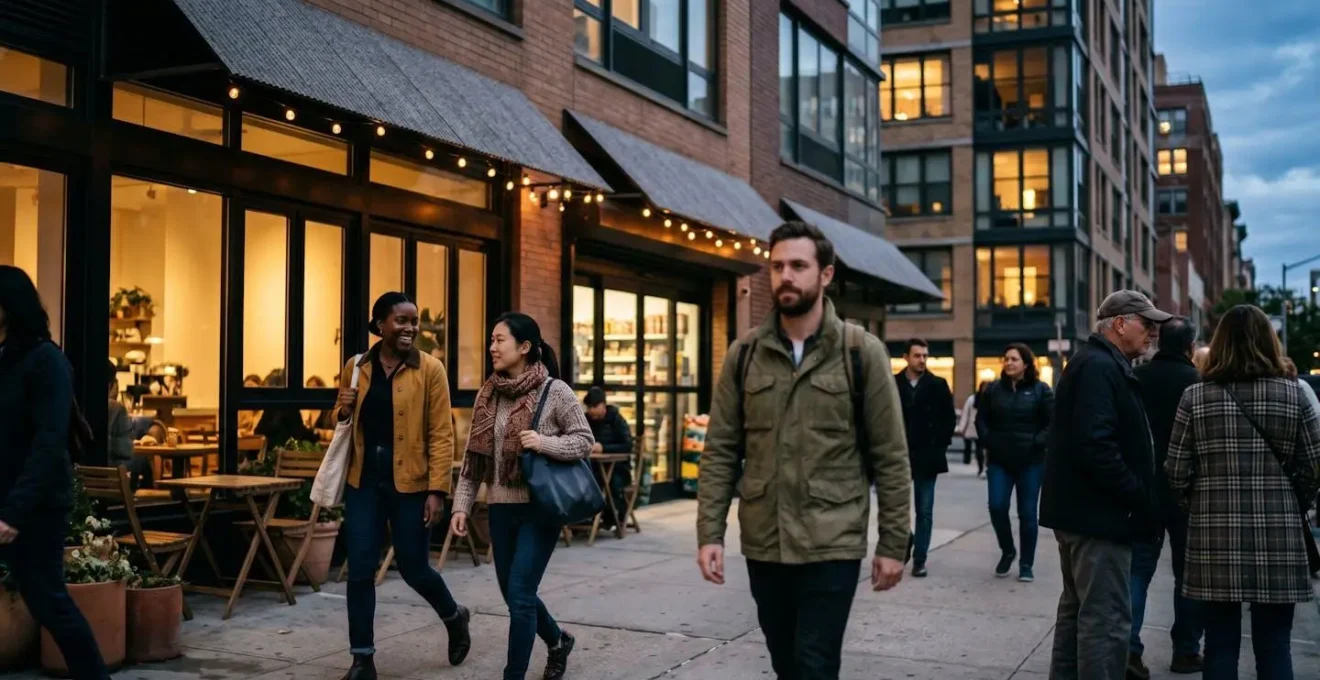
This street-level vitality is the end goal. Now, this transformative energy is shifting north. Data shows that Midtown now accounts for over half (54.8%) of post-2020 conversions, indicating a massive wave of investment and development. Districts around Grand Central and Penn Station, historically dominated by commuters, are seeing a flurry of conversion activity. The vision is to replicate the FiDi model on an even grander scale, turning these transit-rich but soulless commercial hubs into dynamic, walkable communities.
For investors and prospective residents, the strategy is to look for the “One Wall Street” of a district—the catalytic project that signals a broader transformation. By 2030, the areas that successfully attract this foundational layer of high-quality retail and lifestyle amenities will be the clear winners, shedding their corporate-only skin to become some of the city’s most desirable and valuable residential enclaves.
How Architects Solve the “Deep Floor Plate” Problem in Office Conversions
The single greatest architectural challenge in any office-to-residential conversion is the “deep floor plate.” Office buildings are designed to be wide and deep to maximize open-plan workspace, with employees often sitting 50, 60, or even more than 70 feet from the nearest window. Residential building codes, however, have strict requirements for natural light and air; in NYC, no part of a habitable room can be more than 30 feet from a window. This fundamental conflict between commercial and residential design requires immense architectural ingenuity to solve.
Developers can’t just slice these deep floors into a series of long, dark, “bowling alley” apartments. The solutions are often radical and building-specific. The case of 180 Water Street, a 1971 office tower, is a masterclass in overcoming this issue. Its floors featured depths up to 72 feet—more than double the legal limit. Architects employed a combination of creative interior layouts and leveraged flexible light-and-air standards under Section 277 of the Multiple Dwelling Law to make the project viable. This often involves creating unique apartment configurations, where living areas are pushed to the window line and interior spaces are used for closets, bathrooms, or designated home offices.
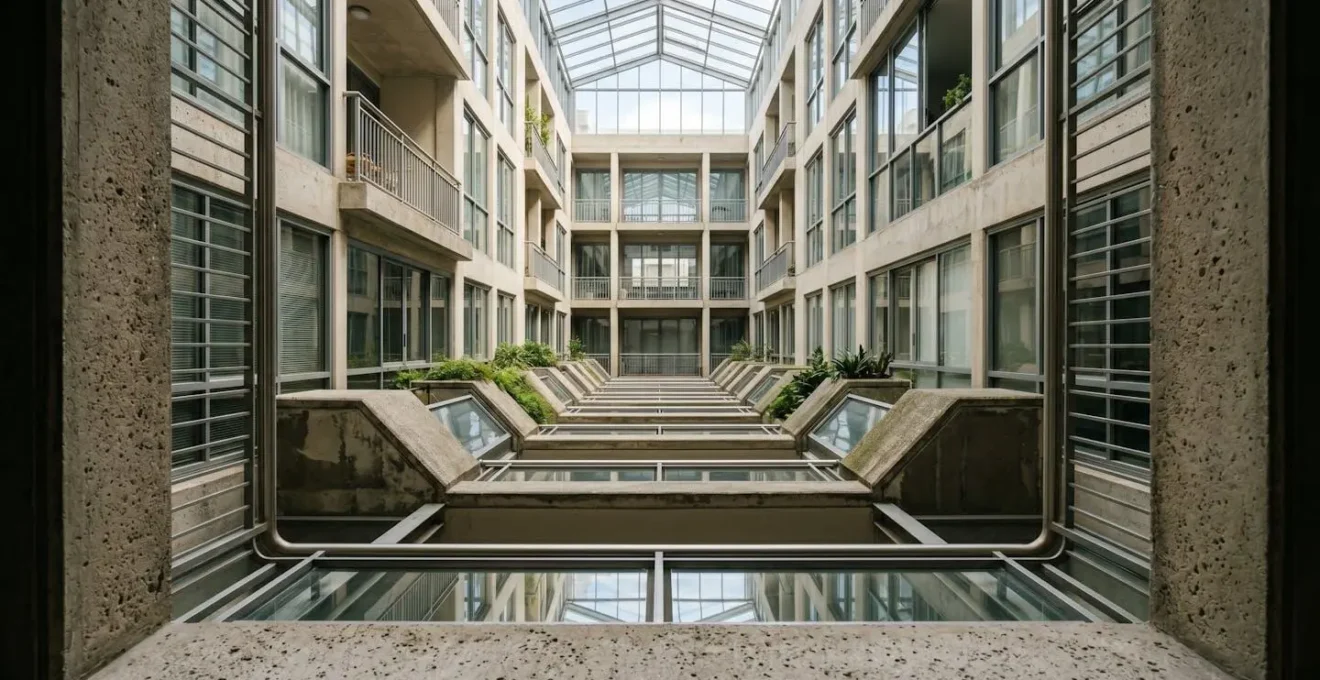
For buildings with even more extreme depths, a more dramatic solution is required: carving a massive hole through the center of the building. By creating an internal atrium or “light well,” architects can introduce a new “exterior” wall to the building’s core. This allows them to create apartments that face into this new courtyard, providing the necessary light and air to previously landlocked square footage. This is an incredibly expensive and structurally complex maneuver, but it can be the only way to unlock the value of a building with challenging DNA. As Gensler’s Robert Fuller noted about a similar project, these conversions are uniquely challenging endeavors.
There’s just a lot of technical challenges and unique conditions from floor to floor. All those things collectively make this quite a unique endeavor and I would argue probably more challenging than any other one I can think of.
– Robert Fuller, Principal at Gensler, Bloomberg
Solving the deep floor plate problem is the heart of the conversion puzzle. It’s a testament to architectural creativity and a clear indicator of the project’s overall complexity and cost. For investors, understanding the specific solution applied to a building is key to assessing its quality and long-term value.
Brooklyn Tech Triangle or Manhattan: Which Location Maximizes Your Seed Funding?
For the last decade, the conventional wisdom for a burgeoning tech startup was to find a brick-and-beam loft in the Brooklyn Tech Triangle or DUMBO. But the new real estate paradigm is upending that calculus. From an investor’s or a well-funded founder’s perspective, the question of location is no longer just about creative-class culture; it’s about long-term value and lifestyle. The most significant opportunity for “seed funding” to translate into a valuable real estate asset may now lie back across the bridge, in the very heart of Manhattan.
The reason is a classic market arbitrage. While Brooklyn’s residential prices have soared, Manhattan’s aging Class B and C office stock has become dramatically devalued. With Manhattan office sale prices having fallen 45% from their 2019 peak, the raw material for residential conversion is now available at a significant discount. This price drop, combined with the new zoning catalysts, has created a fertile ground for development that didn’t exist five years ago. Visionary investors are not just buying buildings; they are buying into the future residential transformation of entire districts.
Midtown, once seen as a corporate monolith, is now the epicenter of this competitive new market. As CBRE broker Doug Middleton told Bloomberg, “Midtown is heating up. It’s probably the most competitive product that we’re seeing in New York City right now.” This competition is a signal of immense perceived value. For those with capital, the opportunity is to get in on the ground floor of this rebirth, acquiring a residential stake in a neighborhood with unparalleled transit infrastructure and a high probability of becoming a fully-fledged 24/7 community.
The choice is no longer between a trendy Brooklyn address and a stuffy Manhattan one. It’s between an established, mature market and a new frontier emerging in the most central location on earth. For those looking to maximize the long-term value of their investment, the answer increasingly points toward the discounted, high-potential commercial-to-residential plays in the heart of the city.
Penn Station vs. Grand Central: Which Hub Offers a Better Quality of Life?
As Midtown solidifies its status as the primary zone for office-to-residential conversions, a more granular question emerges for investors and future residents: which part of Midtown? The character and future trajectory of the areas surrounding the city’s two main transit hubs, Penn Station and Grand Central, offer distinct value propositions. The choice between them is a choice between immediate, established quality of life and a long-term bet on massive, planned transformation.
The Grand Central district is the more mature of the two. It already functions as a 24/7 neighborhood, blending a high-density office population with established residential buildings, world-class dining, and proximity to amenities like Bryant Park and the cultural institutions of the East Side. A resident in a converted office tower near Grand Central steps out into a fully-formed, vibrant ecosystem. The investment here is in a known quantity, offering immediate lifestyle benefits and stable property values.
The Penn Station district, by contrast, is an emerging area and a bet on the future. Historically grittier and more chaotic, the area is the subject of massive, funded redevelopment plans aimed at completely transforming the station and its surroundings. The concentration of conversion projects here is high, driven by the promise of future appreciation as the neighborhood’s infrastructure and amenities catch up. Living here today might involve more growing pains, but the potential upside, both in terms of lifestyle and property value, is arguably greater. The following table breaks down the key differences for a potential resident.
| Factor | Grand Central District | Penn Station District |
|---|---|---|
| Current Residential Ecosystem | Mature 24/7 neighborhood with diverse dining, Bryant Park proximity, established East Side amenities | Emerging area with significant planned transformation underway |
| Conversion Activity | Multiple active projects including former Ernst & Young headquarters | High concentration of conversions including redevelopment of area office stock |
| Leisure Travel Access | Metro-North: Hudson Valley, Connecticut, upstate New York destinations | LIRR & NJ Transit: Long Island beaches, New Jersey shore, western suburbs |
| Investment Potential | Immediate quality of life with established property values | Future appreciation bet on massive funded Penn District redevelopment plans |
| Residential Infrastructure | Already dense with retail, services, cultural institutions | Rapidly developing as conversions drive demand for new amenities |
Ultimately, the decision hinges on an individual’s priorities. Grand Central offers immediate gratification and a blue-chip residential experience. Penn Station offers the excitement and potentially higher returns of a neighborhood on the cusp of a major renaissance.
Key Takeaways
- The high cost of office conversions is a feature, not a bug, creating a barrier to entry that rewards expertise in navigating structural and mechanical complexities.
- Recent zoning reforms like “City of Yes” are the single most important factor, acting as financial catalysts that unlock density and make projects viable.
- The future value of a converted property is tied not just to its amenities, but to its district’s ability to evolve into a vibrant, amenity-rich 24/7 neighborhood.
Is Buying a Condo in a “Luxury” High-Rise Actually a Good Investment?
The glossy brochures and state-of-the-art amenities paint a compelling picture, but the core question for any savvy buyer remains: is a condo in a converted office tower a sound long-term investment? The answer is nuanced, depending heavily on the project’s specifics and the buyer’s ability to perform deep, conversion-focused due diligence. While the first wave of these projects is set to deliver thousands of new homes—with an NYC Comptroller’s report finding that the first wave could produce approximately 17,400 apartments from 44 conversion projects—not all will be created equal from an investment standpoint.
The primary value proposition is uniqueness. These buildings often boast historic Art Deco or mid-century architecture, higher ceilings, and unconventional layouts that can’t be replicated in ground-up construction. This can command a “uniqueness premium.” However, this must be weighed against potentially higher long-term maintenance costs. The adaptive reuse of old systems and structures can lead to underfunded reserves for things like facade maintenance or special assessments for bespoke mechanical systems. A buyer must scrutinize the offering plan for these red flags.
Furthermore, an investor must understand where the building sits in the conversion timeline. The pioneering “first-wave” projects are essentially prototypes. While they may have the most cachet, later “second-wave” developments often benefit from the lessons learned, offering superior layouts and more efficient systems. It is also critical to evaluate the impact of tax incentives. Programs like the 467-m tax abatement can significantly lower costs initially, but buyers must understand when these benefits expire, as that can dramatically affect carrying costs and future resale value.
Ultimately, a conversion condo is not a standard real estate product. It is a complex asset whose value is tied to its unique architectural DNA, the quality of its engineering compromises, and its role in a neighborhood’s larger transformation. A good investment requires looking past the marble countertops to the building’s bones, its offering plan, and its financial future. For those willing to do the homework, the potential for securing a truly unique piece of New York with strong appreciation potential is very real.
To put these principles into practice, the next logical step for any serious investor or prospective resident is to begin identifying and analyzing specific projects that align with their financial goals and lifestyle preferences.