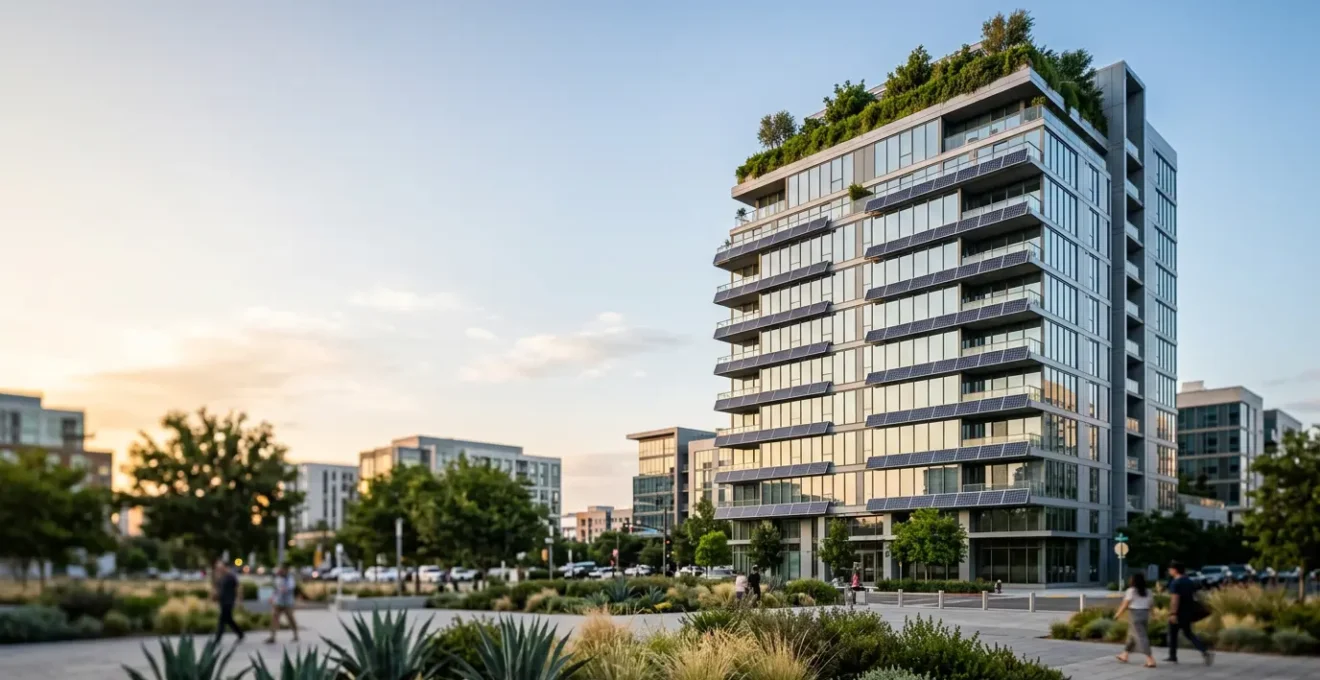
The promise of utility savings in a LEED building isn’t a guarantee; it’s a complex equation where occupant behavior and technology quirks can easily erase the advertised benefits.
- Certification demonstrably boosts resale value, but the payback period on features like advanced greywater systems can span over a decade.
- “Smart” technology is only as effective as the user, and the learning curve can create a significant performance gap between designed and actual savings.
Recommendation: Scrutinize a building’s specific systems, maintenance history, and your own lifestyle habits before accepting the green premium at face value.
The LEED Platinum plaque on a building glitters with the promise of a utopian ideal: a home that is not only environmentally responsible but also remarkably cheap to operate. Potential buyers and renters are drawn to the allure of drastically lower utility bills, imagining a future where their energy and water consumption plummets. This narrative, heavily promoted by developers, suggests that the higher upfront cost or rent—the “green premium”—will be swiftly offset by monthly savings. It’s a compelling story of smart investment meeting ecological virtue.
But from an auditor’s perspective, promises require proof. The reality of building performance is far more complex than a certification level suggests. The crucial difference between a building’s *designed* efficiency and its *actual* energy use, known as the performance gap, is where the marketing narrative often breaks down. This gap is influenced by a host of factors that are rarely mentioned in a sales brochure: the real-world effectiveness of high-tech systems, the unforeseen maintenance costs, and, most importantly, the unpredictable impact of the occupants themselves.
This analysis moves beyond the marketing claims to conduct a rigorous audit of the real-world return on investment for living in a top-tier green building. We will dissect the numbers, challenge the assumptions, and investigate the hidden variables that determine whether a LEED Platinum building is a sound financial decision or simply an expensive statement. By examining everything from air quality to resale value, we will equip you with the skeptical, data-driven mindset needed to calculate your own potential savings.
This guide provides a detailed audit of the financial and non-financial returns of living in a high-performance green building. Below is a summary of the key areas we will investigate to determine the true value behind the certification.
Summary: Living in a LEED Platinum Building: Do You Actually Save Money on Utilities?
- Filtered Air vs. Open Windows: The Health Benefits of Passive House Standards
- When Smart Thermostats Fail: The Learning Curve of High-Tech Homes
- Does “Green” Sell? The Resale Value of Sustainable Certifications
- Greywater Systems: Why Your Toilet Water Might Look Cloudy (and Why It’s Okay)
- Can a Pre-War Co-op Ever Be Net Zero?
- How to Heat a Drafty Brownstone Without Spending $800 a Month
- The Carbon Footprint of Glass Towers: Are They Environmental Disasters?
- Is Buying a Condo in a “Luxury” High-Rise Actually a Good Investment?
Filtered Air vs. Open Windows: The Health Benefits of Passive House Standards
One of the most significant, yet hardest to quantify, benefits of living in a high-performance building is the improvement in indoor air quality (IAQ). Buildings constructed to standards like Passive House utilize an airtight envelope combined with a Heat or Energy Recovery Ventilator (HRV/ERV). Unlike an open window, which invites in pollen, pollution, and noise, these systems provide a continuous supply of fresh, filtered air while exhausting stale, indoor air. This mechanical breathing process is fundamental to the building’s health credentials.
The core of this technology is its ability to maintain a stable indoor environment. An ERV, for instance, transfers both heat and moisture between the incoming and outgoing airstreams, helping to maintain comfortable humidity levels year-round. This is not just a matter of comfort; it has direct health implications. As research from Panasonic’s Indoor Air Quality division highlights, the result is a healthier living space.
Reduced allergens and consistent moisture levels can lead to fewer respiratory flare-ups, better sleep and improved overall well-being.
– Panasonic Indoor Air Quality Research, ERV System Explained: How It Works and Why It Supports Better Indoor Air Quality
While calculating the dollar value of fewer sick days or better sleep is complex, this non-financial ROI is a critical part of the green building equation. The energy cost to run the ventilation fan is minimal compared to the potential long-term health benefits and the comfort of living in a home with consistently fresh air, free from outside contaminants. It represents a shift from viewing a home as a simple shelter to seeing it as an active system for promoting occupant wellness.
When Smart Thermostats Fail: The Learning Curve of High-Tech Homes
High-performance homes are often equipped with sophisticated smart thermostats and building automation systems designed to optimize energy use without human intervention. The marketing pitch is a system that “learns” your habits and adjusts heating and cooling for maximum efficiency. However, this introduces a significant variable: system friction. The complexity of these interfaces can be overwhelming, leading occupants to either ignore them or, worse, constantly override the automated schedules, negating any potential savings.
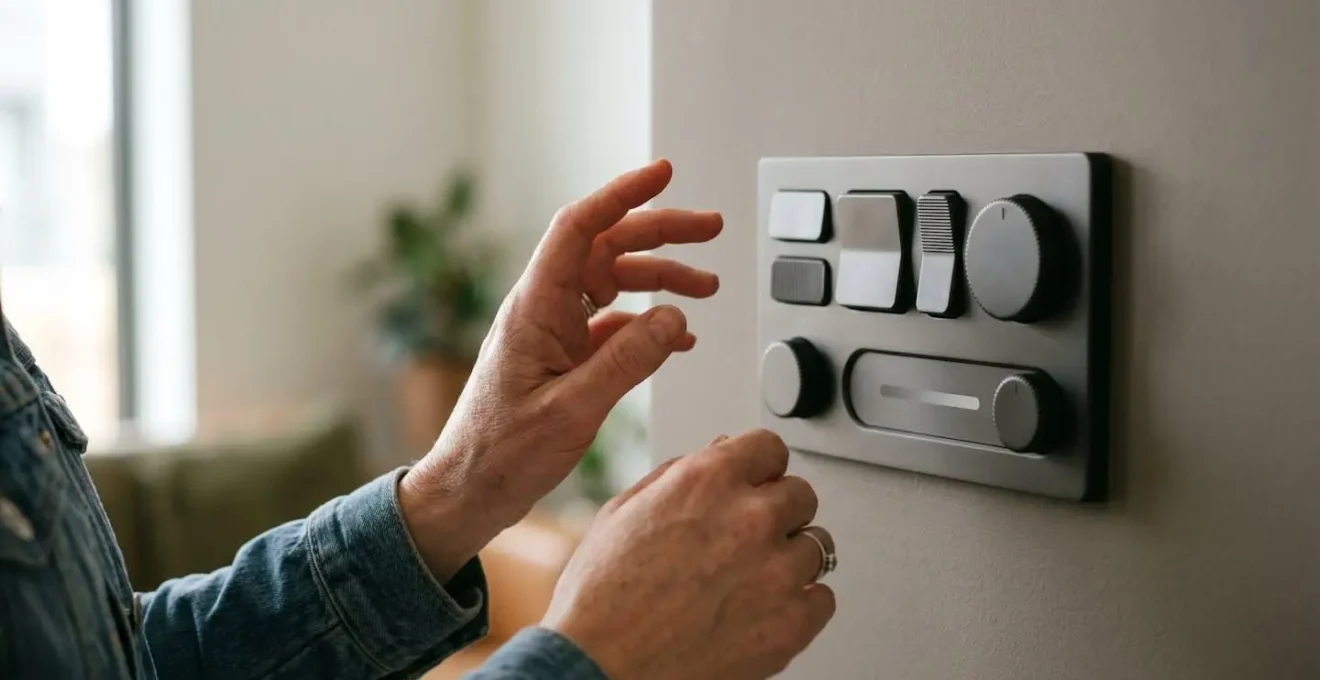
The issue is often not a failure of the technology itself, but a failure in the human-machine interface. When residents cannot intuitively understand how to set a schedule or what a particular mode does, they revert to manual adjustments. This constant tinkering, or “behavioral load,” can make a high-tech HVAC system perform worse than a simple, programmable thermostat. The savings promised on paper are contingent on the occupants’ ability and willingness to trust the system and adapt to its logic.
Interestingly, the hardware is often highly reliable. For instance, a 2020 study of 20,000 smart thermostats found that less than 5% exhibited problematic override behaviors that significantly impacted energy performance from a technical standpoint. This suggests the primary challenge is user education and interface design. A building can be LEED Platinum, but if the occupant fights the thermostat daily, the energy bills will not reflect the building’s potential. The ROI is therefore tied directly to the resident’s tech-savviness and the quality of the initial handover and training.
Does “Green” Sell? The Resale Value of Sustainable Certifications
While monthly utility savings can be variable and dependent on occupant behavior, a more concrete financial benefit of LEED certification emerges at the time of sale. The question for any homeowner or investor is whether the “green premium” paid upfront can be recouped—or even exceeded—down the line. The data increasingly suggests that the answer is yes. A sustainability certification acts as a third-party verification of quality, energy performance, and forward-thinking design, which a growing segment of the market is willing to pay more for.
This isn’t just a hypothesis; it’s borne out by market analysis. The certification provides a clear market differentiator, signaling lower ownership costs and a healthier living environment, which can justify a higher asking price. It effectively de-risks the purchase for the next buyer, who can be more confident in the home’s construction and operational efficiency.
Case Study: The Texas Green Homes Resale Value Premium
To quantify this effect, a comprehensive study from the University of Texas at Austin and the USGBC examined the sales data of over 3,800 certified homes. The findings were clear: according to the analysis reported by EC&M Magazine, homes built to LEED standards showed an 8% boost in resale value between 2008 and 2016. For the average home in the Texas market, this translated into a tangible premium of $25,000 over their non-certified counterparts. This demonstrates that the market does, in fact, reward sustainable construction with a higher asset valuation.
From an auditor’s perspective, this is a critical component of the lifecycle ROI. Even if monthly utility savings only modestly offset the initial green premium, the significant increase in asset value at resale can make the investment highly profitable. It shifts the financial argument from a simple monthly cash-flow calculation to a more sophisticated analysis of long-term wealth creation.
Greywater Systems: Why Your Toilet Water Might Look Cloudy (and Why It’s Okay)
A hallmark of advanced green buildings is a greywater recycling system, which captures relatively clean wastewater from showers, laundry, and bathroom sinks. After basic filtration, this water is then reused for non-potable purposes, most commonly for flushing toilets or landscape irrigation. The immediate benefit is a substantial reduction in municipal water consumption. However, the financial viability of these systems requires a closer look at their upfront costs, maintenance needs, and actual payback period.
For new residents, the first encounter with a greywater system can be unnerving. The recycled water used in toilets is perfectly safe and sanitary, but it’s often not crystal clear, which can be visually jarring. This is a normal and expected characteristic. The real audit, however, focuses on the numbers. The installation and maintenance costs can be significant, and the return on investment varies dramatically based on the system’s complexity and local water prices.
The following data provides a breakdown of the typical costs and savings associated with different greywater systems, showing that the most advanced options come with the longest payback periods. As this analysis of greywater system costs demonstrates, the financial case is not always straightforward.
| System Type | Installation Cost | Monthly Savings | Payback Period | Best For |
|---|---|---|---|---|
| Laundry-to-Landscape | $200 – $2,000 | $15 – $30 | 1 – 4 years | Budget-conscious homeowners with garden irrigation needs |
| Branched Drain System | $3,000 – $8,000 | $35 – $80 | 3 – 7 years | Comprehensive water recycling via gravity-fed networks |
| Pumped Systems | $3,000 – $8,000 | $35 – $80 | 3 – 7 years | Homes where gravity drainage isn’t feasible |
| Advanced Treatment Systems | $8,000 – $25,000 | $50 – $150 | 5 – 12 years | Large homes, indoor reuse (toilets), strict regulations |
This data reveals that while a simple laundry-to-landscape system can pay for itself relatively quickly, a comprehensive whole-house system with advanced treatment represents a long-term investment. For many, the decision to install such a system is driven more by environmental ethics than by a desire for rapid financial returns. It is a prime example of where the “green” aspect outweighs the immediate “savings” aspect.
Can a Pre-War Co-op Ever Be Net Zero?
The challenge of achieving high energy performance is magnified exponentially in older, historic buildings like pre-war co-ops. These structures, with their solid masonry walls, single-pane windows, and often-outdated heating systems, were built in an era when energy was cheap and insulation was an afterthought. The question of whether such a building can *ever* reach net-zero status is a daunting one for auditors and owners alike. While achieving true net-zero (producing as much energy as it consumes) is exceptionally difficult and costly, significant improvements are certainly possible.
The path to high performance in a pre-war building involves a deep energy retrofit. This can include adding insulation (often from the inside, to preserve the historic facade), replacing windows with high-performance units that match the historical aesthetic, air-sealing every crack and crevice, and completely overhauling the HVAC system. Each step is complicated by the building’s construction and potentially by historic preservation regulations. It is an invasive, expensive, and logistically complex undertaking.
However, the potential for savings is immense precisely because the starting point is so inefficient. Data on retrofitted commercial buildings provides a useful benchmark for what is achievable. Rigorous academic studies confirm that even with the constraints of an existing structure, substantial gains are possible. For example, research on retrofitted buildings demonstrates that achieving LEED Gold or Platinum certification can lead to a 31% to 40% reduction in energy consumption. While this may not be net-zero, it represents a massive cut in operational costs and carbon footprint, transforming a leaky, inefficient building into a relatively high-performing one.
For a co-op board or an individual owner, the decision comes down to a long-term capital investment calculation. The upfront cost is high, but the resulting savings on common charges and individual utility bills, combined with increased property values, can make a deep retrofit a financially sound decision over a 10- to 20-year horizon.
How to Heat a Drafty Brownstone Without Spending $800 a Month
Heating a historic brownstone can feel like trying to fill a leaky bucket. Their charming but inefficient construction—original wood windows, uninsulated brick walls, and numerous air gaps—often leads to staggering winter heating bills. The core of the problem is not a lack of heating power, but a catastrophic loss of that heat to the outdoors through conduction and air leakage. Before investing in a larger boiler or more powerful radiators, a proper audit must focus on plugging the leaks in the building’s thermal envelope.
The primary culprits are almost always the same: single-pane windows, uninsulated roof/attic spaces, gaps around window and door frames, and uninsulated foundations. Heat naturally moves to cold, and every one of these weak points is a highway for energy to escape. The most effective strategy is therefore not to produce more heat, but to keep the heat you’ve already paid for inside the building. This involves a systematic approach to insulation and air sealing.

Improving the building envelope is the most cost-effective way to slash heating costs. Blown-in insulation in walls, thick batts of insulation in the attic, modern double- or triple-pane windows, and meticulous air sealing with caulk and foam can collectively cut heat loss by more than half. These upgrades form the foundation of any serious attempt to lower a brownstone’s energy bills, providing a permanent solution rather than a temporary fix.
Your 5-Step Home Energy Leak Audit
- Identify Contact Points: On a cold day, use your hand or an incense stick to check for drafts around all windows, exterior doors, electrical outlets on exterior walls, and where the foundation meets the wall.
- Inventory Existing Insulation: Visually inspect your attic or crawlspace. Measure the depth of the insulation. Check for gaps, compressed areas, or signs of moisture damage.
- Assess Window Performance: Check if your windows are single, double, or triple-pane. Look for condensation between panes, which indicates a failed seal and significant thermal loss.
- Locate Thermal Bridges: Identify areas where building materials create a direct path for heat to escape, such as uninsulated cantilevered floors or exposed concrete slab edges. A professional energy auditor can use an infrared camera for this.
- Create a Prioritized Plan: Rank the identified leaks and insulation gaps from most to least severe. Address the biggest problems first, such as sealing a large attic air leak, which often provides the best return on investment.
By shifting focus from heat generation to heat retention, it’s possible to transform a drafty, expensive-to-heat brownstone into a comfortable and far more affordable home, without sacrificing its historic character.
The Carbon Footprint of Glass Towers: Are They Environmental Disasters?
Modern luxury high-rises, with their floor-to-ceiling glass facades, are often marketed as pinnacles of green living, frequently boasting LEED Gold or Platinum certifications. However, from an environmental auditor’s perspective, this presents a significant paradox. Glass is a notoriously poor insulator. A wall of triple-pane, low-e coated glass still performs far worse than a moderately insulated, conventional wall. This begs the question: how can a building made of glass be considered a model of energy efficiency?
The answer lies in the distinction between operational carbon and embodied carbon. Operational carbon is the emissions from the energy used to heat, cool, and light the building. LEED certification heavily focuses on reducing this, and glass towers often employ hyper-efficient HVAC systems, smart lighting, and other technologies to compensate for their poor thermal envelope. They can indeed achieve low operational energy use, but at a high cost and complexity.
The hidden environmental price is the embodied carbon—the massive amount of carbon dioxide emitted during the manufacturing of the building materials themselves. Concrete and glass are two of the most carbon-intensive materials on the planet. A sleek glass tower has an enormous upfront carbon footprint before it’s even occupied. This critical factor is often downplayed in the pursuit of LEED points, leading to a situation where a building can be ‘green’ on paper but represent a net loss for the climate when its full lifecycle is considered. This complexity is often acknowledged in academic circles.
There is no definitive answer to whether LEED buildings save energy. This discussion reflects the complexity of actual energy performance, which depends on factors such as the level of certification, the climatic context and the building’s operational characteristics.
– Scofield et al., LEED Certification in Building Energy Efficiency: A Review of Its Performance Efficacy and Global Applicability
Therefore, while a resident might enjoy lower monthly energy bills due to the building’s advanced mechanical systems, the claim of the building being an environmental boon is questionable. It is a classic case of optimizing one variable (operational energy) at the great expense of another (embodied carbon), creating a structure that is more of an engineered solution to a self-inflicted problem than a truly sustainable design.
Key Takeaways
- Guaranteed Savings are a Myth: A LEED certification represents energy-saving *potential*, not a promise. Actual savings are heavily dictated by occupant behavior and system maintenance.
- Resale Value is the Real ROI: The most reliable financial benefit of a green certification is often the measurable premium it adds to the property’s market value at the time of sale.
- Behavior Trumps Technology: A high-tech smart home can only save energy if the occupants understand and trust its systems. The “performance gap” is often a human factor, not a technical one.
Is Buying a Condo in a “Luxury” High-Rise Actually a Good Investment?
So, we return to the fundamental question for any prospective buyer or tenant: is investing in a LEED-certified condo in a luxury high-rise a sound financial move? The audit reveals a nuanced answer: it depends entirely on how you define “investment.” If the goal is strictly to achieve the lowest possible monthly housing cost, the green premium on rent or purchase price may not be fully offset by utility savings alone, especially if your local energy costs are low.
However, if the investment is viewed through a broader, more sophisticated lens—the lifecycle ROI—the calculation changes. The investment case rests on three pillars we’ve examined: moderately lower and more predictable operational costs, a significant and proven premium in asset resale value, and non-financial benefits like superior indoor air quality and comfort. A buyer is not just purchasing an apartment; they are investing in a higher-quality, more resilient, and more desirable asset.
The decision becomes less about chasing a few dozen dollars in monthly savings and more about long-term financial and personal well-being. The buyer who will see the best return is one who values health, is willing to adapt to new technologies to maximize their performance, and sees the property as a long-term asset whose value is protected by a reputable, third-party certification. For the purely cost-driven renter, the math may be less compelling.
Therefore, before signing any lease or contract, conduct your own mini-audit. Inquire about the building’s average energy costs, its maintenance protocols for green systems, and be honest about your willingness to live with the technology. Empower yourself with data to ensure your investment aligns with both your financial goals and your lifestyle.