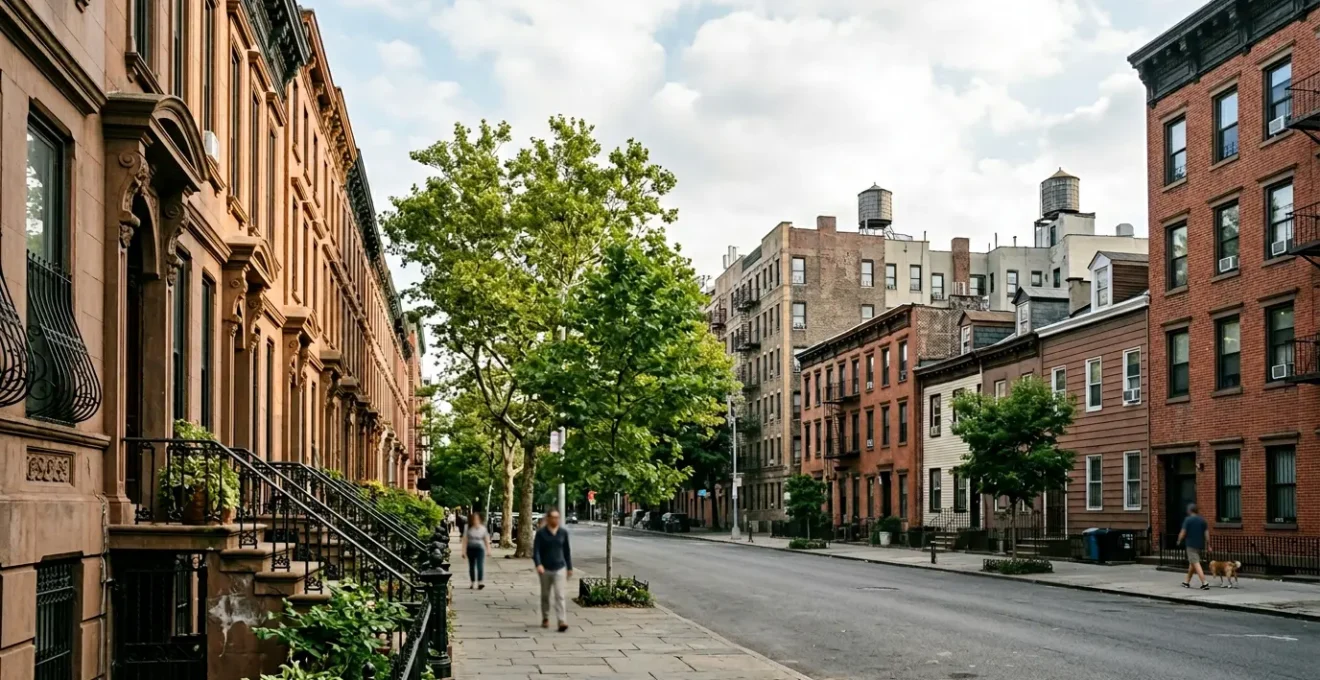
Choosing the right NYC borough is less about chasing a stereotypical ‘vibe’ and more about conducting a data-driven, personal lifestyle audit.
- Quantify your “life commute,” including travel to social hubs, not just your office, to understand the true time cost.
- Prioritize measurable quality-of-life factors like hyper-local noise levels and specific school district performance over broad borough reputations.
Recommendation: Before deciding, use a detailed financial breakdown to compare the 5-year cost of renting in the city versus commuting from a suburb like those in New Jersey.
The question of which New York City borough to call home is as overwhelming as the city itself. For anyone planning a move, the flood of clichés is immediate: Manhattan is for the ambitious and wealthy, Brooklyn for the creative and cool, Queens for families seeking diversity, and the Bronx for… well, the narrative is still being written. This conventional wisdom, while a starting point, often fails to capture the reality of daily life. Choosing a place to live based on a borough’s marketing “vibe” is like choosing a life partner based on their dating profile photo—it misses the substance entirely.
The truth is, each borough is a mosaic of dozens of distinct neighborhoods, each with its own rhythm, cost structure, and definition of community. A quiet, suburban-feeling corner of Queens can feel worlds away from a bustling transit hub just a few miles down the road. The real challenge isn’t picking a borough; it’s defining what “livability” means to you on a granular level. Are you willing to trade 200 square feet of living space for a ten-minute reduction in your commute? Is the background hum of a lively street energizing or draining? These are the questions that matter.
This guide abandons the tired stereotypes. Instead, it offers a relocation consultant’s framework for making a decision that aligns with your actual lifestyle, not an imagined one. We will move beyond the “what” (the borough’s reputation) to the “how”: how to measure what matters, how to spot the real signs of a neighborhood’s character and trajectory, and how to calculate the true costs—in both time and money—of your choice. This is your personal lifestyle audit for finding a home in the greatest, most complex city in the world.
To help you navigate this critical decision, this article breaks down the key trade-offs and considerations. We’ll explore everything from commute quality and neighborhood acoustics to school performance and the subtle indicators of a community’s true character. The following sections provide a structured framework to guide your thinking.
Summary: A Data-Driven Guide to Choosing Your NYC Borough
- Why a 20-Minute Commute from Queens Beats a 15-Minute Walk in Midtown
- The Quiet Neighborhoods of NYC: Where to Sleep Without Earplugs
- Brooklyn vs. Queens: Which Borough Offers Better Public Schools for Young Kids?
- The 3 Signs a Neighborhood Is About to Become Too Expensive for You
- When to Choose the Bronx Over Brooklyn for Authentic Community Vibes
- Commute from Jersey or Rent in City: Which Saves More After 5 Years?
- Where to Find “Village” Vibes Inside Massive Boroughs Like Queens
- How to Raise a Family in New York While Maintaining a Small-Town Community Feel?
Why a 20-Minute Commute from Queens Beats a 15-Minute Walk in Midtown
The concept of the “ideal commute” is one of the most misunderstood aspects of relocating to NYC. A shorter commute on paper does not always equate to a better quality of life. The allure of a 15-minute walk through the chaotic energy of Midtown might seem appealing, but it often comes at a steep price: significantly smaller living quarters and a constant immersion in the city’s most intense environment. With housing costs in the NYC metro area growing over 68% in the last decade, the financial pressure to live centrally is immense.
This is where the trade-off calculus becomes essential. Consider an alternative: a 20-minute subway ride from a neighborhood like Astoria or Long Island City in Queens. While technically longer, this commute offers a crucial benefit that a short walk doesn’t: a mental decompression buffer. This is dedicated time to transition from work to home, to listen to a podcast, read a book, or simply disconnect. This buffer can be a powerful tool for maintaining work-life balance, a luxury often lost when your office is practically an extension of your living room.
Furthermore, the financial savings from living just one or two transit hubs away can be reinvested into a significantly larger apartment, more disposable income for hobbies, or simply a greater sense of financial security. The “price per square foot of sanity” is often much lower in the outer boroughs. The choice isn’t just between 15 and 20 minutes; it’s between a compressed, high-cost existence and a more balanced lifestyle that strategically uses commute time for mental well-being.
The Quiet Neighborhoods of NYC: Where to Sleep Without Earplugs
For many newcomers, the romantic notion of “the city that never sleeps” quickly turns into the harsh reality of a city that is simply loud. Finding an acoustic shelter—a home where you can escape the constant auditory assault—is a critical, yet often overlooked, component of a successful relocation. Noise isn’t evenly distributed across the five boroughs; it’s a hyper-local issue. Data on 311 noise complaints provides a clear map of the city’s sonic hotspots and sanctuaries.
According to an analysis of NYC Open Data, neighborhoods like Washington Heights and Williamsburg are among the most frequent sources of noise complaints. Conversely, areas like Borough Park in Brooklyn register astonishingly few disturbances per capita, proving that tranquility is possible. Beyond just location, the physical construction of your apartment is your first line of defense. High-quality, double- or even triple-pane windows can make a monumental difference in sound insulation.

When apartment hunting, pay close attention to window quality, the building’s position relative to avenues and commercial streets, and its proximity to fire stations or hospitals. A street-facing apartment on the second floor will have a dramatically different noise profile than a rear-facing unit on a higher floor.
Case Study: Bayside Hills, Queens—A Suburban Retreat in the City
Bayside Hills in Queens stands out as the third-quietest neighborhood in all of NYC. It offers a prime example of an urban acoustic shelter, providing a peaceful, residential atmosphere while still being connected to Manhattan via public transit. The noise profile here is dominated by occasional loud talking rather than the disruptive construction, nightlife, or traffic sounds that plague other parts of the city, making it a true retreat for those who prioritize peace and quiet.
Brooklyn vs. Queens: Which Borough Offers Better Public Schools for Young Kids?
For families with young children, the public school system is often the single most important factor in deciding where to live. The Brooklyn vs. Queens debate is particularly fierce in this arena, but a direct comparison reveals that “better” is highly subjective and depends entirely on a family’s priorities. It’s not about which borough is superior overall, but which specific school district aligns with your values regarding diversity, class size, academic focus, and community integration.
Brooklyn boasts a larger system with more schools overall, and some data indicates its average proficiency scores in math and reading are slightly above the state average. This provides a wider array of options and a certain consistency across the borough. Queens, on the other hand, is renowned for being the most culturally diverse urban area in the world, and this diversity is reflected in its schools, offering an unparalleled multicultural environment for children. While it may have fewer schools, high-performing districts in Queens offer an education that is just as excellent as top-tier schools in Brooklyn.
Ultimately, the decision requires micro-level research. Instead of comparing boroughs, parents should compare specific, zoned elementary schools in the neighborhoods they are considering. The following table breaks down some of the key metrics to help you frame your own comparison, based on a comprehensive review of school data.
| Metric | Brooklyn | Queens | Advantage |
|---|---|---|---|
| Math Proficiency (vs NY avg 52%) | 56% | Data varies by district | Brooklyn slightly above state average |
| Reading Proficiency (vs NY avg 49%) | 55% | Comparable to state average | Brooklyn slightly higher |
| Total Public Schools | 573 schools | Fewer schools, more diverse community districts | Brooklyn (more options) |
| Student Population | 290,729 students | Smaller, varies by district | Brooklyn (larger system) |
| Top-Rated Elementary Example | PS 172 Beacon School (A+ grade) | PS 29 Rosedale (A+ grade) | Comparable excellence |
| Diversity Statistics | 83% minority enrollment | Most diverse borough nationally | Queens (cultural diversity) |
| Average School Ranking | 7/10 (top 50% in NY) | Strong performance in select districts | Brooklyn (consistency) |
The 3 Signs a Neighborhood Is About to Become Too Expensive for You
Finding the perfect neighborhood is one thing; being able to afford it long-term is another. Gentrification and rising costs are a constant in NYC, and the pressure can be immense. An analysis from the Urban Displacement Project reveals that 23% of NYC census tracts are already gentrifying, with another 30% at risk. For renters, this means the neighborhood you fall in love with today could become unaffordable within just a few years. Learning to read the leading indicators of economic change is a crucial survival skill.
The most obvious signs—a new luxury condo tower, a Whole Foods—are lagging indicators. By the time they appear, the market has already shifted. To stay ahead, you need to watch for more subtle signals on the ground. These are the three key areas to monitor:
- The “For Rent” Sign Test: Walk down the main commercial street of a potential neighborhood. Are there a large number of vacant storefronts? More importantly, how long have they been vacant? If multiple shops have been empty for over six months, it often means landlords are holding out for high-paying national chains, a clear signal that commercial rents are spiking and residential rents will follow.
- The Bodega Coffee Index: Track the price of everyday staples at your local corner store or coffee shop. Is the cost of a simple coffee and a sandwich creeping up faster than inflation? This “lifestyle ratio” is a real-time indicator of whether the local economy is outpacing your own budget. When your discretionary spending power in your own neighborhood drops, displacement pressure is building.
- The Rise of the LLC: Pay attention to property ownership. A shift from individual owner-occupiers to properties owned by anonymous LLCs is a classic sign of a neighborhood transitioning from a community of residents to a portfolio of assets for investors. This often precedes rent hikes and a loss of community character.
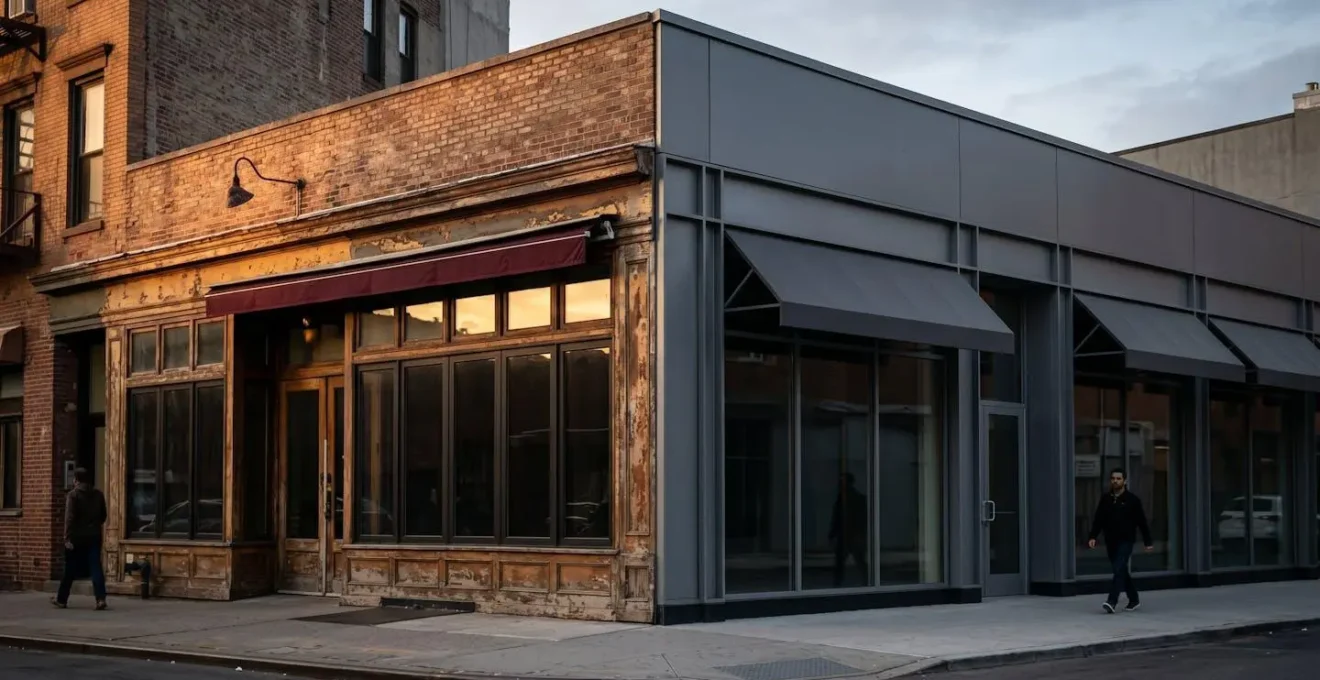
These signs aren’t a judgment on a neighborhood’s evolution, but rather a practical tool for you. They help you make an informed decision and avoid the heartbreak of being priced out of a community you’ve just begun to call home.
When to Choose the Bronx Over Brooklyn for Authentic Community Vibes
The word “authentic” is perhaps the most overused—and misunderstood—term in the search for a New York City neighborhood. For decades, Brooklyn has been marketed as the epicenter of authentic, creative, and community-oriented living. However, this very popularity has fundamentally altered the character of many of its most famous neighborhoods. As a relocation consultant, I often advise clients to question what they truly mean by “authentic.”
Often, what people are seeking is a sense of stability, neighborly connection, and a community not defined by transient trends. In this context, parts of Brooklyn can be a moving target. As Wikipedia contributors note in their analysis of gentrification in the city, the process in Brooklyn is extensive and has been ongoing for over two decades.
Brooklyn experiences or has experienced extensive gentrification for over 20+ years. The gentrification of Brooklyn includes, but is not limited to, the neighborhoods of Williamsburg, Bushwick, Sunset Park, Park Slope, Crown Heights, Fort Greene, and Flatbush.
– Wikipedia contributors, Gentrification in New York City
This long-term shift means that the “authentic Brooklyn” many people are searching for may now be more of a historical concept than a present-day reality in its most popular areas. This is where the Bronx enters the conversation. While it battles its own outdated stereotypes, many Bronx neighborhoods like Riverdale, City Island, or Woodlawn offer a deep-rooted, multi-generational community fabric that has remained stable for decades. Here, “community” isn’t a curated aesthetic but a lived reality of block parties, long-standing local businesses, and families who have known each other for years. Choosing the Bronx over a trendy Brooklyn neighborhood can be the right move when your priority is not performative authenticity, but genuine community cohesion.
Commute from Jersey or Rent in City: Which Saves More After 5 Years?
The financial trade-off between living in an outer borough versus commuting from New Jersey is one of the most complex calculations a potential New Yorker can make. At first glance, the lower rents in towns like Jersey City or Hoboken seem like a clear win. However, a true cost-benefit analysis must extend beyond the monthly rent check to include taxes, transportation, and the intangible but very real cost of time and spontaneity over a multi-year horizon.
A pure rent comparison is misleading. While a suburban New Jersey apartment might save you over $1,000 a month, this savings is quickly eroded. You must factor in the cost of a car (payment, insurance, gas), a monthly NJ Transit pass, potential tolls, and the infamous “last train home” problem—a few missed trains resulting in expensive late-night Ubers can wipe out a significant portion of your savings. Furthermore, you must account for the tax differential, including NYC’s city income tax, which you avoid, versus New Jersey’s notoriously high property taxes if you choose to buy.
The most critical factor, however, is time. A two-hour round-trip commute from New Jersey consumes over 40 full days of your life over a five-year period. The central question of this trade-off calculus is: what is that time worth to you? Is the extra space and lower rent worth sacrificing the spontaneity of staying out late in the city or the simple joy of a short trip home? The following checklist provides a framework for running your own 5-year financial comparison.
Your 5-Year Financial Comparison Calculator: NJ Commute vs. NYC Rental
- Calculate base housing differential: Compare the monthly rent for your desired apartment size in a target NYC neighborhood versus a comparable NJ suburb to find your initial monthly savings.
- Add NJ-specific costs: Tally up all transportation costs: car payment, insurance, NJ Transit pass, tolls, and a monthly budget for parking or occasional drives into the city.
- Account for tax differences: Research the specific NYC city income tax bracket for your salary and compare that cost to the average property and state income taxes in your target NJ town.
- Factor in spontaneity and time costs: Create a realistic monthly budget for “missed last train” Ubers and, more importantly, assign a personal value to the 10+ hours a week you’ll spend commuting.
- Project 5-year lifestyle inflation: Consider long-term costs. NJ homeowners face annual property tax hikes and maintenance, while many NYC renters have rent stabilization protections that cap annual increases.
Where to Find “Village” Vibes Inside Massive Boroughs Like Queens
Many people who move to NYC are secretly searching for a small town. They want the “village” feel: the walkable main street, the shopkeeper who knows their name, the sense of belonging to a tight-knit community. The good news is that these villages exist all over the city, often hidden in plain sight within the vastness of boroughs like Queens. The key is knowing what to look for, as these communities come in two distinct forms: the planned village and the organic village.
Case Study: Forest Hills Gardens vs. Ridgewood—Two Village Models in Queens
Queens offers perfect examples of both village types. Forest Hills Gardens represents the planned model, with its Tudor-style architecture, meticulously maintained green spaces, and a central square designed to foster community interaction. It feels like a village because it was built to be one. In contrast, Ridgewood exemplifies an organic village. Its character grew over decades through cultural layering, centered around multi-ethnic main streets like Myrtle Avenue. Here, community is forged by the dense network of independent, family-owned businesses and annual neighborhood traditions. Both neighborhoods, however, pass the ultimate “shopkeeper recognition test”: walk into a local bakery or hardware store, and the staff knows their customers by name. This is the intangible, yet most crucial, indicator of true neighborhood cohesion.
Finding your village requires you to define your hyper-local radius. Your community isn’t the entire borough; it’s the four-to-six block area around your home. When exploring a potential neighborhood, don’t just look at the apartment. Walk the surrounding streets. Are there independent coffee shops, bookstores, and bakeries? Are there parks or squares where people congregate? Do you see the same faces as you walk around?
This is the essence of finding a small town in the big city. It’s about discovering a pocket where the scale of life is human, where chance encounters are frequent, and where you can build a network of familiar faces. These villages provide a sanctuary from the city’s anonymity, offering the best of both worlds: the intimacy of a small town with the endless opportunities of a global metropolis at your doorstep.
Key Takeaways
- Your ideal NYC home is found through a personal lifestyle audit, not by matching a borough’s stereotype.
- Quantifiable metrics like commute quality, noise levels, and school data are more important than a vague “neighborhood vibe.”
- In a city this large, a sense of community is not something you find, but something you must proactively build within your hyper-local area.
How to Raise a Family in New York While Maintaining a Small-Town Community Feel?
For parents, the greatest challenge of raising a family in NYC isn’t the logistics of small apartments or subway stairs; it’s the fear of isolation. How do you replicate the built-in support system of a small town in a city of millions? The answer is that you don’t find community; you actively and intentionally build your chosen family. This requires a strategic approach to creating connections within your hyper-local radius.
The foundation of this strategy is the concept of the “Third Place”—the social environments separate from home (first place) and work (second place). For families, these are the playgrounds, libraries, and local cafes where community is forged. By establishing a consistent, ritualized presence in these spaces, you move from being an anonymous face to a familiar neighbor. Showing up for the same library story time every week or visiting the same playground every Saturday morning is how recognition builds into friendship.

Building this network requires a conscious effort to convert casual encounters into structured support. Here are some practical steps:
- Define Your 4-Block Radius: Treat your immediate neighborhood as your primary community zone. Get to know every park, shop, and family-friendly space within it.
- Join Digital-to-Real-Life Networks: Use hyper-local Facebook parent groups or building WhatsApp chats to make initial connections, but always with the goal of scheduling an in-person playground meetup or coffee within two weeks.
- Create Mutual Aid Systems: Don’t wait for a crisis to find support. Proactively initiate a babysitting co-op with 3-4 other families, organize a meal train for a neighbor with a newborn, or establish a school pickup backup plan. These structured agreements are the modern equivalent of the small-town neighbor network.
By applying these strategies, you create a dense web of social support that provides the same sense of security and belonging as a small town, but with the rich diversity and opportunity that only New York City can offer.
By approaching your relocation not as a search for the “perfect” borough but as a personal lifestyle audit, you empower yourself to make a choice that is resilient, fulfilling, and truly your own. Start today by outlining what matters most to you and use this framework to find the corner of New York City you can happily call home.