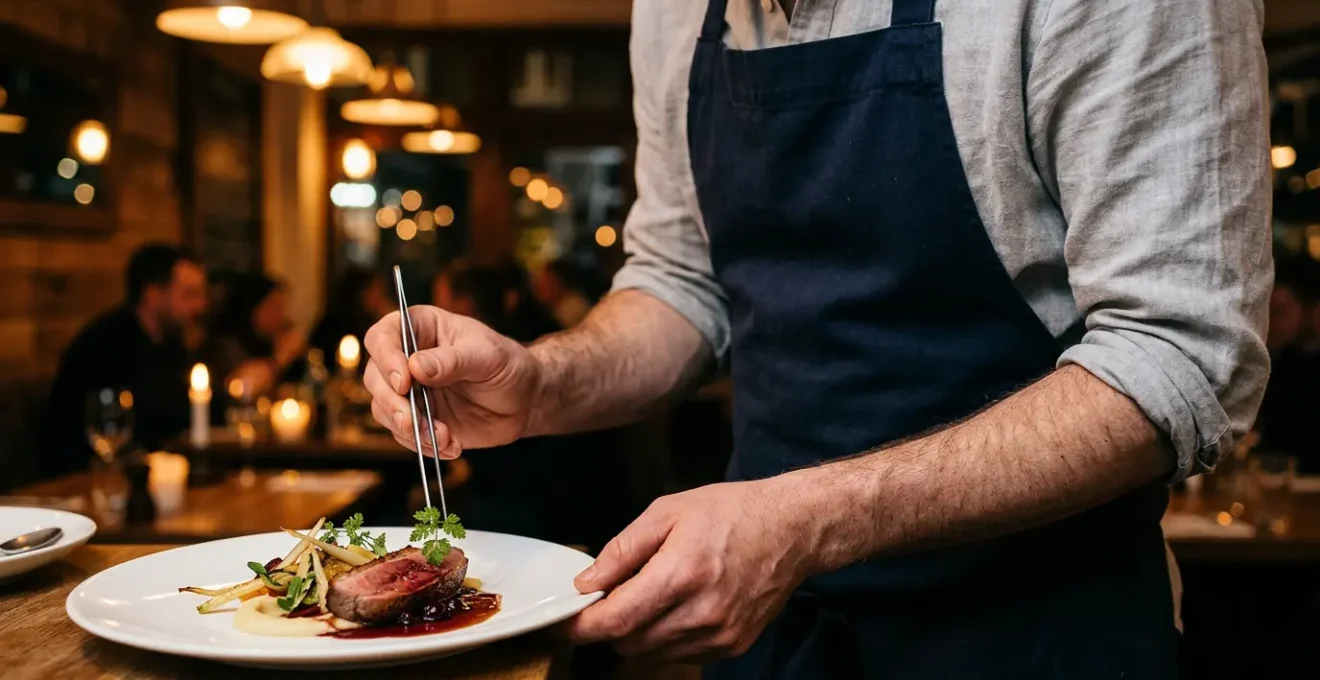
The most memorable NYC meals aren’t about luck or patience; they’re about strategy.
- Focus on insider tactics like leveraging same-day cancellations, ordering off-menu classics, and using the bar for walk-ins.
- Prioritize culinary substance—seasonal ingredients, chef lineage, and house-made specialties—over fleeting social media trends.
Recommendation: Stop chasing reservations and start dining like an insider by looking for culinary heritage and strategic opportunities.
The blinking “Notify” button on Resy feels like a taunt. The endless scroll through TikTok reveals dishes so outrageously constructed they seem engineered in a lab, not a kitchen. For anyone who genuinely loves food, navigating New York City’s dining scene can feel like a game rigged in favor of hype. The common advice—book months in advance, be endlessly flexible, follow the viral crowds—is tiresome and often leads to disappointment. It assumes the goal is simply to get in, not to have a genuinely remarkable experience.
But what if the wait itself is a flawed metric? What if the true currency isn’t patience, but insight? The most coveted tables and dishes aren’t always locked behind a three-month wall. They are often accessible to those who understand the city’s culinary rhythms, who can distinguish between fleeting fads and enduring quality, and who know the unwritten rules of the game. It’s about prioritizing culinary integrity over Instagrammability.
This guide isn’t another list of impossible-to-get reservations. It’s a playbook. We will deconstruct five types of gastronomic experiences that deliver true culinary value and, more importantly, the specific tactics to access them. It’s time to stop waiting and start dining strategically.
Here is a breakdown of the strategies we will cover, providing a roadmap for navigating New York’s complex and rewarding culinary landscape.
Summary: Decoding NYC’s Most Coveted Dining Experiences
- The “Notify” Button Strategy: How to Snag Tables at 4 PM
- The Secret Burger: How to Order Items Not Listed on the Menu
- Why You Should Skip the “Instagrammable” Milkshake for Real Gelato
- The Bar Seat Advantage: Eating at Top Restaurants Without a Reservation
- Soft Shell Crab Season: The 3 Weeks You Cannot Miss
- Who is Cooking Your Food? The Importance of Chef Lineage
- The 5 Dishes You Must Try Before You Get Full (and What to Skip)
- Authentic vs. Fusion: Which New York Restaurants Actually Honor Traditional Recipes?
The “Notify” Button Strategy: How to Snag Tables at 4 PM
Relying on the “Notify” feature can feel like playing the lottery. But the strategy isn’t about hope; it’s about timing and understanding the data. The dirty secret of NYC dining is that plans are fluid, and cancellations are constant. The game isn’t won months in advance; it’s won in the hours leading up to dinner service. The key is to shift your mindset from long-term planning to opportunistic, same-day execution.
The proof is in the numbers. While it may seem like everyone books weeks ahead, recent industry data reveals a different story. In fact, a staggering 45% of reservations were made for the same day in the third quarter of 2024. This confirms that a significant portion of a restaurant’s inventory opens up on the day of service. People’s plans change, meetings run late, and babysitters cancel. This creates a predictable churn of availability.
Your new prime time is not midnight three months from now, but 4 PM today. This is the golden hour when front-of-house managers are confirming reservations and processing the day’s cancellations. Setting an alert is passive. Actively checking the app between 3:30 PM and 5:00 PM is a deliberate strategy. This is when the tables of the less committed become available to the more strategic diner. Forget the long game; the most rewarding tables are often won in a last-minute sprint.
The Secret Burger: How to Order Items Not Listed on the Menu
In a city obsessed with the new, one of the greatest indicators of a restaurant’s quality is an “unlisted experience”—a dish so ingrained in its identity that it doesn’t need to be on the menu. These off-menu items are not cheap marketing gimmicks; they are artifacts of a restaurant’s culture, reserved for those who have done their homework. They are a secret handshake between the kitchen and the informed diner, a testament to recipes that have earned their place through word-of-mouth reverence, not viral marketing.
These dishes are a signal of confidence. A kitchen that can execute a complex, unlisted dish on demand is a kitchen that is disciplined, well-stocked, and staffed by professionals. It separates the true culinary institutions from the trend-chasers. Asking for one isn’t just about getting a great meal; it’s about showing respect for the restaurant’s heritage.
Case Study: Elio’s Legendary Off-Menu Chicken Parm
On the Upper East Side, Elio’s is a classic Italian-American institution. While the printed menu is full of mainstays, insiders know to ask for the chicken parm. As reported by those in the know, this legendary off-menu dish is a favorite of celebrities and long-time regulars. The owner has stated it will never be officially listed because it’s not a “traditionally classic Italian dish,” but the kitchen has perfected its preparation. Ordering it signals you’re not just a tourist, but someone who understands the restaurant’s deeper story.
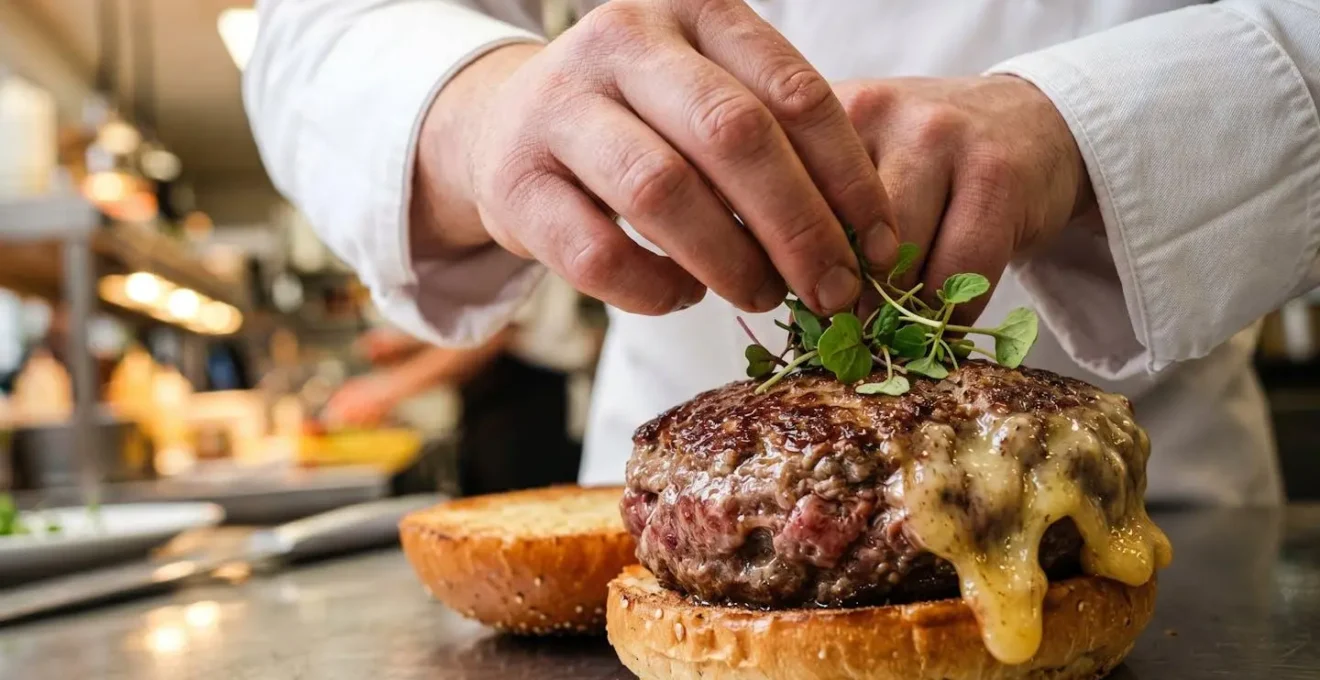
This image captures the essence of the unlisted experience: craftsmanship over advertisement. The focus is on the quality of the ingredients and the skill of the chef, not on a flashy presentation for social media. When you successfully order an off-menu item, you are tapping into this hidden world of culinary integrity, enjoying a dish that has been perfected for a discerning few, not mass-marketed to the many.
Why You Should Skip the “Instagrammable” Milkshake for Real Gelato
The rise of social media has created a category of food that is designed to be photographed, not eaten. These “Instagrammable” creations—towering milkshakes adorned with whole slices of cake, rainbow-colored bagels, and cheese pulls stretched to absurdity—are exercises in visual excess. They prioritize novelty and spectacle over flavor, texture, and balance. A discerning diner must learn to recognize these items for what they are: marketing assets, not culinary achievements.
The pressure for restaurants to participate in this trend is immense; after all, 50% of diners claim social media influences their restaurant choices. This statistic reveals a landscape where many establishments are catering to the camera first and the customer second. The thinking behind this is often purely transactional, a way to generate free advertising.
This business-first mindset is perfectly encapsulated by industry analysis that advises restaurants on leveraging online buzz. As one report on food trends noted:
Keeping up with Instagram food trends in 2024 gives you the opportunity to discover new profitable items to add to your restaurant menu. As you are just jumping on a dish people are already raving about, half of the advertising job is already done for you.
– Industry analysis by Gloria Food, Instagram Food Trends Report 2025
This quote exposes the cynical calculation. The goal is profit and easy marketing, not culinary excellence. The truly great restaurants operate on an opposite principle. They would rather perfect a classic, like a scoop of intensely flavored, small-batch gelato made with exceptional pistachios, than construct a photogenic monstrosity. The former demonstrates culinary integrity; the latter, marketing savvy. A knowing diner always chooses integrity.
The Bar Seat Advantage: Eating at Top Restaurants Without a Reservation
For many of New York’s most sought-after restaurants, the dining room is booked months in advance, but the bar is a different ecosystem entirely. It’s a space governed by different rules, offering a powerful advantage to the spontaneous and strategic diner. Viewing the bar as a consolation prize is a rookie mistake. For the insider, it is often the best seat in the house: no reservation required, direct access to the full menu, and a front-row seat to the energy of the establishment.
Many top-tier restaurants intentionally hold their bar seats for walk-ins. This practice serves two purposes: it maintains a lively, accessible atmosphere and rewards knowledgeable locals who understand the restaurant’s flow. It transforms the act of getting a table from a long-term planning hassle into a short-term tactical challenge. Success requires only timing and a willingness to forego the formality of a dining room table.
Case Study: The Walk-In Strategy at The Four Horsemen
At The Four Horsemen, a Michelin-starred Williamsburg hotspot known for its natural wines and inventive plates, reservations are notoriously difficult to secure. However, as documented by reservation experts, the bar is held exclusively for walk-ins. The key is timing. By arriving around 5 p.m. on a weekday for a 5:30 p.m. opening, a small party can often secure seats. These are not inferior seats; they offer access to the complete menu of house-made breads, pastas, and sausages, making it a premier dining experience without the three-month wait.
The bar seat advantage is about trading the pretense of a reservation for the immediacy of the experience. You gain a direct line of communication with the bartender, who is often one of the most knowledgeable staff members about the menu and beverage pairings. It is an active, engaged way of dining that puts you at the center of the action, not sequestered at a quiet table in the back. It is, in short, a power move.
Soft Shell Crab Season: The 3 Weeks You Cannot Miss
In a world of globally sourced ingredients and year-round availability, true seasonality is the ultimate luxury. It is a powerful signal that a chef prioritizes flavor and quality over convenience. No event on the culinary calendar illustrates this better than the fleeting, glorious window of soft shell crab season. For roughly three to four weeks, typically beginning in May, these creatures are the undisputed kings of any menu they grace, and any restaurant that properly features them is a restaurant worth your attention.
The appeal is in their ephemeral nature. Unlike farmed salmon or frozen shrimp, soft shell crabs cannot be faked or stockpiled. They must be harvested precisely when they have molted their hard shells, making them entirely edible—crispy, sweet, and briny. A chef who builds a special around them is demonstrating a commitment to the rhythm of the seasons and a connection to their purveyors. They are actively choosing a product that is difficult to source and has a short shelf life because the payoff in flavor is immense.
When you see soft shell crab on a menu, it should be an immediate order. Don’t ask if it’s “worth it.” Its very presence is a stamp of approval on the entire establishment. Whether fried in a light tempura, sautéed with butter and capers, or tucked into a sandwich, the dish is a celebration of a moment. It’s an experience that cannot be replicated in August or December. This is the antithesis of the “Instagrammable” milkshake; it is a dish whose value is rooted in its fleeting, natural perfection.
Who is Cooking Your Food? The Importance of Chef Lineage
In today’s chef-as-celebrity culture, a chef’s social media following is often mistaken for a measure of their talent. This is a fundamental miscalculation. A far more reliable predictor of quality is a chef’s lineage: the kitchens they trained in, the mentors they learned from, and the culinary philosophy they inherited. A great chef is not an island; they are a link in a chain of knowledge passed down through generations of discipline and repetition. Understanding this “culinary family tree” is a powerful tool for the discerning diner.
Think of it as a pedigree. A chef who spent years working the line at Per Se, Le Bernardin, or Gramercy Tavern has been immersed in a culture of excellence. They have absorbed standards of technique, sourcing, and consistency that cannot be learned from a cookbook or a YouTube video. This background doesn’t guarantee greatness, but it establishes a baseline of professionalism and skill that is exceptionally rare. It’s the difference between hype and heritage.
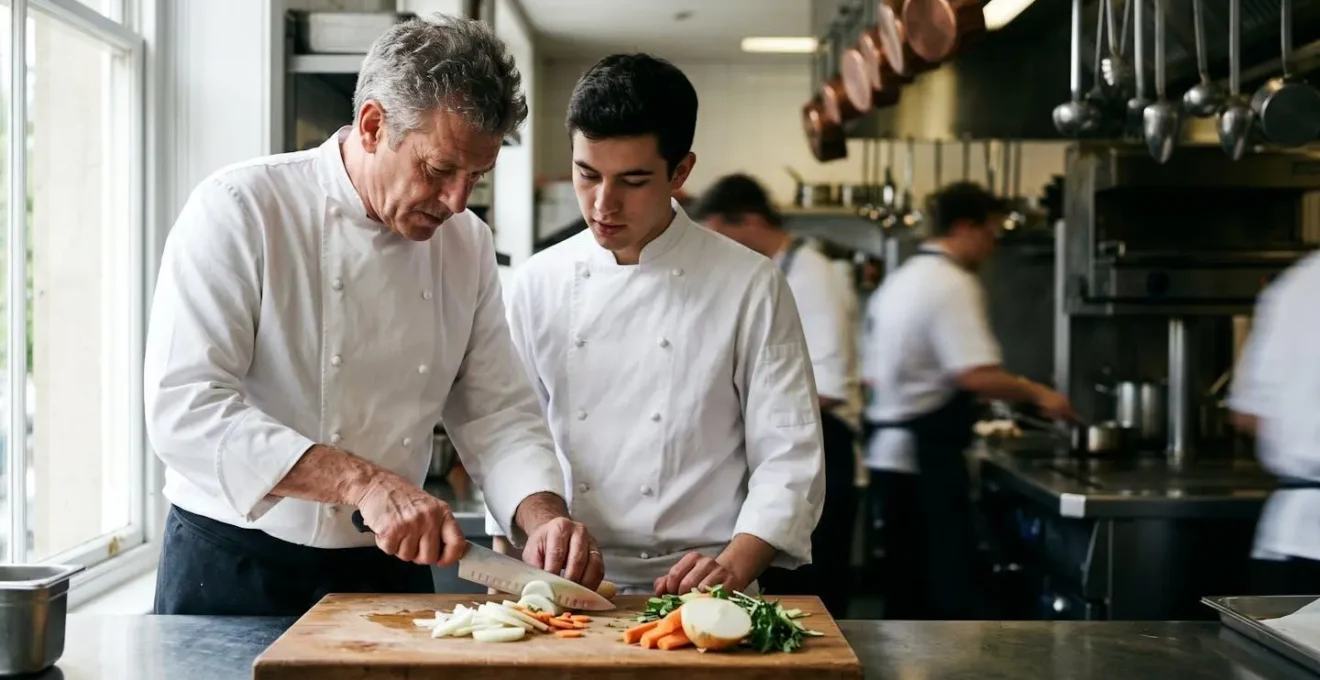
This image of mentorship is the heart of the matter. It represents the quiet, often grueling process of skill transfer that defines the world’s best kitchens. Before a chef can innovate, they must master the fundamentals. When you’re vetting a new restaurant, look past the press release and the follower count. Investigate the head chef’s resume. Where did they learn their craft? Who did they cook for before they started cooking for you? The answer to that question is often more revealing than any review.
The 5 Dishes You Must Try Before You Get Full (and What to Skip)
A great restaurant menu is a curated document, but not every item on it is created equal. Some dishes represent the pinnacle of the chef’s vision, while others are essentially “filler”—safe, profitable, and ultimately forgettable. A strategic diner knows how to read between the lines, identifying the high-value items and avoiding the low-value “menu real estate” designed to occupy space and drive up the bill. The goal is to allocate your appetite and budget toward the dishes that offer the most unique and skill-intensive experience.
This requires a quick but critical analysis. Generic bread baskets (unless house-made and a noted specialty), simple green salads, and overpriced, low-effort items like a basic shrimp cocktail are often the first to be skipped. Instead, your focus should be on anything that signals high-skill labor or unique sourcing: house-made pastas, charcuterie cured in-house, complex sauces that take days to prepare, or dishes built around the hyper-seasonal ingredients we’ve discussed.
Navigating a menu this way is a skill. It’s about maximizing your experience by making informed choices, ensuring every bite contributes to your understanding of the chef’s point of view. To systematize this process, a clear framework can be invaluable.
Your Menu Deconstruction Checklist: A 5-Step Framework
- Identify ‘High-Value Tenants’: Prioritize dishes that are house-made, signature items, or require high-skill techniques (e.g., house-made pastas, chef’s specialties, seasonal ingredients).
- Avoid ‘Space Wasters’: Skip generic bread baskets, simple side salads, filler starches, and overpriced simple items that don’t showcase the chef’s skills.
- Structure Your Flavor Arc: Start with bright, acidic dishes to awaken the palate, progress to richer mains with complex flavors, and finish with a targeted dessert that showcases pastry skill.
- Apply the ‘One Bite Rule’: For shared plates, ensure every diner gets a perfect, representative portion of each dish without anyone stuck with less desirable parts.
- Spot the ‘Menu Decoy’: Identify overpriced, simple items (like a basic shrimp cocktail at a high markup) designed to make other dishes seem more reasonably priced, and then consciously skip them.
By applying this framework, you move from being a passive consumer to an active participant in your dining experience, ensuring you get the very best a kitchen has to offer.
Key takeaways
- Stop playing the long game; focus on same-day availability around 4 PM when cancellations are processed.
- Prioritize substance over style. A chef’s lineage, use of seasonal ingredients, and perfected off-menu classics are better indicators of quality than viral trends.
- Dine strategically. Use the bar for walk-ins, deconstruct the menu to identify high-value dishes, and recognize the difference between culinary integrity and marketing hype.
Authentic vs. Fusion: Which New York Restaurants Actually Honor Traditional Recipes?
In a city as diverse as New York, the line between “authentic” and “fusion” can become hopelessly blurred. Fusion isn’t inherently bad—some of the city’s most exciting dishes are born from cultural cross-pollination. However, the term is often used as a crutch to justify lazy, muddled cooking that respects no single tradition. The truly exceptional restaurants, whether they are innovating or preserving, are built on a deep foundation of respect for their source material. Honoring traditional recipes with precision and high-quality ingredients is often a more radical act than creating a gimmicky fusion dish.
With 67 Michelin-starred restaurants in NYC as of 2025, the spectrum of quality is immense. Amid this sea of accolades, the restaurants that generate the most passionate, enduring loyalty are often those that provide a clear, undiluted taste of a specific place. They are not trying to be everything to everyone. They are a confident, unapologetic expression of a specific culinary heritage. This commitment to authenticity, far from being boring or retrograde, can be the most thrilling experience of all.
Case Study: Semma’s Unapologetic Authenticity
Semma quickly became one of the city’s toughest reservations not by inventing a new hybrid cuisine, but by drilling down into one with fierce specificity. Focusing on the rural traditions of South India, the restaurant offers bold, unapologetically authentic flavors that were previously underrepresented in the city’s fine-dining scene. Its success proves that a meticulous, high-quality execution of traditional recipes can be more exciting and buzzworthy than any fusion concept, demonstrating the immense power of culinary heritage.
The choice is not simply between authentic or fusion, but between clarity and confusion. A restaurant with a clear point of view, rooted in a tradition it understands intimately, will always deliver a more coherent and satisfying experience than one that throws disparate ingredients together in the hope of creating a trend. Look for the restaurants that are proud of their heritage. They are the ones with stories to tell and flavors you won’t forget.