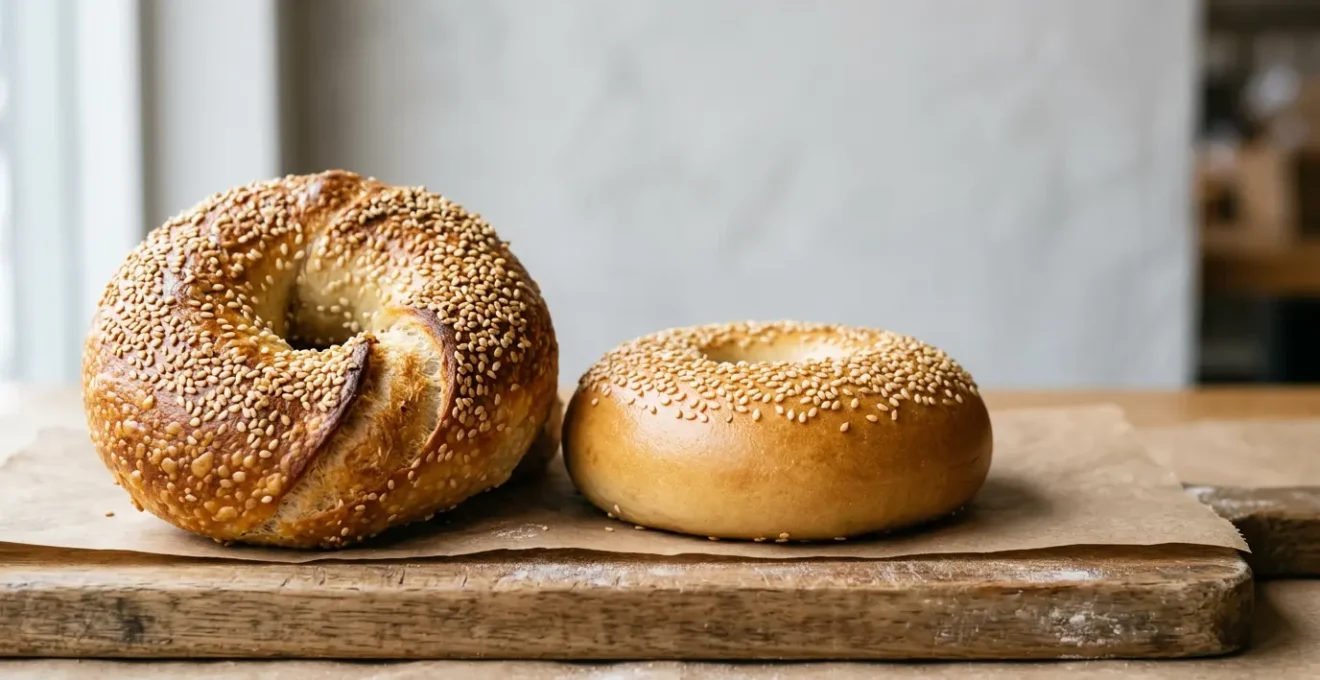
The legendary NYC bagel isn’t about ‘magic water’; it’s about non-negotiable process integrity that machines can’t replicate.
- Low-mineral water and the physical act of hand-rolling create a superior gluten structure for that signature, resilient chew.
- Long, cold fermentation is the secret to complex flavor development, a critical step often skipped in mass production for the sake of speed.
Recommendation: Taste with intent. Look for the signs of a true hand-rolled bagel and never, ever toast a fresh one to experience the craft as the baker intended.
There’s a universal moment of disappointment for any bagel lover: biting into a puffy, flavorless imposter that more closely resembles a round piece of bread than the dense, chewy icon it’s supposed to be. We’ve all been there. You hear the whispers and the legends—”it has to be the New York water,” or “you can’t get a good bagel outside the five boroughs.” These are the platitudes, the easy answers that touch on the truth but miss the point entirely. They treat the bagel as a myth, an accident of geography.
As a baker who lives by the clock of fermentation and the feel of dough, I’m here to tell you it’s not magic. It’s craft. The profound difference you taste between a genuine, hand-rolled bagel and a soulless, machine-made “circle of bread” is the result of chemistry, technique, and time. It’s a chain of deliberate, uncompromising choices where every link matters. A machine can shape dough, but it cannot replicate the structural integrity and flavor complexity born from a process honed over generations.
This guide isn’t about myths; it’s about the science and soul of the bagel. We’re going to deconstruct the chemistry of the crust, teach you how to spot a machine-made fake on sight, and settle the great “to toast or not to toast” debate once and for all. We’ll explore the art of pairing and even dissect the economics that make a true bagel a worthy, and sometimes costly, indulgence. This is the baker’s perspective on why you can, and should, taste the difference.
This article breaks down the essential elements that separate a true artisanal bagel from a mere imitation. Below is a summary of the key areas we will explore to help you become a more discerning bagel enthusiast.
Summary: The Anatomy of a Perfect NYC Bagel
- Is It Really the Tap Water? The Chemistry of the NYC Crust
- The “Circle of Bread” Test: How to Identify a Machine Bagel on Sight
- To Toast or Not to Toast: Why Fresh Bagels Should Never See a Toaster
- Beyond Cream Cheese: The Best Salted Cured Meats for Everything Bagels
- The 7 AM Batch: Why the Best Bagels Disappear Before 9 AM
- The 3 PM Crash: Why a Bagel Is the Wrong Snack for Afternoon Energy
- Why Your $5 Omelet Now Costs $18 (It’s Not Just Greed)
- Beyond Plain: Which Cream Cheese Flavors Actually Complement a Sesame Bagel?
Is It Really the Tap Water? The Chemistry of the NYC Crust
Let’s address the biggest legend head-on: the water. While it’s not magical, it is scientifically significant. The water in New York City is famously “soft,” meaning it has a low concentration of minerals like calcium and magnesium. This is crucial for bagel dough. Hard water, rich in minerals, tightens the gluten network, making the dough tough and difficult to work with. NYC’s soft water allows the gluten to become more extensible and elastic, which is the foundation for that sought-after chewy texture. In fact, some data shows that NYC’s water has a significantly lower mineral content than the national average.
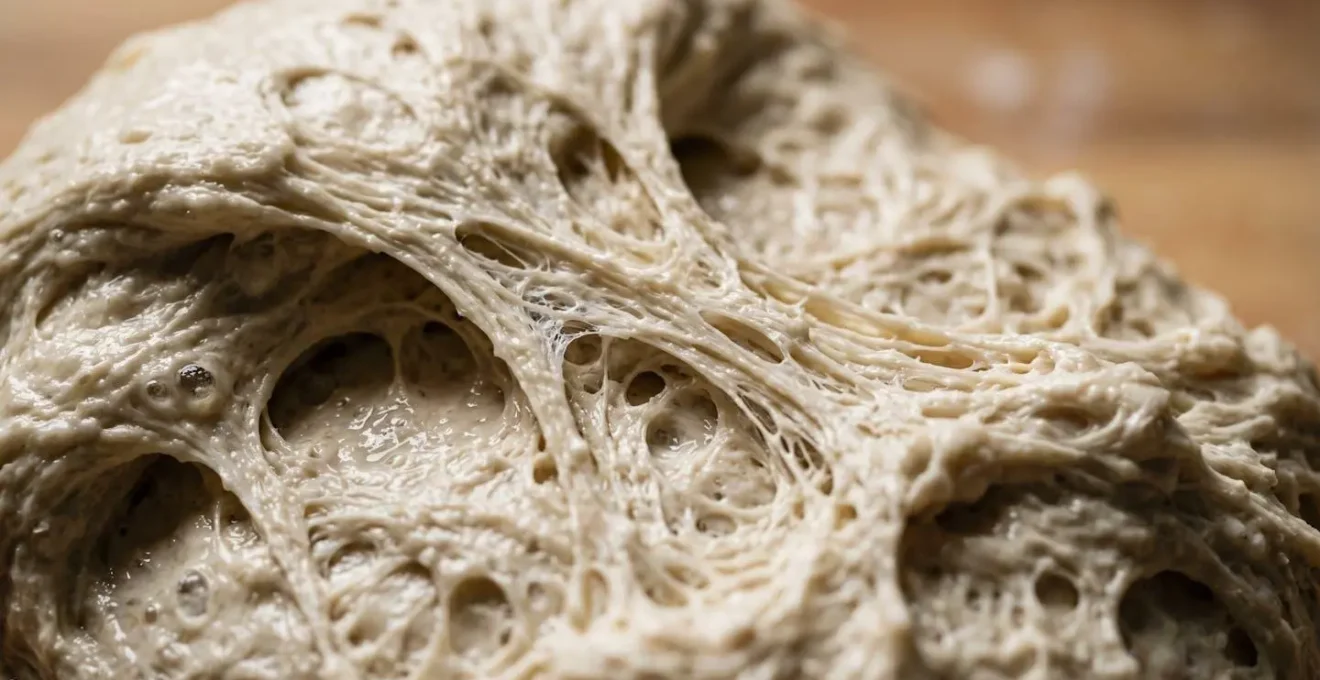
As this detailed view of dough shows, a strong and pliable gluten structure is everything. It’s the scaffolding that holds the bagel together. Beyond minerals, there’s the pH level. As one analysis notes, the water’s character plays a direct role in the final product. The slightly acidic nature of NYC’s water helps to strengthen that gluten even further, contributing to a brighter, more distinct flavor in the crust.
NYC water is generally slightly acidic, which can further enhance gluten development and contribute to a brighter, more flavorful crust.
– EatingChoice Food Science Analysis, Why are NYC Bagels Different? A Deep Dive into the City’s Beloved Bread
So, is it the water? Yes, but not in a mystical way. It’s a key chemical ingredient that creates the ideal environment for perfect dough. A baker outside of NYC can try to replicate it with water treatment systems, but it’s an extra step that mass-producers often ignore, proving that process integrity starts with the very first ingredient.
The “Circle of Bread” Test: How to Identify a Machine Bagel on Sight
Once you know what to look for, a machine-made bagel screams its identity from across the counter. The biggest giveaway is uniformity. A machine is built for perfect replication; every bagel looks identical to the last. A hand-roller, no matter how skilled, imparts slight variations. Our hands are not machines, and that’s the point. The gentle, imperfect shaping creates a superior gluten structure, leading to a light, airy, and chewy interior. A machine, by contrast, compresses and tears the dough.
It is said that bagels made by hand create a stronger gluten structure, which leads to a light and chewy interior, rather than machined bagels, which result in a dense, cake-like texture.
– Priya Krishna, NYT Cooking, Bagel Rollers: The Masters Behind NYC’s Iconic Delicacy
A machine-formed bagel often feels dense and heavy, more like cake than bread. When you squeeze it, it doesn’t spring back with resilience; it compresses sullenly. The surface is another clue. A true bagel, having undergone a long, cold fermentation and a proper boil, will have small, irregular blisters on its crust. This is a mark of a slow, careful process. A machine-made bagel, rushed through production, often has a smooth, pale, and lifeless surface. To truly become an expert, you need a field guide.
Your Field Guide: How to Spot a True Hand-Rolled Bagel
- Seam Examination: Look for the “belly button”—a slight swirl or pucker on the bottom where the dough was joined by hand. A machine leaves a perfectly straight, almost invisible seam.
- Blister Test: Check the surface for small, irregular blisters. Their presence indicates a proper long, cold fermentation and a boil, signs of craft often absent in rushed machine bagels.
- Uniformity Red Flag: Compare several bagels from the same bin. If they are all identical in shape and size, it’s a huge red flag for machine production. Artisan bagels always show natural, beautiful variation.
- The Squeeze Test: Gently compress the bagel. A hand-rolled bagel should have a resilient, airy give and spring back. A machine-made one feels dense and bready, with far less bounce.
To Toast or Not to Toast: Why Fresh Bagels Should Never See a Toaster
This is where the purist in me comes out, but it’s backed by science. Asking a baker to toast a bagel that came out of the oven an hour ago is like asking a chef to microwave a perfectly cooked steak. You are actively destroying the very texture we worked so hard to create. A fresh bagel has a crisp, crackly crust and a warm, soft, and chewy interior. This textural contrast is the hallmark of a great bagel. A toaster obliterates it, rendering the entire thing one-dimensionally crunchy and dry.
The enemy here is a process called starch retrogradation. This is the scientific term for what we call “going stale.” As bread cools, the starch molecules crystallize and push water out, causing the bread to become hard and dry. A toaster temporarily reverses this by reheating the bagel, but it’s a brute-force method. It drives out even more moisture, fundamentally altering the crumb. For a day-old bagel? Fine. Toasting can revive it. For a fresh bagel? It’s a crime against craft.
As food scientists explain, reheating is a way to fight back against the inevitable staling process. A detailed article from The Kitchn confirms that starch retrogradation can be temporarily reversed by applying heat, which causes the starch molecules to reabsorb some moisture. But on a fresh bagel, you’re not reversing anything; you are accelerating the eventual decline by cooking it a second time. The perfect bagel is a fleeting experience, meant to be enjoyed within a few hours of its birth. Respect the craft. Embrace the freshness.
Beyond Cream Cheese: The Best Salted Cured Meats for Everything Bagels
While a simple schmear of cream cheese is classic, the “everything” bagel, with its bold symphony of sesame, poppy, garlic, onion, and salt, is a robust canvas built for more substantial partners. Its assertive flavor profile calls for pairings that can stand up to it, complement it, or provide a pleasing contrast. The world of salted, cured meats offers a perfect playground for this.
The key is to think like a chef, considering flavor harmony and texture. You don’t want to muddle the flavors; you want to elevate them. The smoky, peppery fat of pastrami, the briny punch of corned beef, or the delicate, oceanic saltiness of lox each interact with the everything spice blend in a unique way. The goal is a balanced bite where the meat, the bagel, and any additional condiments work in concert. A thoughtful pairing moves beyond a simple sandwich and becomes a composed dish.
To truly master this, it helps to have a framework. The following chart breaks down how different cured meats interact with an everything bagel, offering suggestions for cheese and acidic counterpoints to create a perfect balance of flavors and textures, as highlighted by a comprehensive guide to bagel artistry.
| Cured Meat | Flavor Profile | Recommended Cheese | Acidic Counterpoint | Texture Harmony |
|---|---|---|---|---|
| Pastrami (hand-sliced) | Smoky, fatty, peppery | Swiss, Muenster | Sauerkraut, pickled red onion | Tender with moisture retention |
| Corned Beef (thick-cut) | Salty, briny, robust | Swiss, sharp cheddar | Whole grain mustard, pickles | Dense yet yielding |
| Smoked Salmon (Lox) | Delicate, buttery, oceanic | Cream cheese, goat cheese | Capers, thinly sliced red onion | Silky, melts on contact |
| Smoked Turkey | Mild, subtly sweet | Havarti, provolone | Honey mustard, cucumber | Lean with clean bite |
The 7 AM Batch: Why the Best Bagels Disappear Before 9 AM
In a real bagel shop, not all batches are created equal. The first batch of the day, the one hitting the racks around 6 or 7 AM, is unequivocally the best. This isn’t opinion; it’s the result of a long, patient process that culminates in that first morning bake. The secret is long, cold fermentation, a step known in the baking world as “retarding.”
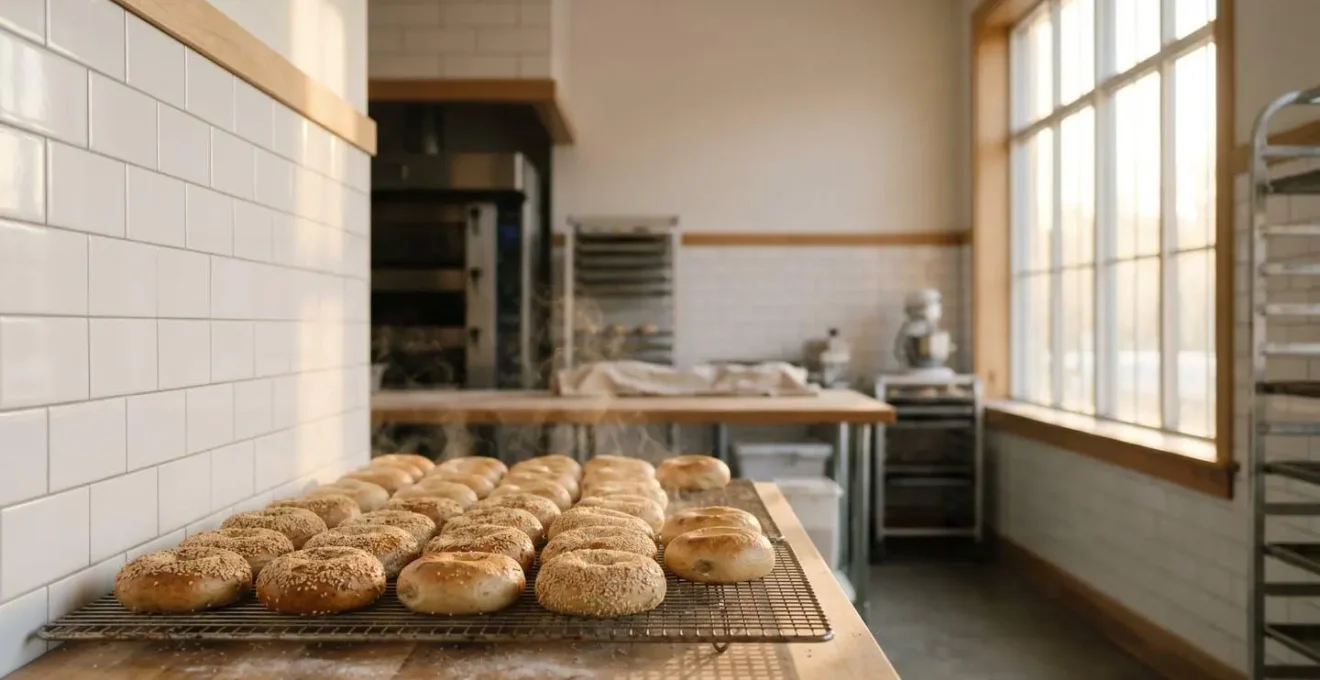
The dough for that 7 AM bagel was likely made 24, or even 48, hours prior. After being mixed and shaped, the bagels are placed in a refrigerator to ferment slowly. This cold environment slows down the yeast’s production of carbon dioxide (which makes bread rise) but allows it to develop complex amino acids and organic compounds. This is where the deep, slightly tangy, and nuanced flavor of a great bagel comes from. It’s a flavor that cannot be faked or rushed. After this long rest, the bagels are boiled in hot water, which sets the crust and gives them their signature shine, before being baked in a scorching hot oven.
The 24-Hour Bagel Production Cycle
Traditional bagel production begins 24-48 hours before the first morning batch hits the display. Dough is mixed, then undergoes retarding (cold storage at refrigeration temperatures) for 24 to 48 hours. This extended cold fermentation allows yeast to develop complex flavor compounds. The 7 AM batch represents bagels shaped the previous day, retarded overnight, then boiled at 100°C for 1-2 minutes and baked at 200-232°C for 18-20 minutes. Subsequent batches made later in the day may use over-proofed dough or shortened fermentation to meet demand, subtly compromising texture and flavor complexity.
As the day goes on and demand rises, some shops may be forced to use dough that hasn’t fermented as long. These later batches might still be good, but they will lack the profound depth of flavor and perfect texture of that first batch. For the true enthusiast, the early bird really does get the best bagel.
The 3 PM Crash: Why a Bagel Is the Wrong Snack for Afternoon Energy
We’ve established the bagel’s glory, but it’s essential to understand its role. A bagel is a powerhouse of quickly digestible carbohydrates. While perfect for starting a busy morning, it can be a disastrous choice for a mid-afternoon snack when you’re looking for sustained energy. The reason lies in its high glycemic index (GI). The glycemic index measures how quickly a food raises your blood sugar levels.
Most traditional white-flour bagels have a high GI, often around 72. According to a nutritional analysis of the glycemic index of a bagel, this puts it in the same category as white bread or sugary cereals. When you eat a high-GI food, your blood sugar spikes rapidly, giving you a quick burst of energy. However, this is followed by a dramatic “crash” as your body releases a surge of insulin to bring your blood sugar back down. This crash is what leads to that familiar 3 PM feeling of sluggishness, irritability, and brain fog—the exact opposite of what you wanted from your snack.
But this doesn’t mean you must forsake the afternoon bagel entirely. If you’re strategic, you can mitigate the blood sugar rollercoaster. The key is to add protein, fat, and fiber to slow down the absorption of the carbohydrates. Here’s a hacker’s guide to making an afternoon bagel work for you, not against you:
- Choose whole wheat or pumpernickel varieties with higher fiber content to slow glucose absorption.
- Scoop out a portion of the interior bread to reduce the total carbohydrate load.
- Load it with protein-rich toppings like eggs, smoked salmon, or whitefish salad to balance macronutrients.
- Add fiber and healthy fats through avocado, tomato, or cucumber to further moderate the glucose impact.
- Limit your portion to half a bagel instead of a whole one to cut the carbohydrate intake.
Key takeaways
- The difference is structural: The combination of hand-rolling and NYC’s soft water creates a superior gluten network for the signature chew.
- Time is the secret ingredient: Long, cold fermentation is a non-negotiable step for developing complex flavor, a process often skipped by machines.
- Respect the craft: A truly fresh, artisanal bagel should never be toasted, as the heat destroys the delicate textural contrast the baker worked to create.
Why Your $5 Omelet Now Costs $18 (It’s Not Just Greed)
The sticker shock is real. You see the price of a bagel with lox and cream cheese, or a full breakfast sandwich, and wonder how it could possibly cost that much. While inflation is a factor, the economics of a true, hand-rolled bagel shop operate on a different plane than a mass-market cafe. The price reflects the three pillars of craft production: premium ingredients, skilled labor, and prime real estate.
It starts with the flour. We use high-gluten flour, often over 14% protein, which is significantly more expensive than standard all-purpose flour. Then comes the labor. A machine can churn out thousands of “bagel-shaped objects” an hour with minimal oversight. A skilled bagel roller is a true artisan. The demand for their expertise is high, and the supply is low, making them some of the most valuable—and highest-paid—workers in the shop.
Bagel rollers aren’t paid a fair living wage: contrary to the belief that bagel rollers aren’t paid fairly, they can actually be among the highest-paid workers in a bagel shop. Given the high demand and few skilled professionals, bagel rollers have significant leverage. Some even earn a six-figure income.
– BagelFest Industry Analysis, Bagel Rollers: The Masters Behind NYC’s Iconic Delicacy
This less scalable, more labor-intensive model exists within the harsh reality of NYC commercial real estate costs. When you combine these factors, as a deep dive into the true cost economics of bagel production reveals, the price on the menu is not a sign of greed. It is a reflection of the fragile economic equilibrium required to keep an authentic, artisanal craft alive in one of the world’s most expensive cities. You are paying for a process, a tradition, and a skill—not just flour and water.
Beyond Plain: Which Cream Cheese Flavors Actually Complement a Sesame Bagel?
The sesame bagel is a study in elegant simplicity. Its flavor is nutty, toasty, and subtly rich. Unlike the “everything” bagel, it doesn’t shout; it hums. This makes the choice of cream cheese pairing even more critical. The goal is to complement or contrast its delicate flavor, not overwhelm it. Plain cream cheese is a perfect blank canvas, but other flavors can elevate the experience if chosen with intent.
The strategy breaks down into two main approaches: complement or contrast. A complementary flavor, like scallion cream cheese, harmonizes with the sesame’s savory notes. A contrasting flavor, like sun-dried tomato, provides an acidic or spicy counterpoint that makes the toasted character of the sesame pop. The biggest mistake is creating flavor redundancy or a direct clash. For this reason, some pairings should be avoided at all costs.
Here is a definitive guide to pairing cream cheese with a sesame bagel, based on sound flavor principles:
- Savory Complement: Scallion or vegetable cream cheese is the top choice. The gentle allium notes of scallion and the savory base of vegetable blends harmonize perfectly with sesame’s toasted, nutty profile.
- Sharp Contrast: For a brighter experience, sun-dried tomato or jalapeño cream cheese provides an acidic or spicy kick that cuts through the richness and elevates the sesame’s roasted character.
- Underrated Champion: Olive or pimento cream cheese offers a briny, salty dimension that beautifully enhances the sesame while adding a layer of Mediterranean complexity and textural interest.
- Lunch-Style Pairing: Lox spread or a high-quality whitefish salad are excellent. Their oceanic, umami depth finds a perfect partner in the sesame’s nutty backbone.
- Flavor Overlap to Avoid: Never, ever use everything bagel cream cheese on a sesame bagel. The redundant spice profiles create a muddy, confusing flavor.
- Sweet Spreads to Reject: Fruit-based cream cheeses like strawberry or blueberry clash fundamentally with sesame’s savory nature. The pairing is discordant and should be avoided entirely by any self-respecting enthusiast.
By applying these principles, you move from random selection to a curated flavor experience, treating the humble sesame bagel with the respect it deserves.
Now that you are armed with the knowledge to identify, appreciate, and properly enjoy a true artisanal bagel, the next step is to seek them out. Support the local bakers who uphold these traditions, and taste the difference that process integrity makes.