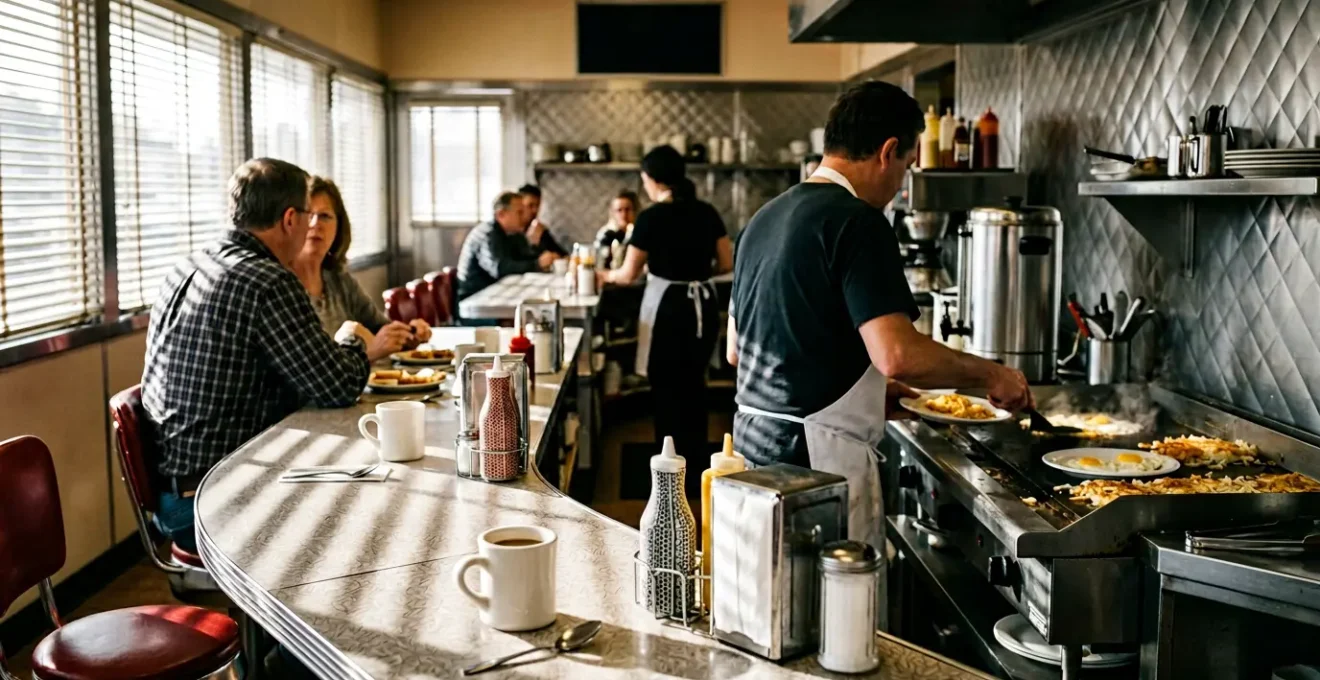
The classic NYC diner isn’t dead, but surviving on a budget requires a new strategy.
- Skyrocketing prices are driven by a perfect storm of food, labor, and real estate costs, not just greed.
- The secret to an affordable, quality meal lies in ordering high-turnover breakfast classics and avoiding complex or exotic menu items.
Recommendation: Master the art of timing and menu decoding. Visit during off-peak hours and stick to the griddle to find authentic spots that still offer a great meal for under $15.
There’s a specific kind of New York heartbreak that hits when you slide into a familiar red booth, scan the menu, and see it: the $18 omelet. It’s a quiet, laminated punch to the gut. You remember when it was $5, served with a gruff smile and a never-ending stream of coffee. That feeling of loss, the sense that another piece of the city’s soul has been sold off, is what this is all about. We’re told the usual stories—it’s high rent, it’s changing tastes, it’s the cost of ingredients. And while all that is true, it doesn’t capture the full picture of this “diner-flation.”
This isn’t another nostalgic lament or a simple list of the few diners left standing. This is a survival guide for the neighborhood loyalist, the local nostalgic for cheap eggs in a disappearing landscape. The key to finding a classic breakfast under $15 isn’t just about knowing *where* to go, but *how* to navigate the places that remain. It’s about understanding the new rules of the game. What if the real secret wasn’t chasing a dwindling number of old-school spots, but learning to decode the menu, the coffee pot, and the crowd at any diner you walk into?
This guide will equip you with that knowledge. We will dissect the economic pressures that turned your cheap breakfast into a luxury item, teach you the art of menu archaeology to find the safe and affordable bets, and reveal the strategies for avoiding the brunch crowds to reclaim the authentic diner morning. This is about protecting a culture, one cup of coffee and one plate of eggs at a time.
To help you navigate this changing landscape, this article breaks down the essential strategies for finding value and authenticity in New York City’s remaining diners. The following sections will guide you through everything from understanding the costs to mastering the social cues of the diner experience.
Summary: A Neighborhood Chronicler’s Guide to the Modern NYC Diner
- Why Your $5 Omelet Now Costs $18 (It’s Not Just Greed)
- The Encyclopedia Menu: What Is Safe to Order in a 10-Page Diner Menu?
- The Bottomless Cup: Determining When Diner Coffee Is Too Old to Drink
- The Last Greek Diners of Queens: A Survival Guide
- Saturday Morning vs. Sunday Brunch: Avoiding the Mimosas Crowd
- Where to Eat Lunch in Midtown Under $15 That Isn’t a Chain
- The $200,000 Permit: Why Your Hot Dog Costs $4
- How to Survive the Midtown Manhattan Commute Without Losing Your Sanity?
Why Your $5 Omelet Now Costs $18 (It’s Not Just Greed)
That feeling of sticker shock when you see the price of a simple two-egg breakfast is real, but it’s rarely a case of simple greed. The economic reality for New York City’s small-business owners is a relentless squeeze from all sides. According to the National Restaurant Association, in the last five years alone, food and labor costs for the average restaurant have each gone up by 35%. This isn’t just a vague trend; it’s a direct hit to the bottom line of every diner trying to keep its doors open.
The price you see on the menu is a reflection of a complex cost structure that the customer never sees. The quality of the ingredients—the fresh eggs, the marbled bacon, the crisp peppers—all come at a premium in today’s market. When you see a price jump, it’s often a desperate measure to keep up with wholesale food price increases that have far outpaced general inflation. In fact, full-service restaurant menu prices increased 31% between 2020 and 2025, a direct consequence of these pressures.
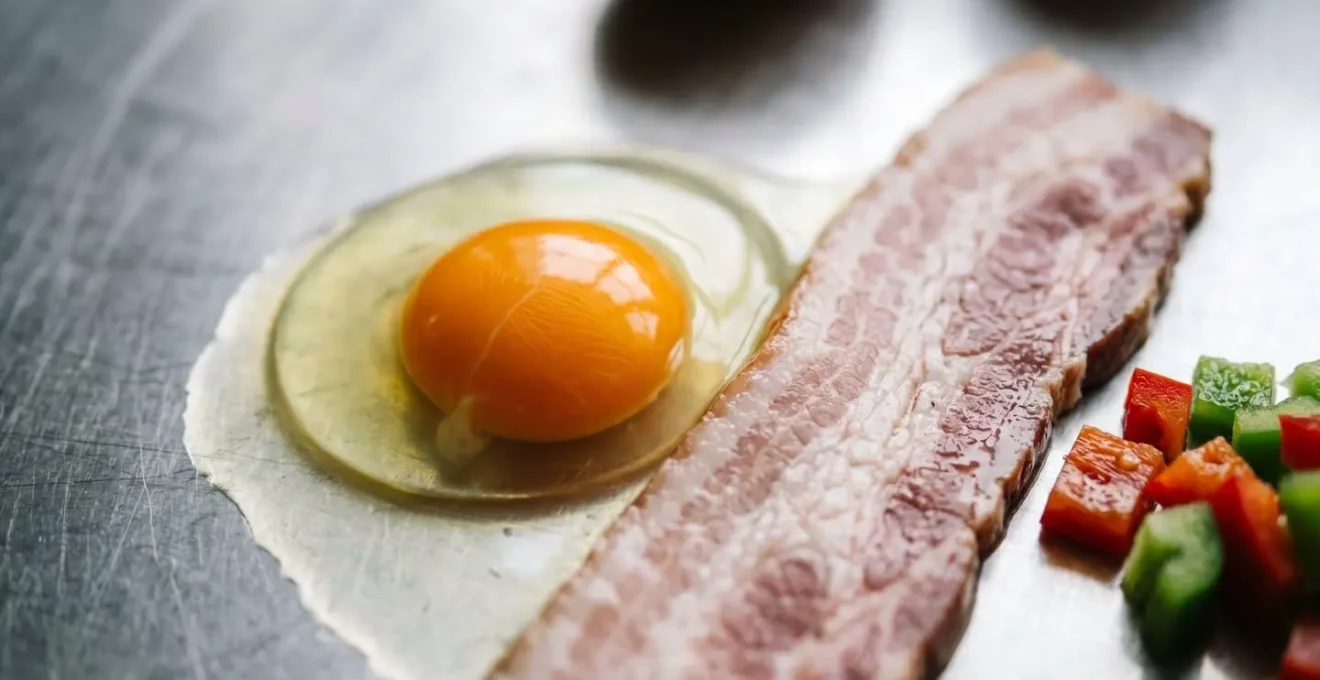
These rising costs create a difficult choice for diner owners: absorb the loss and risk closure, or pass the cost onto loyal customers and risk their ire. The $18 omelet isn’t a sign of a high-end pivot; for many, it’s a simple calculation for survival in a city that gets more expensive by the day. It represents the razor-thin margin between staying in business and becoming another beloved neighborhood memory.
The Encyclopedia Menu: What Is Safe to Order in a 10-Page Diner Menu?
Walking into a classic diner and being handed a laminated menu the size of a small novel is a quintessential New York experience. It’s a testament to the diner’s ambition to be all things to all people, offering everything from pancakes to souvlaki to seafood fra diavolo. But for the budget-conscious and food-safety-aware patron, this vastness is a minefield. The secret to a good, safe, and affordable meal lies in a practice we’ll call “menu archeology.”
The principle is simple: the safest and freshest items are those made from high-turnover ingredients. A busy diner goes through cases of eggs, pounds of bacon, and loaves of bread every single day. The griddle is always hot, and the ingredients for breakfast staples are constantly being replenished. Conversely, that obscure “Chef’s Special” featuring swordfish might be made from components that have been sitting in the freezer for an unknown amount of time. The more complex and out-of-place a dish seems on a diner menu, the more likely it is to be a low-turnover item.
Your goal is to stick to the diner’s core competency. Look for the sections that are busiest and built from a few simple, constantly used ingredients. This strategy not only ensures you get a fresher meal but also steers you toward the items the kitchen executes best and most efficiently, which often translates to better value. To make it simple, follow these core principles:
- Always safe: Breakfast items using high-turnover ingredients (eggs, bacon, hash browns, toast) – these are made fresh throughout the day.
- Green light: Burgers, club sandwiches, grilled cheese – built from core ingredients that move quickly.
- Caution: Complex dishes with seafood (Fra Diavolo, fish specials) – likely frozen components in traditional diners.
- Skip: Obscure ‘Chef’s Specials’ that don’t align with diner staples – these may sit pre-made for days.
- Best bet: The “Breakfast All-Day” section – it uses constantly replenished griddle ingredients with the fastest turnover.
The Bottomless Cup: Determining When Diner Coffee Is Too Old to Drink
The bottomless cup of coffee is a sacred institution. For less than the cost of a subway swipe, it promises a warm, caffeinated companion for as long as you occupy the booth. It’s the lifeblood of students, the fuel for cab drivers, and the silent partner to a thousand neighborhood conversations. But as any regular knows, not all “bottomless” coffee is created equal. There’s a fine line between a fresh, welcoming brew and a bitter, burnt liquid that’s been stewing on a hot plate for hours.
The quality of your coffee experience often comes down to timing and observation. A diner at peak breakfast rush will be brewing fresh pots constantly. The coffee you get at 8:30 AM is likely to be far superior to the one poured at 2:30 PM from the same pot. But you don’t have to leave it to chance. Learning to read the signs of a stale pot is a crucial diner survival skill. It’s about protecting your palate without offending the hardworking staff who are just trying to keep up.
A polite, well-timed request for a “fresh cup when you make the next pot” is almost always met with understanding. It shows you’re not just complaining, but that you appreciate the difference. This small act of communication can transform your experience from a grim caffeine delivery to a genuinely enjoyable part of your meal. Knowing what to look for empowers you to ensure your bottomless cup is one worth refilling.
Your 5-Point Coffee Freshness Check
- Visual Inspection: Look for a steady wisp of steam rising from the cup. Its absence is a key indicator that the coffee has been sitting and has cooled below its optimal temperature.
- Surface Analysis: Examine the surface of the coffee in the pot or your cup. A dark, oily sheen suggests over-extraction from prolonged exposure to the hot plate, which breaks down the coffee oils and creates bitterness.
- The Smell Test: Before you sip, give it a gentle sniff. A fresh pot will have a rich, aromatic coffee scent. If the dominant aroma is burnt or acrid, the coffee is long past its prime.
- The Polite Request: If the coffee fails the checks, use a friendly script. Saying, “I think I’m ready for a fresh cup when you make the next pot!” preserves your relationship with the staff and shows respect for their work.
- The Milk Indicator: As a bonus check, ask if they have fresh milk (not just pre-packaged creamers). Diners that maintain high standards of quality, even for coffee, typically offer real milk as an option for discerning customers.
The Last Greek Diners of Queens: A Survival Guide
While Manhattan’s diners are increasingly transient, tourist-focused, or simply gone, the heart of New York’s classic diner culture still beats strong in Queens. Here, in neighborhoods from Astoria to Jackson Heights, the Greek-American diner tradition endures not as a retro novelty, but as a living, breathing part of the community. These are not just restaurants; they are greasy-spoon cathedrals, pillars of the neighborhood that have served generations.
The difference is palpable. The chrome gleams a little brighter, the welcome feels a little warmer, and the menu, while still vast, feels rooted in a specific culinary heritage. These are places where the owner might still be working the register and the cooks have been flipping the same perfect pancakes for decades. They represent a stark contrast to the corporate feel of many Manhattan establishments, offering a taste of a more grounded, authentic New York.
Case Study: Jackson Hole Diner – The Astoria Institution
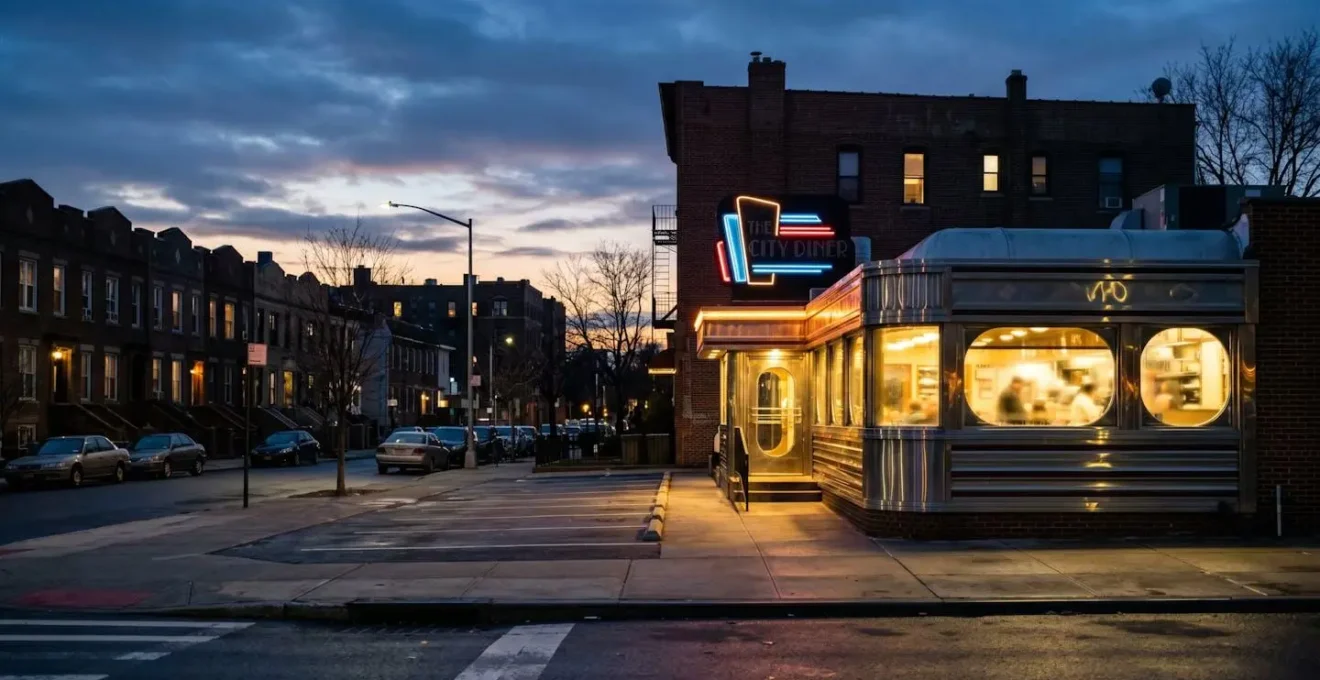
Jackson Hole in Astoria has been operating for nearly a century, exemplifying Greek-American diner resilience. The diner maintains its gleaming chrome and neon aesthetic while serving massive burgers, BLTs, and orange creamsicle milkshakes made with fresh-squeezed juice. Located near LaGuardia Airport, it features mini tabletop jukeboxes and represents the classic greasy-spoon cathedral that defines Queens’ diner culture—a stark contrast to Manhattan’s transient tourist-focused establishments.
Finding these gems requires venturing beyond the usual foodie hot spots. It means hopping on the 7 train or the N/W line and exploring the borough that has become the de facto protector of this piece of New York history. The reward is more than just an affordable meal; it’s a chance to experience a piece of the city’s living heritage.
Saturday Morning vs. Sunday Brunch: Avoiding the Mimosas Crowd
Timing is everything in New York, and nowhere is this truer than at the diner. The character of a diner can change dramatically not just by the day, but by the hour. The quiet, contemplative weekday morning gives way to the weekend rush, but even within the weekend, there is a world of difference between Saturday morning and Sunday brunch. For those seeking an authentic, budget-friendly experience, understanding this difference is critical.
Saturday morning, especially between 7 and 9 AM, is often the “golden hour” of the diner. This is when you’ll find the old-timers reading the paper at the counter, the cops and construction workers fueling up for the day, and the early risers seeking a simple, no-fuss meal. The pace is brisk but relaxed, and the focus is on good, honest food. This is the diner in its purest form.
Sunday, however, has been co-opted by the “brunch” phenomenon. Around 9 AM, the vibe shifts. The demand for bottomless mimosas and multiple variations of avocado toast takes over, attracting a different crowd—the “mimosas crowd.” This often leads to longer waits, rushed service, and a menu that pivots away from classic diner value toward higher-margin, trendier items. This shift is a form of brunch-flation, where the classic diner experience is diluted in favor of a more performative, and expensive, weekend ritual.
- Saturday 7-9 AM: Peak authenticity. Find old-timers, cops, and early risers before the weekend wave hits.
- Sunday 7-8:30 AM: The last peaceful window before the mimosa crowd arrives around 9 AM.
- Weekday 10 AM (Tue-Thu): The most authentic experience with true regulars and a relaxed pace.
- Counter Seating Strategy: Always opt for the counter for faster service and to avoid large brunch groups who occupy booths.
- Brunch-flation Warning Signs: Multiple avocado toast variations, prosecco on the menu, or the word ‘artisanal’ used repeatedly—these indicate a pivot away from the classic diner experience.
Where to Eat Lunch in Midtown Under $15 That Isn’t a Chain
Midtown Manhattan presents the ultimate challenge for the budget-conscious diner enthusiast. It’s a landscape dominated by tourist traps, expensive business-lunch spots, and soulless chain restaurants. The economic pressure here is at its peak; with commercial rent soaring, the idea of a small, independent diner surviving seems almost impossible. Indeed, a recent analysis showed the average Manhattan office space averaged $68.11 per square foot, a cost that makes running a low-margin business like a classic diner a Herculean task.
Yet, even in this concrete jungle, pockets of authenticity and value persist. They are harder to find, often tucked away on side streets or nestled in less glamorous neighborhoods on the fringes of the business district, like Morningside Heights. These survivors often double as vital community hubs, serving students, hospital workers, and longtime residents who depend on them not just for food, but for a sense of place. They are a testament to the resilience of the neighborhood spirit in the face of overwhelming commercial forces.
Case Study: Tom’s Restaurant – The Morningside Heights Haven
Tom’s Restaurant in Morningside Heights exemplifies the affordable Midtown-adjacent alternative. Dating back to the 1940s and famously featured on “Seinfeld,” it remains a vital hub. It offers affordable options like $7 mimosas and daily specials well under the $15 lunch threshold. With its deep red booths and walls adorned with currency from around the world donated by international student regulars from nearby Columbia University, it provides an optimized, caffeine-fueled study hall and a community touchstone, proving that the soul of classic NYC dining can survive even in Manhattan’s orbit.
Finding these places requires a willingness to walk a few extra blocks and to look past the shiny facades of the big chains. The reward is a meal that feels earned—a small act of defiance against the homogenization of the city, and a direct investment in the businesses that give our neighborhoods character.
The $200,000 Permit: Why Your Hot Dog Costs $4
While the focus is often on the diner, the economic pressures crushing small food businesses are city-wide, affecting everything from a corner hot dog stand to a family-run restaurant. The title of this section is a nod to the legendary costs of food vendor permits, but the principle applies directly to brick-and-mortar diners. The price on the menu reflects a universe of invisible costs that go far beyond food and labor. One of the most significant of these is commercial rent.
In New York City, real estate is a blood sport. For a small diner, the monthly rent check is often the single largest expense, a relentless burden that dictates every other business decision. This isn’t just a marginal cost; it’s a monumental one. As one report on NYC restaurant failures notes, prime locations in Manhattan can cost $200–$300 per square foot annually, meaning a modest 1,500-square-foot diner could face a staggering monthly rent exceeding $30,000.
This reality forces owners into a desperate calculus. To cover such astronomical overhead, they must maximize every dollar from every customer. This pressure is what leads to the slow erosion of value—the slightly smaller portion sizes, the extra charge for a side of toast, and the eventual, inevitable price hike on that classic two-egg special. The $18 omelet isn’t born in the kitchen; it’s born in the lease agreement. It’s a direct consequence of a regulatory and real estate environment that is profoundly hostile to small, low-margin businesses.
Key Takeaways
- Price hikes are driven by a ‘perfect storm’ of rising food, labor, and, most importantly, real estate costs that define the NYC market.
- The safest, freshest, and most affordable order in any diner is almost always the high-turnover breakfast special cooked on the griddle.
- Timing is everything: early mornings on weekdays or Saturdays offer the most authentic and value-driven experience, far from the “brunch-flation” of Sunday.
How to Survive the Midtown Manhattan Commute Without Losing Your Sanity?
The daily Midtown commute is a soul-crushing gauntlet. It’s a sensory overload of crowded subways, aggressive traffic, and the anonymous, impersonal energy of the city at its most transactional. In this chaotic environment, the humble diner plays a role that goes far beyond serving food. It functions as a vital psychological anchor, a decompression chamber between the chaos of the commute and the pressures of the office, or a welcoming haven at the end of a long day.
This role has become even more critical as the cost of everything in the city continues to climb. The simple act of sitting at a counter with a coffee and a newspaper provides a moment of stability and normalcy that is increasingly rare and valuable. It’s a small, affordable luxury in a city that offers few of them. Even as prices rise—with the NYC’s food price index in 2024 was 25.2% higher than just five years prior—the value proposition of the diner as a mental refuge remains immense. It’s a place to gather your thoughts, to feel a part of a community, and to simply be.
This sense of belonging, of being a “regular” in a place where your order is known by heart, provides a powerful antidote to the alienation of modern city life. It transforms the diner from a mere restaurant into a third space—an “other living room”—that is as essential to a New Yorker’s well-being as their own apartment. The following testimony from a longtime resident perfectly captures this sentiment:
A longtime NYC resident describes reaching ‘regular’ status at 7th Avenue Donuts & Diner in Park Slope: ‘The coffee arrives on cue and our order is known by heart. A bottomless cup of coffee = love in a mug.’ This exemplifies how diners serve as psychological anchors for commuters, providing community and stability in the impersonal daily grind – transforming the diner from mere restaurant into a ‘decompression chamber’ and ‘other living room’ between home and office.
– Regular Diner Customer, Australian Women in New York
The next time you walk past a classic diner, don’t just see a restaurant. See a neighborhood anchor, a community hub, a bastion of sanity. Step inside, sit at the counter, and order the two-egg special. You’re not just getting breakfast; you’re casting a vote with your dollars to keep a vital piece of New York alive.