
The seductive marketing of luxury high-rises often conceals significant financial liabilities that can erode an investment’s long-term value.
- “Resort-style” amenities are not perks but operational liabilities that drive up monthly fees, creating a significant “fee drag” on returns.
- Modern glass curtain wall construction, while aesthetically pleasing, often presents a structural risk with poor thermal performance and higher long-term maintenance costs compared to older, solid structures.
Recommendation: An investor must dismantle the “lifestyle” sales pitch and conduct rigorous due diligence on operational expenditures (OpEx), structural integrity, and long-term value retention to distinguish a true asset from a depreciating liability.
The glossy brochures paint an irresistible picture: panoramic city views from a floor-to-ceiling glass wall, a 24/7 concierge, a state-of-the-art private cinema, and a rooftop infinity pool. The “luxury” high-rise condo is marketed not just as a home, but as the pinnacle of a sophisticated urban lifestyle. For the potential investor or homebuyer, the allure is powerful. However, from the dispassionate perspective of a real estate asset manager, this narrative is a carefully constructed sales pitch that obscures a more complex financial reality. The key to a sound investment is not to be seduced by the lifestyle, but to critically analyze the underlying asset.
Most advice focuses on generic factors like location and potential appreciation. This analysis goes deeper. It deconstructs the very concept of “luxury” to reveal the hidden operational liabilities and structural risks that are rarely discussed. The central question is not whether the amenities are nice, but what their true cost is to your bottom line. The argument presented here is that the most heavily marketed features of a new luxury building—its amenities and its modern glass facade—are often its greatest financial weaknesses. This guide will provide a framework for evaluating these assets critically, comparing them to more robust alternatives, and understanding the market forces that will dictate their future value.
This article provides a data-driven framework for any potential buyer to look beyond the marketing and evaluate a luxury condo as a pure financial instrument. We will dissect the true cost of amenities, the inherent risks of modern construction, and the market dynamics that determine long-term value.
Summary: Is Buying a Condo in a “Luxury” High-Rise Actually a Good Investment?
- Why “Resort-Style” Amenities Will Double Your Monthly HOA Fees
- The “Glass Curtain” Risk: Why New Towers Leak Heat and Water
- Pre-War vs. New Development: Which Asset Holds Value in a Recession?
- How to Get Your Money’s Worth from the Private Cinema You Pay For
- When to Buy in a New Building: Pre-Construction vs. Closeout Deals
- Which Commercial Districts Will Be the Next Hot Residential Zones by 2030?
- Does “Green” Sell? The Resale Value of Sustainable Certifications
- How Remote Work Is Reshaping New York’s Commercial Real Estate into Residential Spaces?
Why “Resort-Style” Amenities Will Double Your Monthly HOA Fees
In the world of asset management, every feature is evaluated on a cost-versus-return basis. The extensive amenity packages in luxury condos—pools, gyms, spas, golf simulators, and private cinemas—are presented as value-adds. Financially, they are operational liabilities. These features require constant staffing, maintenance, insurance, and eventual capital replacement, all of which are funded through one primary mechanism: your Homeowner Association (HOA) fees. While a basic condo may have fees covering common area maintenance and insurance, a “resort-style” building’s fees are inflated to support a non-revenue-generating hospitality operation.
The financial drag is not trivial. In markets saturated with luxury developments, these costs can be staggering. For instance, in many Miami luxury towers, monthly HOA fees commonly exceed $1,900, with some ultra-exclusive buildings charging over $5 per square foot. An investor must calculate this “fee drag” directly against their potential rental income or appreciation. A $2,000 monthly fee is $24,000 per year that is not building equity or generating cash flow. It’s a pure operational expense that directly reduces your net operating income (NOI) and, consequently, the asset’s overall valuation. From an investment standpoint, you are not buying a home with perks; you are subsidizing a small hotel that you may or may not use.
Furthermore, these fees are not static. As buildings age, the cost to maintain and repair these complex systems escalates, leading to inevitable fee increases and the constant threat of special assessments. An investor must scrutinize the HOA’s reserve study to understand if they are adequately planning for future capital expenditures or if a ticking financial time bomb awaits. This is a critical piece of due diligence often overlooked by buyers mesmerized by the infinity pool.
The “Glass Curtain” Risk: Why New Towers Leak Heat and Water
The defining aesthetic of modern luxury high-rises is the “glass curtain”—a seamless, floor-to-ceiling window wall that promises unparalleled views and natural light. However, from a building science and long-term cost perspective, this design choice introduces significant structural and financial risks. Glass is a fundamentally poor insulator compared to a traditional, well-insulated solid wall. This creates an ongoing thermal penalty for the life of the building.

The performance difference is stark. While a well-insulated wall can achieve a thermal resistance (R-value) of up to R-50, even high-performance window systems struggle to deliver meaningful insulation. An industry analysis reveals that even advanced windows net an R-value of only around 4.3. This translates directly into higher heating and cooling costs for residents, an operational expense that eats into net returns. Beyond energy costs, this thermal inefficiency can lead to condensation issues, creating a risk of water damage and mold growth within the wall assemblies—a costly and complex problem to remediate in a high-rise structure.
The seals and gaskets that hold these vast glass panels in place are also a point of failure. They have a finite lifespan and are exposed to constant thermal expansion and contraction, as well as UV degradation. The eventual failure of these seals leads to water intrusion, a far more direct and damaging issue than thermal loss. The cost to repair or replace a curtain wall system is a massive capital expenditure, one that is inevitably passed on to owners through special assessments. An investor must consider this accelerated depreciation of the building envelope as a core part of their financial model.
Pre-War vs. New Development: Which Asset Holds Value in a Recession?
An essential part of any investment analysis is assessing performance during a market downturn. When comparing asset classes, the contrast between pre-war buildings (typically those built before 1940) and modern new developments is instructive. While new developments offer the allure of contemporary finishes and amenities, pre-war buildings often represent a more resilient asset class, particularly during a recession. Their value is rooted in fundamentals that new constructions often lack: superior build quality and larger physical footprints.
The construction methods of the pre-war era relied on materials and techniques that are now prohibitively expensive. This includes features like solid wood floors, plaster walls, and poured concrete floors. This robust construction provides tangible benefits, such as superior soundproofing between units, a common complaint in modern, steel-framed buildings. More importantly, this build quality contributes to slower depreciation and better value retention. As one construction analysis shows, pre-war buildings, with their solid construction, are more likely to retain their value than other building types. In a flight to quality during uncertain economic times, buyers often prioritize the tangible, lasting quality of these older assets over the fleeting trends of new developments.
Furthermore, pre-war units often feature more generous and flexible layouts, with defined rooms rather than the open-plan concepts favored today. In an era of increasing remote work, this traditional layout, providing distinct spaces for living and working, has gained new appeal. While a new development’s value is heavily tied to its amenity package and contemporary finishes—both of which date quickly—a pre-war building’s value is anchored in its irreplaceable “good bones,” its location in established neighborhoods, and its proven track record of weathering multiple market cycles. For a long-term investor, this proven resilience is a significant factor.
How to Get Your Money’s Worth from the Private Cinema You Pay For
If you find yourself owning or considering an investment in a building with a high “fee drag” from underutilized amenities, a passive approach is a losing strategy. As an asset manager, the goal is to either mitigate the cost or maximize the return on every square foot you pay for. This requires a proactive, strategic mindset to transform these operational liabilities into potential assets. The first step is to quantify the problem: calculate the precise portion of your monthly HOA fees that are allocated to the amenity package. This gives you a clear financial basis for any subsequent action.
Once the cost is understood, the next step is to explore avenues for cost reduction or revenue generation. This often involves engaging directly with the HOA board. Can underutilized, high-cost amenities be monetized? For example, could the private cinema or party room be rented out to external groups or for corporate events during off-peak hours, with the revenue used to offset the building’s operational costs? This transforms a pure cost center into a potential revenue stream, benefiting all owners. Similarly, petitioning the HOA for tiered membership or à la carte pricing for certain amenities can allow owners who do not use these features to opt out and reduce their monthly fees.
Finally, if direct monetization is not feasible, an owner must think creatively about personal ROI. The private cinema isn’t just for watching movies; it’s a high-impact presentation room. The resident lounge isn’t just a place to relax; it’s a professional space for client meetings. By reframing these amenities as business tools, an entrepreneur or professional can derive tangible value that helps justify the high cost, effectively turning a portion of their HOA fees into a business-related expense.
Action Plan: Strategic Amenity Optimization Framework
- Review HOA and property management rules before purchasing to understand rental restrictions and amenity usage policies that impact your ability to monetize underutilized features.
- Calculate cost-per-use by dividing annual amenity fees by realistic usage frequency to determine true value versus impact on monthly fees.
- Petition the HOA for tiered membership levels or à la carte amenity packages to negotiate out of paying for features you’ll never use.
- Propose revenue-sharing arrangements where underutilized high-cost amenities (cinema, party rooms, golf simulators) are rented to outside groups to offset monthly fees.
- Frame premium amenities as business tools for entrepreneurs conducting high-impact presentations, client events, or professional content creation to maximize ROI.
When to Buy in a New Building: Pre-Construction vs. Closeout Deals
For investors committed to a new development, the timing of the purchase is a critical strategic decision. The two primary entry points are the pre-construction phase and the closeout phase, each with a distinct risk and reward profile. Pre-construction buying involves purchasing a unit based on floor plans and architectural renderings before the building is complete. The primary incentive here is financial. Developers need to secure a certain number of sales to obtain construction financing, and they are highly motivated to create early momentum.
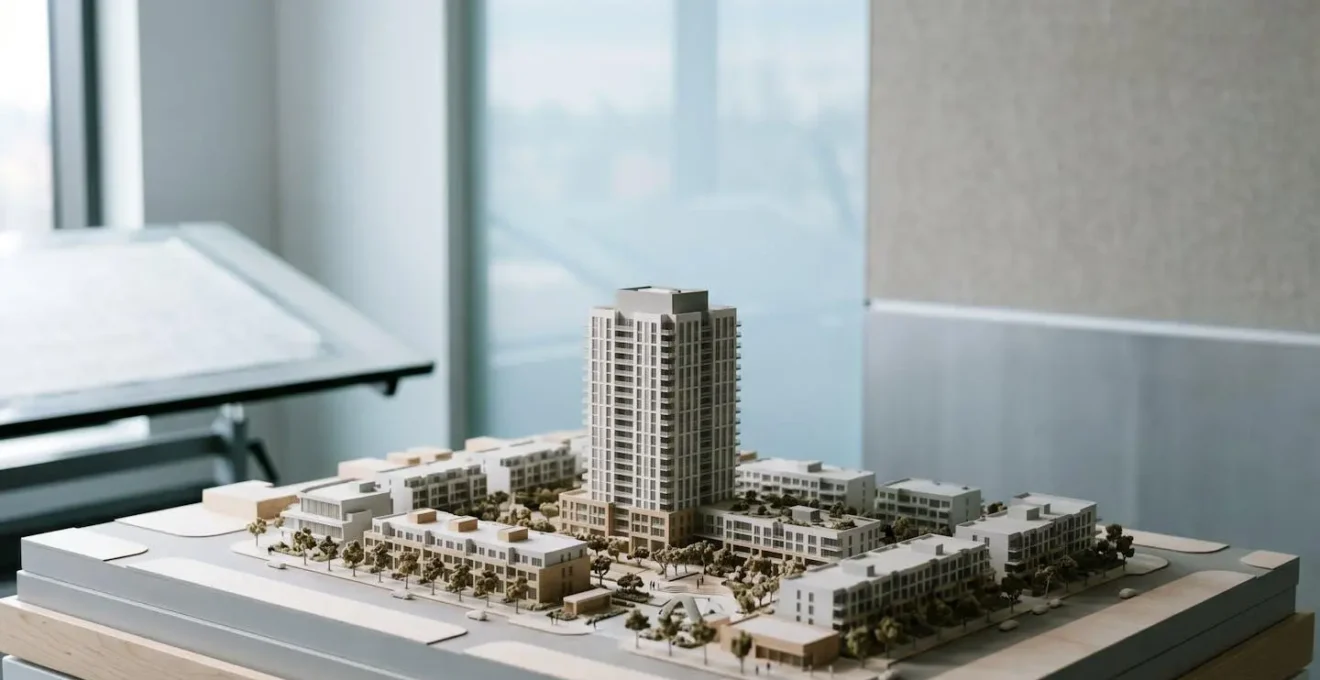
To achieve this, they offer tangible benefits. As Miami pre-construction market data shows, developers often offer early-bird pricing and incentives, which can include deep discounts like 1-2% cash rebates at closing. This allows early investors to capture immediate “on-paper” equity. However, this comes with significant risk. The investor is exposed to construction delays, potential changes in finishes or layouts, and the risk that the market could decline between the contract signing and the closing, which could be years later. This is an investment in a developer’s promise, not in a tangible asset.
Conversely, buying during the closeout phase—when the building is complete and the developer is selling the last remaining units—offers certainty at the expense of the best price. You can physically walk through the unit and inspect the quality of the finishes and the views. The building’s amenities are operational, and the initial kinks of a new property have often been worked out. The developer, at this stage, is less motivated to offer deep discounts and is focused on maximizing their final profit. The choice between these two strategies depends entirely on an investor’s risk tolerance. Pre-construction is a higher-risk, potentially higher-reward speculative play, while closeout is a lower-risk purchase of a known quantity.
Which Commercial Districts Will Be the Next Hot Residential Zones by 2030?
A sophisticated real estate investor doesn’t just analyze individual buildings; they analyze macro-level trends that create future opportunities. One of the most significant shifts in urban landscapes is the conversion of obsolete commercial districts into vibrant residential zones. The rise of remote and hybrid work has rendered millions of square feet of office space functionally obsolete, creating a massive, distressed asset class and a historic opportunity for adaptive reuse.
Identifying the next hot residential zone requires looking for a confluence of factors. The first is a high vacancy rate in Class B or Class C office buildings, particularly those with architectural character or historical significance. These buildings are often too outdated for modern corporate tenants but are prime candidates for conversion. The second factor is zoning. Municipalities, desperate to revitalize their urban cores and increase housing supply, are increasingly creating new zoning laws and offering tax incentives to encourage office-to-residential conversions. An investor should be closely monitoring city planning departments and council meetings for these policy shifts.
The third and most important factor is the existing or planned “15-minute city” infrastructure. Are these commercial districts already served by public transit, grocery stores, parks, and restaurants? If not, are there plans to develop this infrastructure? The most successful conversions will be in districts that can be transformed into true live-work-play neighborhoods, not just isolated residential towers surrounded by empty office blocks. By tracking office vacancy data, zoning changes, and infrastructure development, an investor can get ahead of the curve and identify opportunities in districts that are currently undervalued but have the underlying fundamentals to become the prime residential neighborhoods of the next decade.
Does “Green” Sell? The Resale Value of Sustainable Certifications
Sustainable or “green” certifications like LEED (Leadership in Energy and Environmental Design) are now a common marketing tool for new luxury developments. They are presented as a mark of quality, environmental responsibility, and, implicitly, a feature that adds to the property’s value. From a purely financial perspective, the question is: does the market actually pay a premium for these certifications at resale? The answer is complex and requires separating the marketing narrative from the tangible financial benefits.
The direct financial benefits of a green-certified building are often related to lower operating costs. Features like high-efficiency HVAC systems, superior insulation (though, as discussed, this is a challenge in glass towers), and water-saving fixtures can lead to lower utility bills for residents. This is a clear and quantifiable benefit. However, the premium that a buyer might pay for the “green” label itself is much harder to prove. The value is often conflated with other attributes of a new, high-quality building. A new LEED-certified building is also, by definition, a new building with modern finishes and systems, and it’s difficult to isolate the “green” premium from the “newness” premium.
Where certifications can have a more measurable impact is in their contribution to a well-managed property, which is often reflected through the HOA. While high fees are a drag, a well-run HOA can protect property values. In fact, some research confirms that HOAs, on average, increase property values by 5-6%. In this context, a green certification can be seen as an indicator of a forward-thinking, well-managed building that is focused on long-term operational efficiency and quality. The value may not come from the certificate on the wall, but from the underlying commitment to quality construction and management that the certificate implies. An investor should view these certifications not as a guaranteed price booster, but as a potential indicator of a lower-risk, better-managed asset.
Key Takeaways
- Amenities drive up HOA fees, creating a significant “fee drag” that directly reduces your return on investment.
- Modern glass facades often have inferior thermal performance and higher long-term maintenance risk compared to solid pre-war construction, impacting both operating costs and capital expenditures.
- Investment timing is a critical decision; pre-construction offers potential discounts but carries significant risk, while closeout deals provide certainty at a higher price point.
How Remote Work Is Reshaping New York’s Commercial Real Estate into Residential Spaces?
The post-pandemic normalization of remote and hybrid work is the single most powerful force reshaping urban real estate markets today. For decades, the central business district (CBD) was the undisputed heart of the city, a concentration of office towers that dictated commuting patterns and residential desirability. This model is fundamentally broken. With office utilization rates stubbornly low, the value of commercial office space in many urban cores has plummeted, creating a landscape of distressed assets. However, this crisis for the commercial sector presents a generational opportunity for residential real estate investors.
This structural shift is driving a wave of office-to-residential conversions. Visionary developers are acquiring obsolete office towers at a significant discount and transforming them into residential units, directly addressing the chronic housing shortages in many cities. This trend is not just about creating new apartments; it’s about the birth of entirely new neighborhoods. As former 9-to-5 business districts transform into 24/7 communities, they will require a new ecosystem of retail, dining, and services, creating further investment opportunities.
Case Study: The 61 Broadway Conversion
A landmark example of this trend is the conversion of the 32-story Financial District tower at 61 Broadway in New York City. Backed by a $420 million construction loan from Apollo Global Management, the project will transform the century-old office building into 796 residential units. This project directly confronts the specific investment risks of conversions, such as deep floor plates that can create long, dark “bowling alley” layouts and the high cost of updating building systems (HVAC, plumbing) originally designed for commercial use. Its success will serve as a blueprint for future large-scale conversions.
For an investor in a luxury high-rise, this trend has two major implications. First, the glut of new residential units coming online from these conversions could create downward pressure on rents and resale values, particularly for generic, non-differentiated properties. Second, it redefines the concept of a “prime location.” A luxury condo in a traditional residential neighborhood may soon face new competition from a converted tower in a newly vibrant, mixed-use downtown district. The savvy investor must therefore look beyond their own building and analyze the broader urban transformation underway.
Therefore, before signing any contract based on a slick marketing video, perform the rigorous due diligence of an asset manager. Deconstruct the fees, challenge the quality of the construction, and model your returns based on a realistic, conservative financial forecast. The best investment is not always the one with the most impressive brochure, but the one that stands up to the most intense scrutiny.