In summary:
- Go beyond basic tips by adopting a food critic’s strategic mindset to conquer the market.
- Master the “why” behind market logistics, from cash-only economics to strategic arrival times.
- Use specific frameworks like a “Flavor Flight” for tasting and a “Sensory Safety Scan” for hygiene.
- Learn to identify authentic vendors and communicate respectfully to unlock deeper cultural experiences.
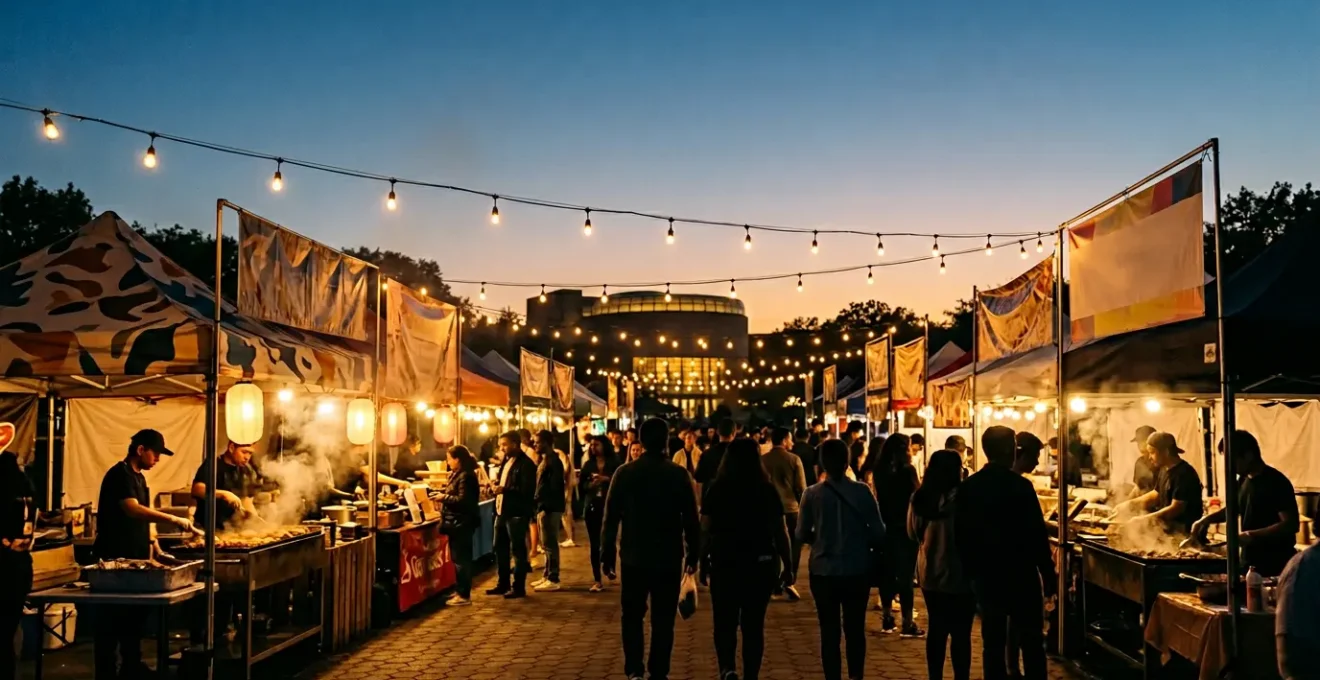
The first thing that hits you is the sound: a joyful cacophony of sizzling grills, bubbling woks, and languages from every corner of the globe. Then the smells—char-grilled meats, aromatic steam from bamboo baskets, sweet fried dough—all mingling in the warm evening air. This is the Queens Night Market, a sprawling, vibrant celebration of New York City’s unparalleled diversity. For any food lover, it’s paradise. It can also be utterly overwhelming. The sheer number of choices, the jostling crowds, the seemingly endless lines… where do you even begin?
Most guides will give you the same generic advice: “go early” and “bring cash.” While true, this barely scratches the surface. It won’t help you decide between Colombian arepas and Burmese palatas, or tell you how to gauge if a vendor’s setup is truly hygienic. You’re left to wander, often getting full on the first few things you see, missing out on hidden gems and feeling a pang of “what if?”
But what if the key wasn’t just to visit, but to strategize? What if you approached the market not as a tourist, but as a culinary critic on a mission? This guide is your new framework. We’re moving past the platitudes to give you a professional’s methodology. You’ll learn the economic reasons behind payment methods, how to analyze crowd flow, how to build a strategic tasting plan, and how to spot the subtle signals of authenticity. Prepare to transform a chaotic night out into a masterful culinary adventure.
This guide is structured to build your critic’s toolkit step by step, from pre-arrival planning to the art of identifying a truly traditional dish. Follow along to turn your intimidation into expertise.
Summary: A Critic’s Playbook for the Queens Night Market
- Cash vs. Apps: Why You Still Need Dollar Bills in Queens Markets
- When to Arrive at the Night Market to Avoid hour-long Lines
- The 5 Dishes You Must Try Before You Get Full (and What to Skip)
- Is Street Food Safe? Understanding NYC’s Vendor Letter Grades
- How to Ask Vendors About Ingredients Without Being Annoying
- The Best Basement Dumpling Shops in Chinatown Only Locals Know
- Are the Pre-Cut Mangoes Safe? A Guide to Street Fruit Hygiene
- Authentic vs. Fusion: Which New York Restaurants Actually Honor Traditional Recipes?
Cash vs. Apps: Why You Still Need Dollar Bills in Queens Markets
Your first strategic move happens before you even leave home: visit an ATM. While we live in a world of taps and apps, the Queens Night Market operates on an economic model that makes cash king. It’s not because vendors are low-tech; it’s because they are focused on accessibility. The market’s famous $5-$6 price cap on food is a core part of its mission, made possible by subsidized vendor fees. This means margins are razor-thin. A standard 3% credit card processing fee might seem small, but on a $5 dish, that’s a significant cut for a small family-run operation.
Because of this, the official Queens Night Market FAQ confirms most vendors primarily accept cash. While an on-site ATM exists, the line can easily become one of the longest at the market, eating into your precious tasting time. Arriving with a pre-planned budget in small bills ($1s, $5s, and $10s) is a signature move of a seasoned critic. It shows respect for the vendors’ business model and makes your transactions swift, keeping you and the line moving.
Here’s how to prepare your wallet like a pro:
- Bring Small Bills: Have a mix of $1, $5, and $10 bills ready. Fumbling with a $20 for a $5 item slows everything down.
- Set a Budget: Veterans recommend budgeting $40-$50 per person to get a generous sampling of what the market has to offer.
- Have a Digital Backup: Keep apps like Venmo or Zelle ready. A growing number of vendors display QR codes, but don’t count on this being a universal option.
By preparing financially, you’re not just ready to buy; you’re ready to explore efficiently.
When to Arrive at the Night Market to Avoid hour-long Lines
With around 20,000 visitors descending on the market each weekend, timing isn’t just a suggestion—it’s your most powerful strategic tool. A food critic’s goal is to maximize variety and quality, not to spend the evening staring at the back of someone’s head. Simply “going early” isn’t enough; you need a timeline strategy based on your specific goals for the night. The market’s rhythm changes dramatically from its opening at 5:00 PM to its peak and eventual wind-down.
A critic analyzes crowd flow. Instead of just joining the longest line, they assess line velocity. A long line that moves quickly often indicates an efficient, experienced vendor. A short line that’s at a standstill could mean complex prep or disorganization. Your arrival time dictates which of these scenarios you’ll face. The difference between arriving at 5:00 PM and 7:00 PM can be the difference between tasting ten dishes or three.
Here’s how to plan your arrival for maximum culinary impact:
- The Early Bird (5:00 PM): Arrive right at opening. This is your golden hour to hit the most popular, hyped-up vendors before the main crowds arrive around 6-7 PM. You’ll get your must-try dishes out of the way with minimal waiting.
- The Prime Time Navigator (7:00 PM – 9:00 PM): If you arrive during peak hours, deploy the “divide and conquer” tactic. Check the vendor list (posted online on Fridays), split up with your group, and have each person tackle a different line to reconvene with a feast.
- The Late-Night Strategist (Post-9:00 PM): The last 90 minutes offer a different advantage. Lines thin out, and the atmosphere becomes more relaxed. While some popular items might be sold out, this is the perfect time to discover newer, less-trafficked booths and chat with vendors.
Choosing your arrival time wisely is the first step in curating your experience rather than letting the crowds dictate it for you.
The 5 Dishes You Must Try Before You Get Full (and What to Skip)
The biggest rookie mistake at the Queens Night Market is filling up too quickly on the first things you see. With the generous $5-$6 price cap on all food items, it’s tempting to go all-in at the first two or three stalls. A food critic, however, doesn’t just eat; they curate. Your goal is to construct a “Flavor Flight”—a balanced, intentional progression of tastes and textures that tells a story of the market’s diversity. This requires reconnaissance and a plan.
Before you buy anything, do a full lap of the market. Observe. Smell. See what people are carrying. Check the weekly vendor lineup online ahead of time to create a “must-try” shortlist. This isn’t about finding a definitive list of the “best” five dishes, as vendors change and quality varies. It’s about giving you a framework to build your own perfect tasting menu. Avoid the “hype traps”—long lines can be for Instagrammable novelties rather than true culinary gems. Your critic’s eye should guide you.
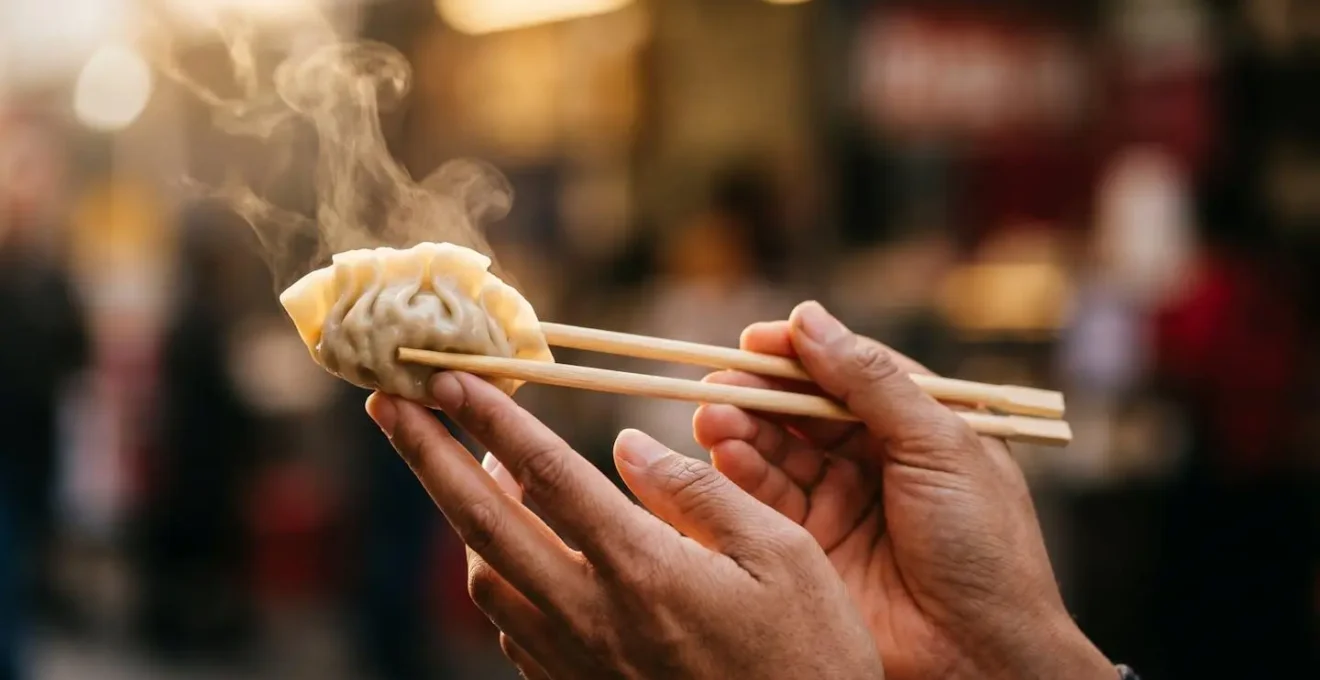
As the image above suggests, a critic’s approach involves careful examination. You’re not just consuming; you’re analyzing. To build your own perfect “Flavor Flight,” consider this strategic framework:
- One Fried & Crispy: Start with something like Trinidadian shark sandwiches (from an occasional vendor) or crispy Taiwanese popcorn chicken to awaken your palate.
- One Grilled & Smoky: Look for skewers. Think Filipino pork BBQ or juicy Turkish kebabs, which offer a deep, savory flavor.
- One Steamed & Delicate: This is where dumplings, Tibetan momos, or steamed buns come in. They provide a softer texture and often a more nuanced filling.
- One Soupy or Saucy: A small bowl of Malaysian laksa or a saucy serving of Indonesian noodles can provide a comforting, complex middle course.
- One Sweet Finale: End with something unique, like Romanian-Hungarian chimney cakes, Japanese souffle pancakes, or Portuguese pasteis de nata.
By following this structure, you guarantee a more satisfying and comprehensive tasting journey, leaving with a true sense of the market’s incredible range.
Is Street Food Safe? Understanding NYC’s Vendor Letter Grades
For the uninitiated, the idea of “street food” can conjure images of questionable hygiene. However, in New York City, mobile food vending is a highly regulated industry. While the familiar A-B-C letter grades are for brick-and-mortar restaurants, food carts and trucks have their own strict permitting and inspection process overseen by the NYC Department of Health. A critic knows that safety isn’t a matter of luck; it’s a matter of observation. You can and should perform your own rapid “Sensory Safety Scan” before you even place an order.
Your eyes and nose are your best tools. A clean, organized cart with high customer turnover is a fantastic sign. High turnover means ingredients are constantly being replenished and are less likely to be sitting out for long periods. Watch the vendor’s process. Are they handling money and food with the same gloves? Is their cutting board clean? Are hot foods visibly steaming and cold foods kept on ice? These small details are everything. The presence of a visible NYC Health Department permit decal is your first confirmation that the vendor is part of the system and subject to inspection.
Your 5-Point Food Safety Audit: A Critic’s Checklist
- Permit & Grade Display: Look for the NYC Health Department Mobile Unit Permit sticker. It should be clearly displayed on the cart or truck as proof of registration and inspection.
- Temperature Discipline: Observe the food. Hot items must be held in steam tables and be visibly steaming (held above 140°F). Cold items must be on ice or in refrigeration.
- Glove & Hand Protocol: Watch the vendor’s hands. Do they change gloves after handling money? Is there a handwashing station visible? Bare-hand contact with ready-to-eat food is a major red flag.
- Workstation Cleanliness: Glance at the cutting boards, utensils, and surfaces. They should be clean and free of old food debris. Wiping cloths should be stored in a sanitizing solution, not left on the counter.
- Ingredient Freshness: Assess the ingredients themselves. Does the food look vibrant and fresh, or is it sitting out, looking tired? High customer volume is often a great indicator of high ingredient turnover.
By training your senses to spot these key indicators, you can enjoy the market’s vast offerings with confidence and peace of mind.
How to Ask Vendors About Ingredients Without Being Annoying
A food critic’s job involves curiosity. You want to know what’s in a dish, what makes it special, or if it contains an allergen. But at a bustling market where vendors are working at a frantic pace, there’s a fine line between inquisitive and annoying. With vendors representing up to 90 countries, the market is a nexus of cultural exchange. The key is to frame your questions with respect, genuine interest, and perfect timing.
Never start your interaction with a barrage of questions when there’s a long line behind you. The golden rule is to order first, question during preparation. Once you’ve clearly stated your order, there’s often a natural 30-60 second lull while the vendor assembles your food. This is your window. Instead of a demanding “What’s in this?”, try a curiosity-based approach like, “This smells incredible! I’m trying to learn, is that star anise I can smell?” This reframes you as an interested student, not a demanding customer.
Here is a critic’s protocol for respectful and effective communication:
- Be Specific About Allergies: If you have a dietary restriction, be direct and polite. “I’d love to try this. Quick question, does this sauce contain any nuts?” is clear and efficient.
- Use the “Praise-Question-Praise” Sandwich: “Wow, that looks amazing. I have a quick question about the spice level. Thank you so much, I can’t wait to try it!” This softens the interaction.
- Acknowledge Their Heritage: Many vendors are there to share a piece of their home. Phrasing like, “I’ve never tried this before, what’s the traditional way to eat it?” shows respect and opens the door for a story.
- Read the Room: If the vendor is visibly stressed and slammed with orders, keep it simple. Save your deeper questions for a vendor who has a moment to breathe. Respect the line velocity.
By mastering this art, you not only get your questions answered but also open the door to richer, more meaningful interactions with the people behind the food.
The Best Basement Dumpling Shops in Chinatown Only Locals Know
While the Queens Night Market offers an incredible breadth of global cuisine, a true food critic’s journey through NYC’s culinary landscape also involves deep dives into specific neighborhoods known for singular excellence. For an authentic dumpling experience that feels worlds away from trendy, polished eateries, you must venture into the heart of Manhattan’s Chinatown—specifically, into its hidden-in-plain-sight basement food courts.
These are not places you stumble upon; they are destinations. They represent a commitment to tradition over trendiness, where the focus is entirely on the craft. One of the last and most authentic examples is a vendor tucked away in a nearly abandoned mall, a true insider’s secret that rewards the adventurous eater.
Case Study: The Fu Zhou Wei Zhong Experience
Deep in the basement of the East Broadway Mall, underneath the Manhattan Bridge, you’ll find Fu Zhou Wei Zhong Wei Jia Xiang Feng Wei. As detailed in a dispatch on New York’s hidden dumpling gems, this stall has been operating for over 20 years. To find it, you must enter 88 East Broadway through the left doors (others are often locked), descend the stairs, and turn right. The reward is perfectly steamed buns and dumplings in a setting that is the epitome of authenticity: worn tile floors, hand-written menus, and the complete absence of slick marketing. It’s a taste of a Chinatown that is rapidly disappearing.
When you find a place like this, you need a rubric to evaluate what you’re eating. Here’s a critic’s framework for assessing world-class dumplings:
- Wrapper Integrity: The dough should be thin and delicate but strong enough to hold the filling without tearing. It should be pleasantly chewy, not gummy.
- Filling-to-Wrapper Ratio: The dumpling should be plump and generous, with the wrapper serving as a perfect vehicle, not the main event.
- Juice Factor (for Soup Dumplings): A proper Xiao Long Bao should release a burst of savory, fragrant broth upon the first bite.
- The Pan-Fried Test: For potstickers, look for a crispy, golden-brown bottom that contrasts beautifully with a tender, steamed top. There should be no excessive grease.
Applying this critical eye allows you to appreciate the craft and understand why these unassuming spots are so revered by those in the know.
Are the Pre-Cut Mangoes Safe? A Guide to Street Fruit Hygiene
Nothing is more refreshing on a warm market night than a bag of perfectly ripe, pre-cut fruit. The mangoes, pineapples, and watermelons on display at street carts are a quintessential NYC experience. But the question of hygiene naturally arises. Is it safe to eat fruit that’s been cut and exposed to the air? The answer is yes, provided you know what to look for. Just as with hot food, a trained eye can quickly assess the safety and quality of a fruit vendor’s operation.
The number one rule is freshness. The best vendors cut their fruit in small batches throughout the day or, even better, will cut a piece fresh for you on the spot. This is the gold standard. Look for fruit that is vibrant and juicy, not dull, dry, or browning from oxidation. Pay close attention to the vendor’s workspace. A clean knife, a sanitized cutting board, and the use of gloves (especially when a different person is handling money) are all crucial indicators of good practice. Also, take a quick glance for any insect activity; the absence of fruit flies is a very good sign.
Here is your five-point inspection checklist for street fruit:
- Temperature Control: The fruit should be kept chilled on a bed of clean ice or in a refrigerated display. Fruit packages should never be sitting in a puddle of undrained, melted ice.
- Knife & Board Hygiene: The cutting board should be a smooth, non-porous material, and both the knife and board should be visibly clean. Watch if the vendor rinses or sanitizes them between uses.
- Cross-Contamination Awareness: The best vendors use separate gloves for handling money and food, or have a dedicated person for payments. Bare hands that just took cash should not be touching your mango.
- Visual Freshness Check: Look for vibrant color and a glistening surface. Avoid fruit that looks overly brown, mushy, or dried out, as this indicates it has been sitting for too long.
- The Cut-to-Order Standard: Don’t be afraid to ask, “Could you please cut a fresh one for me?” Reputable vendors who are confident in their product will happily oblige. This is the surest way to guarantee safety and flavor.
A beautiful bag of fresh-cut fruit is one of the market’s simple pleasures, and with a little diligence, you can enjoy it without a second thought.
Key takeaways
- A critic’s approach to a food market is about strategy, not just appetite; it requires a plan for money, time, and tasting.
- The market’s economics and cultural diversity are not just background noise; they directly influence everything from payment methods to communication styles.
- Your senses are your best tools for assessing both quality and safety, whether you’re evaluating a dumpling’s wrapper or a fruit vendor’s cutting board.
Authentic vs. Fusion: Which New York Restaurants Actually Honor Traditional Recipes?
The Queens Night Market through and through is a love letter to New York City.
– John Wang, Queens Night Market Founder, in an anniversary season preview
In a city saturated with “fusion” concepts and trendy eateries, the word “authentic” has lost much of its meaning. Yet, the desire for it is what drives many of us to places like the Queens Night Market. As the founder John Wang’s quote suggests, the market is a platform for genuine cultural expression. So how does a critic separate true tradition from clever marketing? You learn to read the signals—the subtle cues in a menu, a setting, or a vendor’s story that speak to a deep-rooted heritage.
Authenticity isn’t about a rigid, unchanging recipe; it’s about intent. At the market, vendors are selected based on their ability to share the story behind their food, connecting it to their personal history and culture. This is a powerful starting point. A vendor proudly explaining that a dish is “just like my grandmother used to make” is a stronger signal of tradition than a slick menu with a dozen fusion tacos. The most traditional vendors often have the shortest menus, specializing in one or two things they have mastered over a lifetime.
Here is a final framework for identifying establishments that truly honor their roots:
- Menu Language & Length: A very short menu focused on a specific category (e.g., only tamales, only skewers) signals mastery. The presence of a “secret” menu or items listed only in a native language is a strong indicator they are also serving their own community, not just tourists.
- Ingredient Specificity: Look for the use of traditional, less-common ingredients, like specific regional spices, fermented elements, or offal cuts. This shows a commitment to the original flavor profile, not an adaptation for Western palates.
- The “Crossed-Out Item” Test: A hand-written menu with items crossed out is a fantastic sign. It means they prepare food in small, fresh batches and have sold out, the opposite of an industrial operation that has everything available all the time.
- Pricing as a Signal: The market’s $5-$6 price cap is a deliberate choice to maintain accessibility, a value often central to traditional community food cultures. Extremely affordable food can be a powerful marker of authenticity.
Armed with this critic’s framework, you are now ready to go beyond mere eating and begin a deeper, more rewarding exploration of New York’s incredible food scene. Your culinary mission awaits.