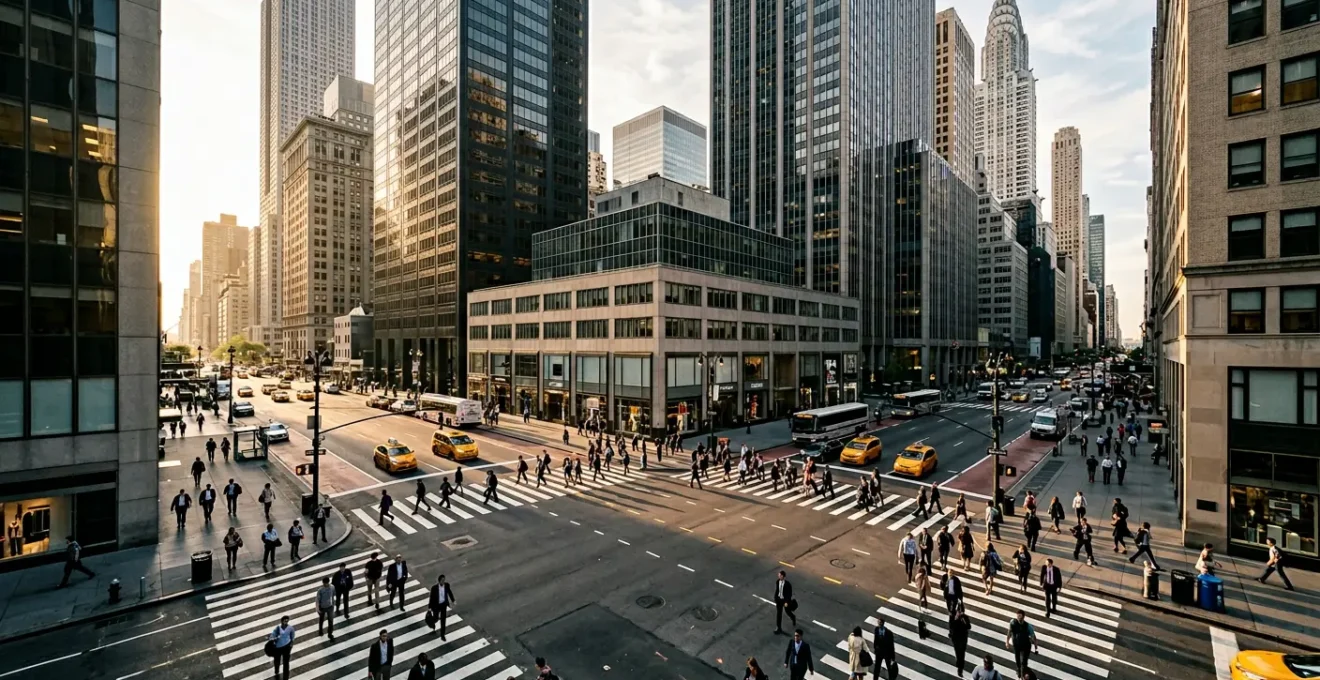
The Midtown commute isn’t a test of endurance; it’s a solvable logistics problem that you’re currently losing.
- True optimization requires data: analyze your entry hub, food costs, and the real price of your time.
- Bypass the chaos by leveraging “geospatial hacks” like underground passages and privately owned public spaces.
Recommendation: Stop enduring your commute and start actively hacking it with the systems in this guide.
The daily commute into Midtown Manhattan is a universally understood form of cruel and unusual punishment. It’s a soul-crushing gauntlet of delays, impenetrable crowds, and the distinct aroma of despair. The common advice is as useless as it is cliché: “leave earlier,” “listen to a podcast,” or the ever-helpful “learn to be more patient.” This advice assumes the problem is your attitude, not the fundamentally broken system you’re forced to navigate. It suggests you should simply endure the chaos. That is a losing strategy.
Let’s reframe the problem. This isn’t a test of your zen-like patience. It’s a complex logistical puzzle, and every day you solve it inefficiently, you’re paying a tax in time, money, and mental energy. The key to survival isn’t distraction; it’s control. It’s about weaponizing information to build a better, more efficient system for yourself. Forget patience. We’re here to talk about tactical advantages, transit arbitrage, and geospatial hacking. This guide is for the commuter who is done being a victim of the system and is ready to start gaming it.
We’ll dissect every stage of the commute, from the macro-decision of where you live to the micro-decision of where you grab lunch. We will provide the data and hidden knowledge required to bypass the worst of Midtown’s daily onslaught. This is your new playbook for reclaiming your sanity, one optimized decision at a time.
This article provides a systematic approach to mastering the Midtown commute. The following sections break down key strategic areas where you can gain an efficiency edge, turning daily frustration into a predictable, optimized process.
Summary: Hacking the Midtown Manhattan Commute System
- Penn Station vs. Grand Central: Which Hub Offers a Better Quality of Life?
- Where to Eat Lunch in Midtown Under $15 That Isn’t a Chain
- The Rockefeller Center Radius: How to Dodge Tourists During Rush Hour
- The Underground Passageways of Midtown: Walking 5 Blocks Without Going Outside
- Where to Find Silence in Midtown for a 20-Minute Mental Break
- Commute from Jersey or Rent in City: Which Saves More After 5 Years?
- Tolls vs. Train Tickets: The Math of Commuting Under the New Rules
- How to Land an Executive Role at a Fortune 500 HQ in Manhattan Without an Ivy League Degree?
Penn Station vs. Grand Central: Which Hub Offers a Better Quality of Life?
Your commute’s quality is determined before you even step onto a Manhattan street. It begins at your arrival hub. Choosing between Penn Station and Grand Central isn’t just a matter of which train line you use; it’s a strategic decision that impacts your daily stress levels. Penn Station is a masterclass in utilitarian dysfunction, a subterranean maze designed to move bodies with brutal efficiency. With over 600,000 passengers handled daily, its primary function is throughput, not human experience. The low ceilings, lack of natural light, and constant state of cramped urgency make it a psychological drain before your workday has even started.
Grand Central, while also handling immense volume, offers a fundamentally different experience. Its grand concourse, architectural beauty, and access to the East Side subway lines provide a qualitatively better “decompression zone.” While no one would call it peaceful during rush hour, its spaciousness provides a brief moment of perspective. The choice of hub also dictates your onward journey. Penn Station funnels you to the West Side, while Grand Central serves the East. Your office location is the primary factor, but if you have any flexibility, a cost-of-sanity analysis is warranted. The following table breaks down the objective differences, but the subjective choice is yours: do you start your day in a functional but soul-crushing transit machine or an inspiring, if still chaotic, landmark?
| Feature | Penn Station | Grand Central Terminal |
|---|---|---|
| Daily Passenger Volume | 650,000+ (rail passengers) | 750,000 (total visitors, 250,000+ rail commuters) |
| Number of Tracks | 21 tracks (serving 3 rail operators) | 44 tracks (serving Metro-North) |
| Rail Services | Amtrak, NJ Transit, Long Island Rail Road | Metro-North Railroad |
| Architecture | Underground, low ceilings, utilitarian | Beaux-Arts, grand concourse, iconic ceiling |
| Passenger Experience | Cramped, criticized as dysfunctional | Spacious, architectural landmark |
| Onward Connections | West Side (1, 2, 3, A, C, E trains) | East Side (4, 5, 6, 7, S trains) |
The data clearly shows that while passenger numbers are comparable, the environment is not. Your choice of commute may lock you into one hub, but acknowledging the qualitative difference is the first step in managing its psychological toll.
Where to Eat Lunch in Midtown Under $15 That Isn’t a Chain
The second battle of the day is lunch. Midtown presents a false choice: a $25 sad desk salad or a soulless chain sandwich. Both are inefficient drains on your wallet and your will to live. Hacking the Midtown lunch scene means ignoring the obvious and developing a system for locating high-quality, low-cost independent vendors. The goal is a satisfying meal for under $15 that doesn’t involve a fluorescent-lit fast-food queue. The first rule is to think vertically and horizontally. Most tourists and office drones stick to the main avenues. Your targets are the side streets and food carts.
A high concentration of office buildings between 45th and 55th streets, particularly between 6th and Madison, creates a competitive ecosystem for food carts. These aren’t just hot dog stands; they are specialized kitchens on wheels serving everything from halal platters to Korean BBQ. The key is to identify the carts with lines of construction workers or office staff, not tourists. This is your quality signal. Another tactic is to explore the ground-floor “holes-in-the-wall” in older office buildings. Many have small, family-run delis or takeout counters that are invisible from the street but are legendary among building tenants. Avoid anything with a glossy sign and look for the hand-written menus. This is where value lives.
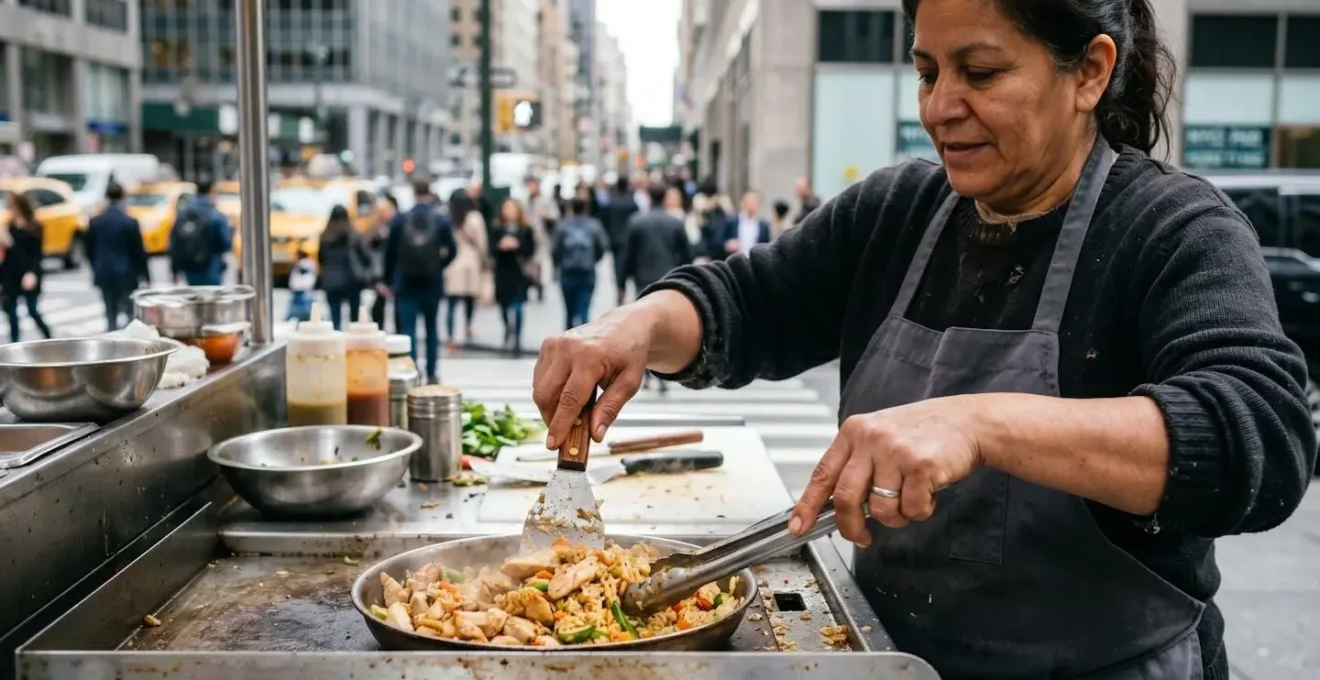
The final hack is timing. The peak lunch rush is from 12:15 PM to 1:30 PM. By shifting your lunch to 11:45 AM or after 1:45 PM, you not only avoid the longest lines but also often get fresher food and more generous portions as vendors are either ramping up or winding down. This simple act of “time arbitrage” saves you 15-20 minutes of standing in line, a significant return on investment for a small schedule adjustment.
The Rockefeller Center Radius: How to Dodge Tourists During Rush Hour
The area around Rockefeller Center, St. Patrick’s Cathedral, and Times Square is a human traffic jam, a vortex of slow-walking tourists that can derail any efficiently planned journey. Moving through this zone at street level during rush hour is a tactical error. The solution is not to push through the crowd, but to go under it. This is geospatial hacking 101: leveraging the semi-public indoor and underground networks to bypass the surface-level chaos entirely.
Rockefeller Center itself contains an extensive underground concourse of shops and passageways. This network is your primary tool. It allows you to traverse several city blocks without ever being exposed to the elements or, more importantly, the tourist swarms. Learning these routes transforms a frustrating 10-minute walk into a predictable 5-minute stroll. It’s about knowing the entry and exit points and understanding that these private buildings are, during business hours, public thoroughfares for those in the know.
The most powerful of these routes allows for a nearly continuous indoor walk from the heart of Rockefeller Center to the edge of the Times Square area. It requires navigating through a series of interconnected building lobbies and corridors. This isn’t a secret whispered among elites; it’s a practical, repeatable strategy for any commuter whose path crosses this congested zone. It is the physical embodiment of working smarter, not harder.
Your Action Plan: The Rockefeller-to-Times Square Underground Route
- Enter on the west side of Fifth Avenue between 50th and 51st Street (look for the 630 Fifth Avenue entrance across from St. Patrick’s).
- Proceed through the main lobby and descend into the Rockefeller Center underground concourse. Follow signs for the subway to stay on the main path.
- Navigate west through the concourse, passing shops and restaurants.
- Continue through two connected office building corridors that extend westward from the main concourse.
- Emerge at Seventh Avenue and 49th Street, having bypassed the most intense tourist gridlock. Note: This route is only fully accessible during standard business hours.
The Underground Passageways of Midtown: Walking 5 Blocks Without Going Outside
The Rockefeller Center concourse is just one piece of a larger, fragmented network of underground and indoor passages. True mastery of Midtown movement involves mapping these “geospatial hacks” across the district. These routes are your secret weapon against bad weather, extreme temperatures, and, most critically, pedestrian congestion. They transform your mental map of the city from a 2D grid of streets and avenues into a 3D puzzle with multiple layers of traversal.
For those arriving at Grand Central, a similar network exists. This system is less about a single long tunnel and more about a series of interconnected building lobbies and transit corridors. One of the most effective is an underground network stretching from 48th Street to 42nd Street, allowing commuters to access multiple buildings and the subway system without surfacing. These are not secret tunnels; they are marked as public access routes, often designated as “POPS” (Privately Owned Public Spaces). The key is to see them not as part of a building, but as part of your personal transit infrastructure.
Case Study: The Rockefeller Center to Times Square Network
One of Midtown’s most effective indoor pedestrian routes spans over two blocks from Rockefeller Center to the Times Square vicinity. Accessible during business hours, this network allows commuters to walk from 630 Fifth Avenue (across from St. Patrick’s Cathedral) through interconnected building lobbies and underground corridors, eventually emerging at Seventh Avenue and 49th Street. The route leverages multiple privately-owned public spaces, offering a climate-controlled and crowd-free alternative to one of Manhattan’s most congested tourist zones, saving significant time and reducing stress.
The strategy is simple: on your next non-rush-hour walk, identify the POPS signs on buildings along your route. Enter and explore. Take note of through-block connections and underground access points. Building this mental map is an upfront time investment, but the daily dividends in efficiency and predictability are enormous. You are no longer subject to the whims of surface-level conditions; you have an alternative. This is the essence of hacking your environment.
Where to Find Silence in Midtown for a 20-Minute Mental Break
The relentless sensory assault of Midtown is a significant contributor to commuter burnout. The constant noise, motion, and density create a state of low-grade cognitive overload. A strategic retreat, even for just 20 minutes, is not an indulgence; it’s a necessary system reboot. Hacking this problem means identifying and mapping your personal “Sanctuary Zones”—accessible pockets of silence and calm in the heart of the chaos.
Once again, the solution lies in Privately Owned Public Spaces (POPS). Many of the large corporate towers are required by city zoning laws to provide public-access atriums, arcades, or gardens. These spaces are often overlooked by the general public and are designed to be tranquil. They are your free, private lounges. Look for the small, unassuming plaques near the entrances of major office buildings on avenues like Madison, Park, and Sixth. These plaques denote a public space within.
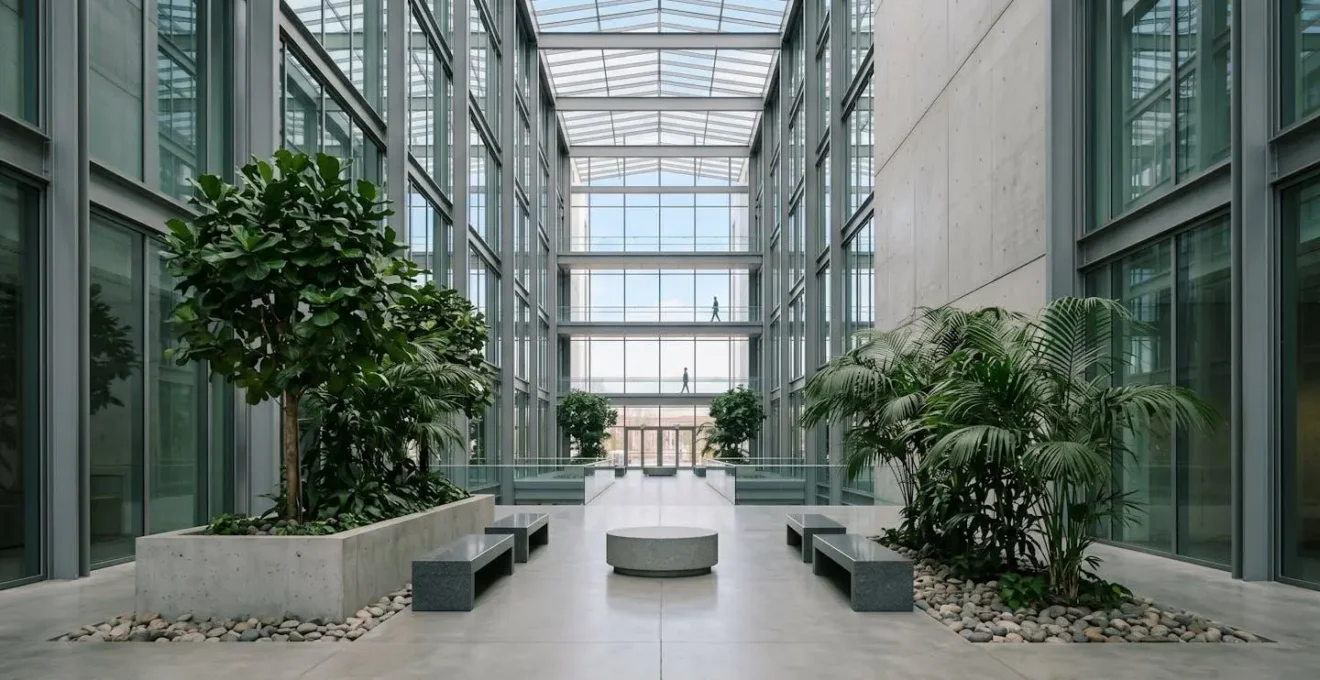
Inside, you’ll often find waterfalls, comfortable seating, and a level of quiet that feels impossible for Midtown. These are not cafes where you’re expected to buy something. They are oases, purpose-built for moments of decompression. The atrium in the Ford Foundation Building or the indoor park at 550 Madison are prime examples. The goal is to build a mental map of at least three such Sanctuary Zones near your office. When you feel the pressure building, you don’t just “deal with it.” You execute a plan: you walk to your nearest sanctuary, put your phone on silent, and take 20 minutes to reset. This isn’t wasted time; it’s a strategic investment in your afternoon’s productivity and mental clarity.
Commute from Jersey or Rent in City: Which Saves More After 5 Years?
The ultimate commute hack is a macro-level decision: your home address. The “Jersey vs. City” debate is often oversimplified to a monthly rent vs. train pass calculation. A true productivity-hacker analysis requires a 5-year outlook, factoring in all costs, both financial and psychological. Financially, the surface-level math seems to favor New Jersey. Housing data reveals that rent in New York City is roughly 58% higher compared to New Jersey, a staggering differential that forms the basis of most commuters’ decisions.
However, this single data point is misleading. A comprehensive analysis must include property taxes (significantly higher in NJ), income tax complexities (paying both NJ and NY state taxes), and the full cost of transportation, which often includes car ownership in the suburbs. Most importantly, you must quantify the cost of your time. A 90-minute commute each way is three hours a day. Over a 5-year period, that’s over 3,750 hours—or roughly 156 full days of your life—spent in transit. What is the opportunity cost of that time? Could it be used for a side hustle, professional development, or simply rest, all of which have a real economic and personal value?
The table below provides a more holistic breakdown. It forces you to look beyond the rent check and consider the total ecosystem of costs. The “right” answer is personal, but it must be based on a full accounting of the variables, not just the most obvious one. This is the core of a “Commute ROI” calculation.
| Cost Category | Living in NYC | Living in NJ (Commuting to NYC) |
|---|---|---|
| Overall Cost of Living | Baseline (100%) | 53.3% lower |
| Rent | $2,800-$4,000+ (1BR) | $1,800-$2,200 (1BR suburban) |
| Income Tax | NYC city tax (additional) | NJ income tax + NY state tax (with credit) |
| Property Tax (homeowners) | 0.88% average | 2.42% average (nearly 3x higher) |
| Transportation | $132/month (unlimited MetroCard) | $200-$400/month (rail pass) + car costs |
| Daily Commute from NJ | N/A | 15-90 minutes each way depending on location |
| Restaurant Prices | Baseline (100%) | 51% lower in NJ |
Key takeaways
- Your commute is a system to be optimized, not a punishment to be endured. Control is the goal.
- Leverage hard data—from transit hub architecture to lunch costs—to make a series of small, informed decisions that yield major daily gains.
- Master “geospatial hacking” by using underground passages and POPS to bypass street-level chaos and find “Sanctuary Zones” for mental resets.
Tolls vs. Train Tickets: The Math of Commuting Under the New Rules
For those still considering driving, the implementation of congestion pricing has fundamentally altered the financial equation. It is no longer just a matter of gas, wear-and-tear, and existing bridge/tunnel tolls. The congestion fee is a significant, non-negotiable daily expense that must be factored into any rational cost-benefit analysis. Under the program, drivers entering Manhattan below 60th Street pay a $9 peak toll for passenger vehicles with an E-ZPass. Without one, the cost jumps by 50%. This fee applies once per day and is in addition to all other tolls.
This new variable makes the math brutally clear for most daily commuters: driving is now a luxury, not a practical alternative. A monthly rail pass, which may seem expensive at $400, pales in comparison to the total cost of driving. When you factor in the congestion fee, a bridge toll, parking (which can easily be $40+/day in Midtown), gas, and insurance, the monthly cost of bringing a car into the city can easily exceed $1,500. This doesn’t even touch upon the time and stress cost of navigating traffic.
The table below lays out the stark reality. The introduction of congestion pricing was a deliberate policy choice to make driving into the city’s core an economically irrational decision for the vast majority of commuters. The MTA has also signaled that the toll will increase over time. Your personal “Commute ROI” calculation must now heavily penalize the driving option. Unless your employer is subsidizing a significant portion of these costs, the train is almost certainly the more efficient choice from both a financial and time-management perspective.
| Transportation Mode | Daily Cost | Monthly Cost (22 workdays) | Annual Cost (260 workdays) | Notes |
|---|---|---|---|---|
| Congestion Toll (E-ZPass peak) | $9.00 | $198 | $2,340 | Charged once per day for passenger vehicles |
| Congestion Toll (Tolls by Mail peak) | $13.50 | $297 | $3,510 | 50% surcharge without E-ZPass |
| NJ Transit Monthly Pass | N/A | $200-$400 | $2,400-$4,800 | Varies by zone and route |
| PATH Train Monthly Pass | N/A | ~$89 | ~$1,068 | For Hudson County to Manhattan |
| NYC Subway Unlimited | N/A | $132 | $1,584 | For travel within NYC boroughs |
| Full Car Ownership (insurance, gas, maintenance, depreciation) | N/A | $800-$1,600 | $9,600-$19,200 | Plus congestion toll if driving into Manhattan |
How to Land an Executive Role at a Fortune 500 HQ in Manhattan Without an Ivy League Degree?
The same optimization mindset used to hack your commute can be applied to hacking your career trajectory. The conventional wisdom is that landing an executive role at a Manhattan Fortune 500 headquarters requires a specific pedigree: an Ivy League degree, a linear career path, and the right establishment connections. This is the “street-level” view of career progression—slow, crowded, and subject to gatekeepers. The “hacker” approach bypasses this by focusing on a different set of variables: demonstrated value, network density, and internal mobility.
Just as you’d choose a train line based on efficiency, not prestige, you should build skills that solve expensive, high-visibility problems for the company, regardless of their glamour. Become the go-to expert in a niche but critical area—supply chain logistics, data compliance, or internal systems integration. This demonstrated, tangible value is a currency that spends far better than a diploma from a decade ago. Your performance becomes your pedigree. This makes you an internal asset that is too valuable to lose, creating leverage for promotion.

Furthermore, instead of “networking” at generic industry events, focus on building high-density relationships within your own organization and adjacent ones. The same principles of navigating Midtown’s physical spaces apply to its social ones. Identify the key nodes—the influential project managers, department heads, and administrative gatekeepers—and build genuine rapport. Offer help before you ask for it. A strong internal network is like knowing the underground passages; it gets you where you need to go faster and more reliably than the public route. Landing an executive role isn’t about having the right resume; it’s about making your promotion the most logical, efficient solution to the company’s problems. You become the path of least resistance.
Stop letting the city’s broken systems dictate the quality of your day and the trajectory of your career. Start implementing these data-driven hacks now and reclaim control of your time, your sanity, and your professional future.