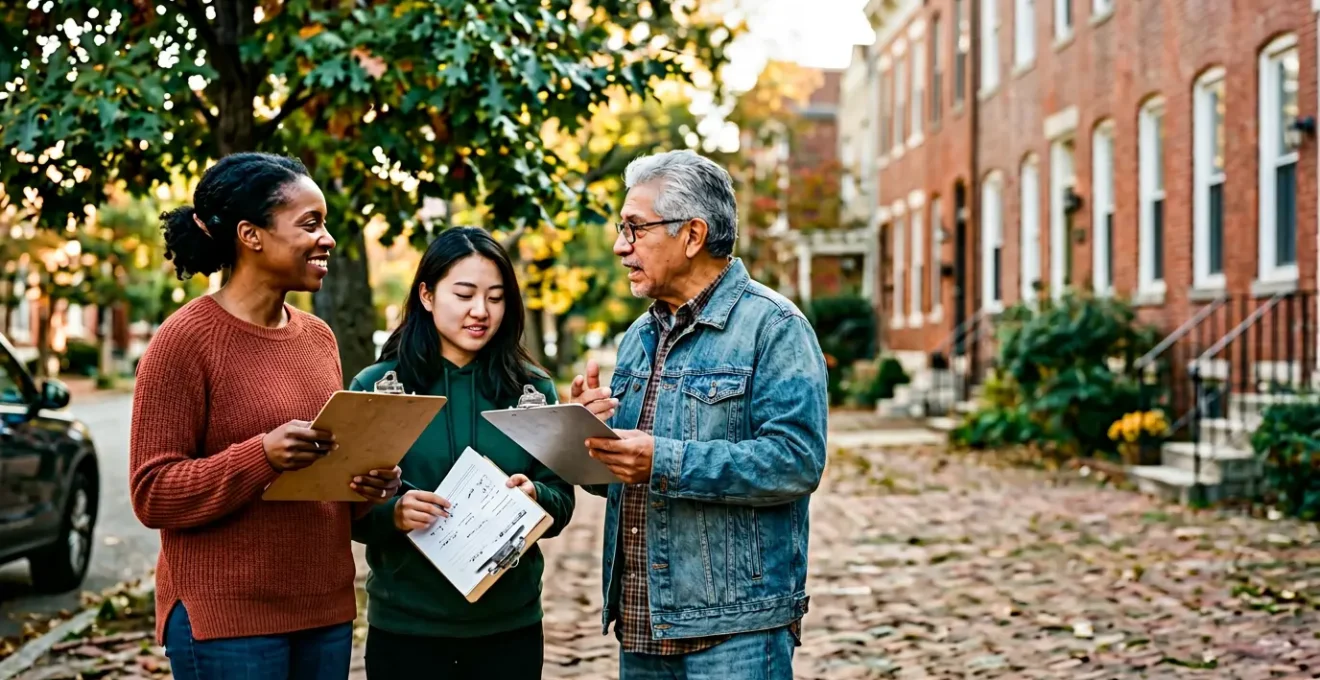
The fight for your neighborhood is won on the sidewalk, not on social media.
- Effective activism prioritizes face-to-face organizing and handwritten petitions over digital campaigns, which are demonstrably less effective.
- Sustaining momentum requires strategically managing volunteer energy to prevent burnout, not just relying on initial passion.
Recommendation: Shift your focus from raising online “awareness” to creating tangible, media-ready moments and building undeniable political pressure through a disciplined ground game.
It starts with a notice taped to a lamppost or a rumor at the local coffee shop. A luxury condo, a big-box store, or a casino is planned for the heart of your neighborhood. The immediate feeling is often one of powerlessness, a David-and-Goliath struggle against faceless developers with deep pockets. The instinctive reaction in our digital age is to fight back online. “I’ll start a Change.org petition,” someone says. “We’ll create a hashtag,” says another. These are well-intentioned first steps, born from a genuine desire to protect the community fabric—the small businesses, the historic buildings, the public parks that give a place its soul.
But what if this digital-first approach is exactly what developers expect, and ultimately, what allows them to win? What if the real power isn’t in the number of retweets, but in the number of neighbors you’ve spoken to face-to-face? The truth that veteran organizers know is that successful campaigns are rarely won with clicks. They are won with clipboards, with meticulously planned meetings, and with a deep understanding of how to turn neighborly concern into real political pressure. This isn’t about simply making noise; it’s about making noise that decision-makers cannot afford to ignore.
This guide is your tactical playbook. We are going to dismantle the myth of easy “clicktivism” and replace it with the proven strategies of a robust ground game. We’ll cover why old-school signatures still matter, how to get a reporter to actually show up, and how to sustain your group’s energy for the long, hard fight. This is how you move from feeling powerless to becoming an unstoppable force for your community.
To equip you for this fight, this article breaks down the essential strategies into a clear, actionable roadmap. From initial mobilization to navigating the complexities of city planning, each section provides the tactical knowledge needed to build a successful grassroots campaign.
Summary: A Tactical Guide to Winning Your Neighborhood Back
- Why Online Petitions Fail and Handwritten Signatures Win
- How to Get a Local Reporter to Cover Your Block Association Meeting
- The 6-Month Wall: How to Sustain Momentum Without Exhausting Volunteers
- The Jane Jacobs Playbook: Tactics That Still Work 60 Years Later
- Micro-Grants vs. Crowdfunding: Funding Your Protest Materials
- Does Saving Historic Buildings Accelerate Neighborhood Gentrification?
- How Community Boards Can (Sometimes) Stop a Skyscraper
- Why New York’s City Planning Favors Supertalls Over Public Parks?
Why Online Petitions Fail and Handwritten Signatures Win
The first instinct in any modern campaign is to launch an online petition. It feels productive, scalable, and easy to share. Yet, it’s one of the least effective tools for creating local change. The data is sobering: research confirms that over 99% of online petitions fail to even reach their signature goals, let alone influence policy. Why? Because they lack the one thing that politicians and developers truly respect: tangible, committed local support. An online signature is a low-effort click; a handwritten signature represents a conversation, a physical presence, and a neighbor willing to open their door.
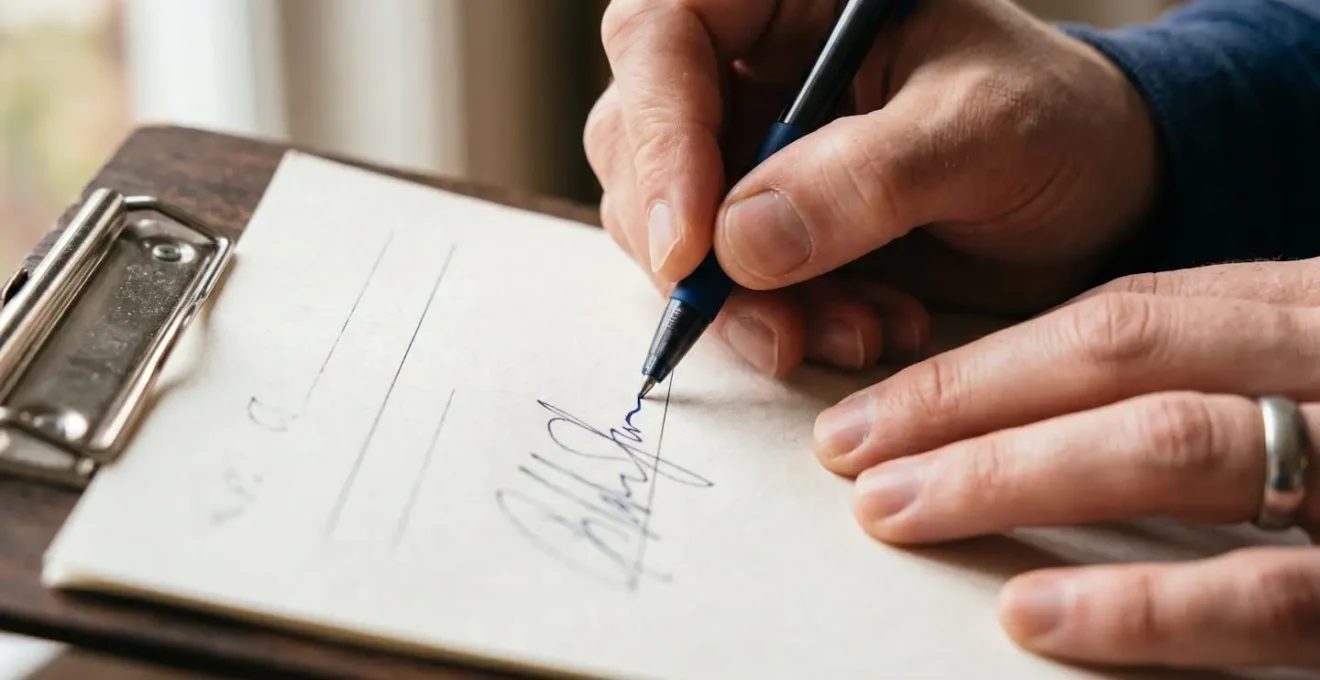
This is the core of the ground game. Going door-to-door with a clipboard isn’t just about collecting names; it’s about building a network. Each signature is an opportunity to identify supporters, recruit volunteers, and gather stories. As you can see in the image below, the act of signing is a personal commitment, a physical endorsement of the cause that a simple click can never replicate.
Furthermore, the momentum of a campaign is often decided in the first few days. Analysis of petitions shows that first-day signature count is the single greatest predictor of success. An online campaign can slowly trickle in, but a coordinated weekend of door-knocking creates an immediate, undeniable surge of support. This initial burst of energy is what creates political pressure, signaling to officials that your movement is organized, serious, and represents a significant portion of their constituents. Don’t waste your most critical window of opportunity on a strategy built for clicks instead of commitment.
How to Get a Local Reporter to Cover Your Block Association Meeting
Once you’ve built a base of support through your ground game, the next step is to amplify your message. A room full of angry residents is a start, but a local news segment about that room is a force multiplier. The problem is that reporters are inundated with requests. Simply sending a press release about your meeting is not enough. You must create a media-ready moment—an event so visually compelling and narratively clear that it’s easy for them to cover. This is about tactical visibility, not just wishful thinking.
Your goal is to make the story irresistible. Frame your spokesperson not as “President of the Block Association,” but as a compelling character: “the third-generation resident fighting to save her grandfather’s favorite park.” Instead of just complaining about a developer, offer the press exclusive access to your own well-researched data, like a pedestrian traffic count or a survey of local businesses threatened by the project. This transforms you from a protest group into a credible source of information. The meeting itself is just the backdrop; the real show is the 15-minute, visually interesting event you stage just before or after. Think a banner unfurling, a guided tour of the threatened site, or a powerful visual demonstration.
Your Action Plan: Creating a Media-Ready Moment
- Plan a visually compelling 15-minute event before or after the meeting (e.g., banner unfurling, site tour, visual demonstration).
- Offer one trusted reporter exclusive first access to your own community-collected research data to build a relationship and guarantee coverage.
- Frame your spokesperson as a compelling character with a personal story, not just a role or position.
- Create pre-prepared, 2-minute testimonies from residents, optimized for news cameras and sharable social media clips.
- Use the official forum (like a community board meeting) as a public stage for your campaign, not just as a place to convince board members.
This strategic approach to media ensures your message reaches a far wider audience, building public sympathy and increasing the political pressure on decision-makers. It shows that you are not just a small group of dissenters, but a well-organized and media-savvy movement that represents the community’s will.
The 6-Month Wall: How to Sustain Momentum Without Exhausting Volunteers
The initial outrage over a new development can fuel a flurry of activity, but activism is a marathon, not a sprint. Many grassroots movements crumble when they hit the “6-Month Wall”—that point where initial passion wanes, the timeline stretches on, and volunteers start to disappear. This isn’t a sign of failure; it’s a predictable challenge that must be managed with strategy, not just enthusiasm. The key is to shift from thinking about passion to focusing on strategic energy management. Burnout is the single greatest internal threat to your campaign.
This isn’t just an anecdotal problem. A staggering 95% of nonprofit leaders identify burnout as a major organizational concern. Your volunteer group is no different. You must actively fight it. Instead of framing the goal as “Stop the Casino,” which could take years, break the mission into smaller, achievable milestones. “Collect 200 signatures this month.” “Raise $1,000 for flyers by Friday.” “Get 50 people to the next meeting.” Celebrating these small, tangible wins with social events like a potluck or a gathering at a local pub creates a rhythm of success and reinforces community bonds.
Furthermore, respect your volunteers’ time. Replace open-ended commitments with time-bound “tours of duty.” A “4-Week Social Media Blitz Team” is a much easier ask than “Can you help with social media?” Schedule official “fallow periods”—weeks with no meetings, no emails, and no tasks—to allow everyone, especially leaders, to truly disconnect and recharge. An exhausted movement is an ineffective one. By building rest and celebration into your strategic plan, you ensure your group has the resilience to cross the finish line, no matter how far away it is.
The Jane Jacobs Playbook: Tactics That Still Work 60 Years Later
The tactics we’ve discussed—the ground game, tactical visibility, and energy management—are not new. They are rooted in a powerful philosophy of urban activism championed by one of its greatest heroes: Jane Jacobs. A writer and activist with no formal training in urban planning, Jacobs led the successful fight to stop master-builder Robert Moses from bulldozing entire neighborhoods in New York City. Her playbook is more relevant today than ever, providing the intellectual and moral foundation for our work.
Jacobs’ core insight was that vibrant, safe, and economically successful city neighborhoods are not the product of top-down master plans. They are the result of a complex, organic “sidewalk ballet”—the everyday interactions of residents, shopkeepers, and passersby. As she famously wrote:
Cities depend on a diversity of buildings, residences, businesses and other non-residential uses, as well as people of different ages using areas at different times of day, to create community vitality.
– Jane Jacobs, The Death and Life of Great American Cities
This philosophy directly challenges the logic of most large-scale development, which seeks to impose a single, monolithic use on a complex environment. A casino, a supertall luxury tower, or a big-box store fundamentally disrupts this delicate ecosystem. Your job as an organizer is to make this invisible “sidewalk ballet” visible to the powers that be. The image below captures the essence of this vitality—a mix of people, uses, and architecture that creates a living community.
Case Study: Jane Jacobs’ Victory Against the Lower Manhattan Expressway
In the 1960s, Robert Moses planned an expressway that would have destroyed what are now SoHo, Little Italy, and Chinatown. Jane Jacobs organized fierce grassroots opposition. She didn’t just use statistics; she armed residents with the tools of observation to document the intricate social and economic life of their streets. By leading public “critiques” and mobilizing residents to pack public hearings, she demonstrated that the neighborhood had a value that planners’ abstract models could not capture. Though arrested for her passionate activism, her tactics made the “sidewalk ballet” a political force, leading to the expressway’s cancellation and preserving the very character that makes those neighborhoods world-famous today.
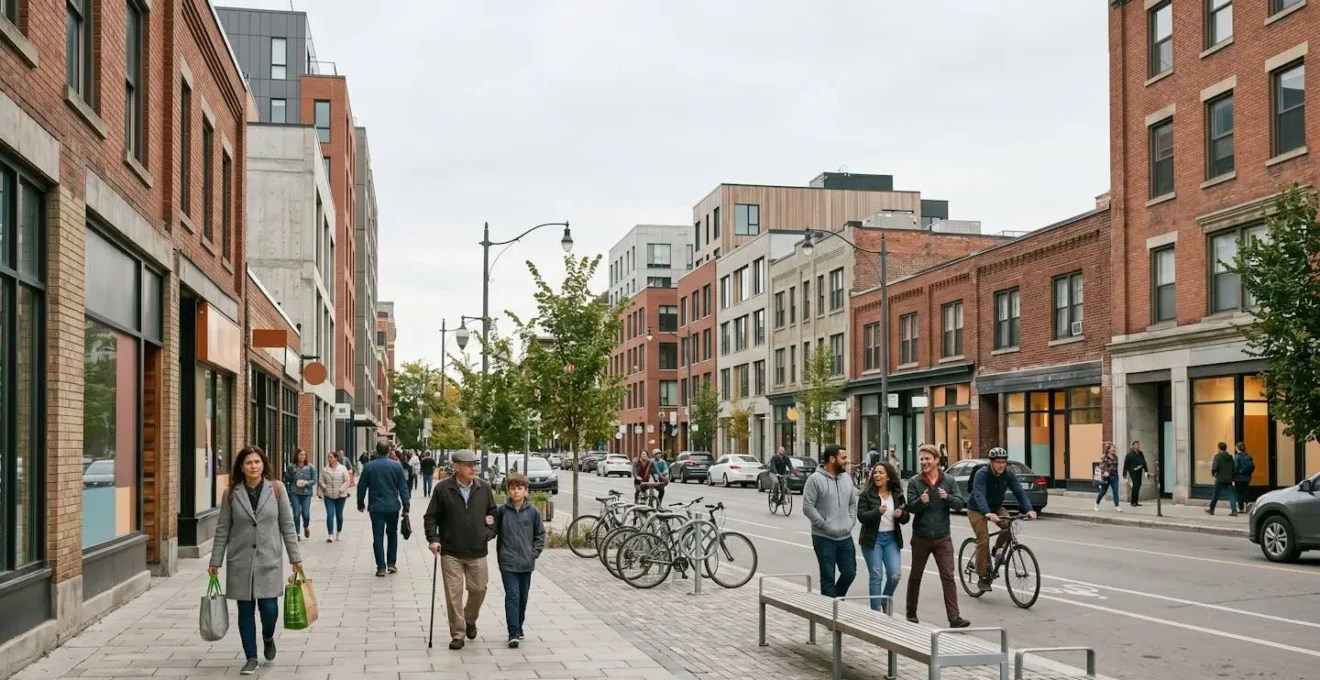
By adopting Jacobs’ perspective, your fight is no longer just “anti-development.” It becomes a pro-community movement, a positive campaign to protect the existing, successful urban fabric. This reframing is a powerful tool for winning both public and political support.
Micro-Grants vs. Crowdfunding: Funding Your Protest Materials
While passion and people are your primary assets, a successful campaign inevitably requires some funding for essentials like printing flyers, hosting a website, or buying supplies for a rally. This raises a common question: where does the money come from? Many groups immediately turn to crowdfunding platforms like GoFundMe, but this isn’t always the most strategic choice. Understanding the difference between crowdfunding and seeking micro-grants from activist funds or foundations is key to a smart funding strategy.
Crowdfunding’s greatest strength is its narrative value. Being able to declare that “500 local neighbors donated to our cause” is a powerful political statement that demonstrates broad public support. It’s excellent for raising funds for highly visible materials like lawn signs and banners. However, it can be slow and requires significant effort to manage. Micro-grants, on the other hand, offer speed and discretion. These small grants ($500 – $10,000) from foundations or activist funds are designed for urgent needs and can be approved in weeks, not months. They are ideal for less public but critical costs, such as legal filing fees or hiring an expert witness to challenge a developer’s environmental report. The key is to match the funding tool to the specific need.
The following table, based on a recent comparative analysis of activist funding, breaks down the strategic considerations for each option.
| Factor | Crowdfunding (e.g., GoFundMe) | Micro-Grants (Foundation/Activist Funds) |
|---|---|---|
| Primary Benefit | Demonstrates broad public support; political legitimacy | Speed and discretion for urgent needs |
| Best Use Cases | Lawn signs, flyers, visible campaign materials | Legal filing fees, expert witness retainers, research costs |
| Timeline | Weeks to months for building momentum | Days to weeks for approval and disbursement |
| Transparency | Highly public; every donor visible | Can be confidential if needed |
| Narrative Value | High – ‘500 local donors’ is a powerful messaging | Low – typically not publicized |
| Administrative Burden | Moderate – requires campaign management, updates | High – application process, reporting requirements |
| Typical Amount | $1,000 – $50,000 depending on network size | $500 – $10,000 per grant |
A sophisticated campaign often uses both. Use a public crowdfunding campaign to build momentum and demonstrate support, while simultaneously applying for private micro-grants to cover your core operational and technical expenses. This two-track approach gives your movement both the public legitimacy and the financial agility it needs to succeed.
Does Saving Historic Buildings Accelerate Neighborhood Gentrification?
This is one of the most difficult and emotionally charged questions in community activism. Opponents of historic preservation, often developers themselves, will weaponize this argument, claiming that your efforts to save a beloved old building will inevitably make the neighborhood more expensive and push out long-term residents. It’s a cynical tactic designed to divide your coalition. The answer is complex, but it is not the simple “yes” that they want you to believe. Saving a building does not, by itself, cause gentrification; it’s the type of investment and policy that follows that matters.
Gentrification is driven by a massive influx of capital that fundamentally changes a neighborhood’s economic and demographic character. A single, out-of-scale luxury development can do more to accelerate displacement than a dozen lovingly restored historic buildings. In fact, grassroots preservation efforts are often a form of resistance against gentrification, not a catalyst for it. When a community fights to save a local landmark, they are fighting for local control and against the speculative forces that see their neighborhood as just another asset class.
The key is to pair preservation with proactive, community-focused policies. If you save a historic theater, fight to ensure it’s operated by a local non-profit with affordable ticket prices. If you designate a historic district, simultaneously advocate for inclusionary zoning, rent stabilization, and property tax relief for longtime homeowners. The argument that saving a building causes gentrification falsely assumes that the only alternative to demolition is a high-end luxury conversion. Our job is to present a third option: community-led preservation that protects both the built environment and the people who live there.
How Community Boards Can (Sometimes) Stop a Skyscraper
Community Board meetings are a central battleground in any development fight. It’s tempting to see them as the final decision-makers, and to feel demoralized when they vote in favor of a project. But this misunderstands their true power and your strategic goal. In most cities, a Community Board’s vote is purely advisory. They cannot, by themselves, stop a skyscraper. Their real power lies in their public platform, and your goal is not necessarily to win the vote, but to win the political narrative.
The strategy is to use the Community Board meeting as a stage for your campaign. This is where you put your media training to work, where your well-researched reports are entered into the public record, and where the emotional testimonies of residents create a compelling, human story. A ‘no’ vote from the board is great, but a ‘no’ vote that is messy, well-attended, and dominates local news coverage is infinitely more powerful. As one veteran organizer put it:
The strategy is not to win the vote, but to make the ‘no’ vote so well-researched, well-attended, and publicly resonant that it becomes politically toxic for the final decision-maker to ignore.
– Community Organizing Best Practices, Civil College Foundation Community Organizing Program Case Studies
The final decision on a major project is almost always made by an elected official, like a city council member or borough president. They are the ones who feel the political pressure. A Community Board’s recommendation gives them political cover. If the board’s ‘no’ vote was backed by a huge public outcry that you orchestrated, it becomes very difficult for that politician to go against it. The board meeting isn’t the end of the fight; it’s a critical tool for building the political ammunition you need to win the real war.
Key takeaways
- Real change comes from a disciplined “ground game” of face-to-face organizing, not just online “clicktivism.”
- Sustaining a campaign requires strategically managing volunteer energy with milestones and planned rest to avoid burnout.
- The goal of public meetings is often not to win the advisory vote, but to create undeniable political pressure on the ultimate decision-makers.
Why New York’s City Planning Favors Supertalls Over Public Parks?
When you’re fighting a single bad project, it’s easy to get lost in the details of that one battle. But to truly understand what you’re up against, it’s crucial to zoom out and see the systemic forces at play. Using a city like New York as a case study, we can see a common pattern: city planning processes are often structured to favor large-scale, private development over public goods like parks and community spaces. This isn’t necessarily due to malice; it’s often the result of a system built on zoning laws and tax incentives that make a supertall luxury tower a much easier and more profitable venture than a new public park.
Zoning codes often allow for immense density (“as-of-right” development) on certain plots, meaning a developer can build a massive structure with minimal public review. To build something smaller or create a park instead would often require a complex and uncertain rezoning process. Furthermore, cities are heavily reliant on property tax revenue, and a supertall tower generates exponentially more tax revenue than a park or a low-rise historic building. This creates a powerful institutional bias towards maximizing private development, even when it comes at the cost of public space and quality of life.
This is the larger context of your fight. You are not just fighting one developer; you are pushing back against a system that is often tilted in their favor. This understanding is not meant to be discouraging, but empowering. It clarifies that your grassroots efforts are more than just a “Not In My Backyard” (NIMBY) protest. You are fighting for a more humane and balanced approach to urban development. You are demanding that the “sidewalk ballet” and the long-term health of the community be valued as highly as short-term tax revenue. Your local campaign is a crucial part of a much larger movement to reclaim city planning for people, not just for profit.
The fight for your neighborhood isn’t won by one person. It’s won block by block, conversation by conversation. Take this playbook, find one neighbor who feels the same way you do, and start the conversation. Your community is waiting for you.