The loss of ancestral languages by the third generation in New York is not inevitable, but a failure to engage with the city’s hidden “infrastructures of heritage.”
- The “Silent Gap” between generations is driven by a process of “Shared Language Erosion,” where communication breaks down as children master English and lose their heritage tongue.
- Sustaining language requires moving beyond home practice to actively use institutional supports like dual-language schools and authentic cultural spaces.
Recommendation: Actively interview elders, trace your family’s Ellis Island history, and leverage free library resources to create an ecosystem of intentional cultural transmission.
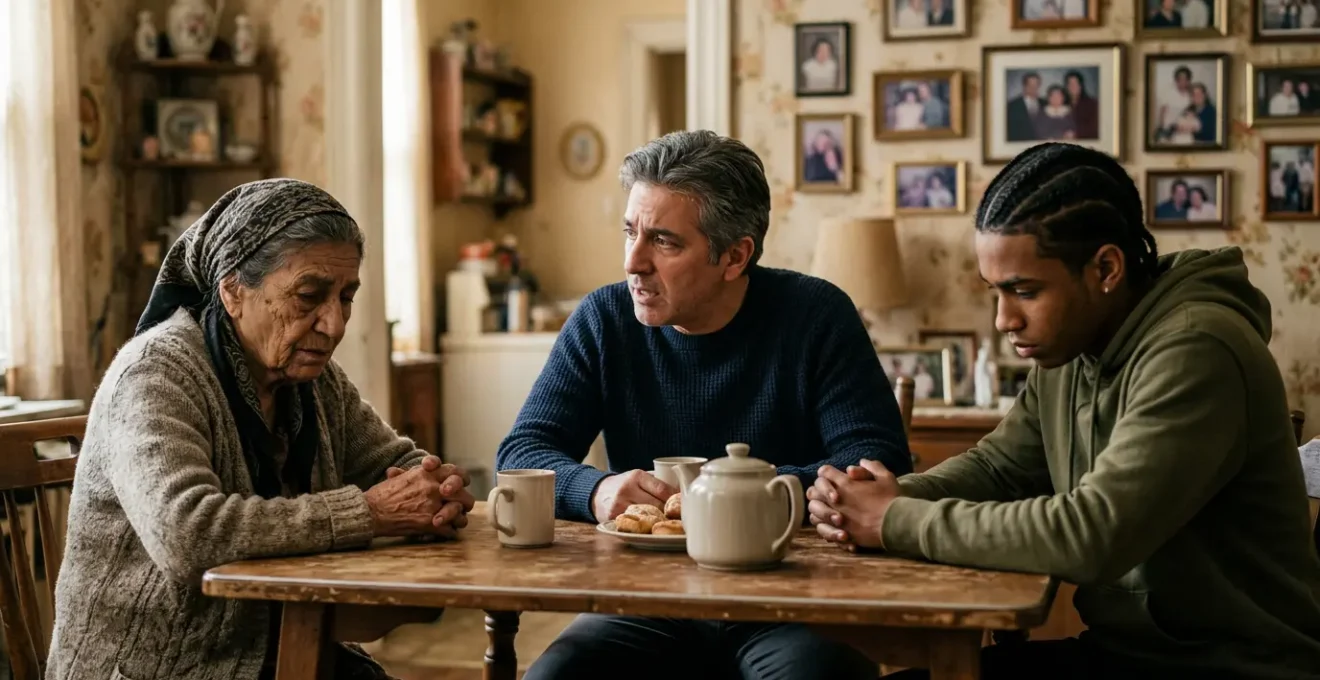
For many third-generation New Yorkers, it’s a painfully familiar scene: a grandparent shares a story rich with the cadences of their homeland, and the grandchild, loving but lost, can only offer a nod and a smile. This communication breakdown, the “Silent Gap,” is more than just a language barrier; it’s a chasm where family history, cultural nuances, and a sense of identity can disappear. The common advice—”just speak the language at home”—oversimplifies a complex social dynamic. In a city that is a relentless engine of assimilation, passive exposure is often not enough to counteract the overwhelming dominance of English in schools, media, and peer groups.
This struggle is a well-documented sociolinguistic pattern, often called the “three-generation model” of language loss. The first generation arrives, speaking their native tongue. The second generation is bilingual, navigating between their parents’ world and the English-speaking society. By the third generation, English dominance is often complete. But what if this isn’t an unavoidable fate? What if the key to preservation lies not just in willpower, but in strategy? This article argues that the erosion of ancestral tongues is a symptom of a deeper disconnection from the city’s vast, yet often hidden, infrastructures of heritage.
To reverse this trend, families must become cultural strategists. This involves moving beyond nostalgia and taking intentional action. We will explore the sociolinguistic forces driving this phenomenon and provide a concrete roadmap for families. This guide will show you how to navigate the city’s educational systems, find authentic community hubs, leverage public resources, and, most importantly, transform family history from a fading memory into a living, breathing part of your children’s identity. It’s about building a resilient ecosystem for your language to thrive in the world’s greatest melting pot.
This guide provides a structured approach to understanding and combating heritage language loss. Below, you will find a detailed breakdown of the core challenges and actionable solutions available to families in New York City.
Summary: Why Third-Generation New Yorkers Struggle to Maintain Their Ancestral Languages?
- Dual Language Programs in NYC Schools: How to Get Your Child In
- Beyond the Parade: Where to Find Authentic Cultural Celebrations, Not Just Parties
- The “Silent Gap”: Why Grandparents and Grandkids Can’t Communicate
- How to Trace Your Ancestors’ Arrival at Ellis Island (and Beyond)
- How to Interview Your Elders Before Their Stories Are Lost
- How to Practice a Heritage Language for Free at NYC Public Libraries
- How Little Italy Shrank to Three Blocks: The History of Language Islands
- How New Yorkers Build Resilient Support Networks for Heritage Preservation
Dual Language Programs in NYC Schools: How to Get Your Child In
One of the most powerful infrastructures for heritage language maintenance is the public school system, yet it remains critically underutilized. Dual Language (DL) programs, where students are taught in two languages, are a proven method for developing true bilingualism and biliteracy. They offer a structured environment where the ancestral language is not just a “special” subject but an integral medium of instruction. However, access is limited; data from the NYC Department of Education reveals that only 8.39% of English Language Learners were served in Dual Language programs in the 2024-2025 school year. This exclusivity makes a proactive strategy essential for parents.
The success of these programs can be transformative. The Rafael Hernández Dual Language School in the Bronx, for example, was founded to help second- and third-generation Puerto Ricans maintain Spanish. There, an estimated 95 percent of students graduate bilingual and with a New York State Seal of Biliteracy. This stands in stark contrast to national trends of language loss. For families concerned about their children seeing the heritage language as “less important” than English, a DL program validates its value and provides a community of bilingual peers, counteracting the social pressure to be monolingual.
Navigating the NYC Department of Education to secure a spot requires diligence. It is not an automatic process, and parents must actively research and apply to ensure their child is considered. The process involves identifying schools, understanding eligibility, and sometimes advocating for placement if your zoned school lacks an appropriate program.
Action Plan: Enrolling in an NYC Bilingual Program
- Initial Check: Visit schools.nyc.gov to determine if your zoned school offers a dual language program in your heritage language.
- District-Wide Search: If your assigned school does not have a program, you have the right to select another school within the same district that does offer one.
- Program Research: Download the official Bilingual Program List from the NYC DOE website. Use its filters to search by borough, district, program type, and specific language.
- Formal Application: For children identified as speaking another language at home, apply for educational services. This can include Transitional Bilingual Education, English as a New Language (ESL), or the more immersive Dual Language programs.
- Explore Newer Options: For less common languages like French, Japanese, or Bengali, investigate the newer pre-K and school-age programs that have been announced since 2019, as these may have different enrollment processes.
Beyond the Parade: Where to Find Authentic Cultural Celebrations, Not Just Parties
For many New Yorkers, cultural identity is expressed through large-scale, public-facing events like parades and street festivals. While these celebrations are important for visibility, they often present a curated, performative version of a culture. True cultural transmission—the passing down of nuanced traditions, values, and social codes—happens in smaller, more intimate settings. These are the authentic community hubs that form another pillar of the heritage infrastructure. Finding them, however, requires looking beyond the tourist maps and event calendars.
Authentic celebrations are less about performance for an outside audience and more about participation for the community’s sake. They are found in the basements of religious institutions, in community center kitchens, at private family gatherings, and in local parks on a Sunday afternoon. It is in these spaces that the heritage language is the default mode of communication, not a novelty. It’s where children can see the language being used naturally by people of all ages to negotiate, joke, comfort, and celebrate. This normalization is crucial for a child to internalize the language as a living, useful tool rather than a relic.
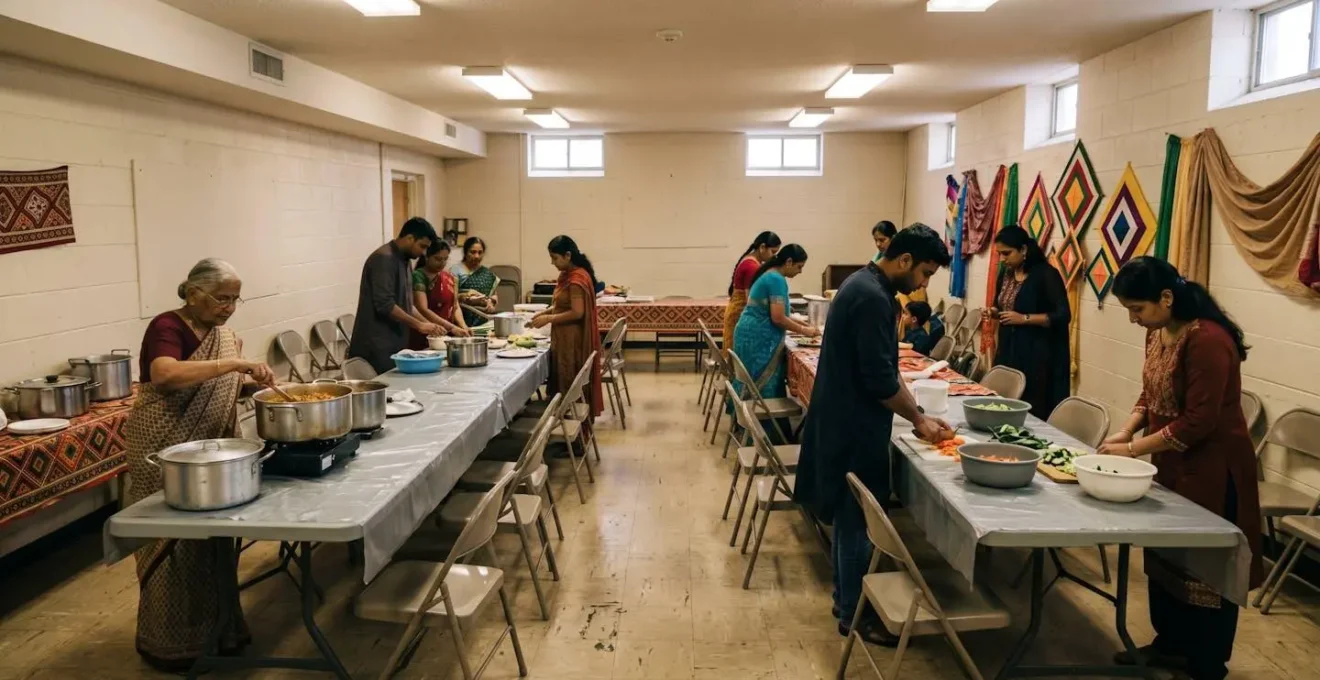
Engaging with these spaces requires a shift from being a spectator to being a participant. It might mean volunteering at a local cultural organization, joining a religious community, or simply frequenting businesses in an ethnic enclave and building relationships. For third-generation families who may feel like outsiders, this can be intimidating. Yet, it is often in these less formal environments that the strongest intergenerational connections are forged, and the language is absorbed most effectively, steeped in the context of shared food, music, and ritual.
The “Silent Gap”: Why Grandparents and Grandkids Can’t Communicate
The “Silent Gap” is the heartbreaking emotional and cultural distance that emerges when generations lose a common language. This isn’t just a matter of inconvenience; it represents the primary point of failure in the intergenerational transmission of heritage. For third-generation children, English is the language of their social world and education, while for their immigrant grandparents, the ancestral tongue remains the language of their heart and memories. The result is a communication breakdown that sociolinguists have studied for decades. Research confirms the stark reality: in the third generation, only 12 percent could speak the native language well, and this drops to a mere 2 percent by the fourth.
This phenomenon is academically defined as “Shared Language Erosion.” As one research team explains, it’s a dual process:
Shared Language Erosion is the process during which adolescents improve their English skills while simultaneously losing or failing to develop their heritage language; at the same time their parents acquire English at a much slower rate.
– Research team, Shared Language Erosion: Rethinking Immigrant Family Communication and Impacts on Youth Development
This erosion has profound personal consequences. Without a shared language, complex stories, life lessons, and expressions of affection are reduced to their simplest forms. The richness of a grandparent’s life experience becomes inaccessible. This creates a sense of disconnection and loss, as felt by many second- and third-generation individuals.
“I lost most of the Korean I learned in those lessons because I took them when [much] younger, which is sad, [considering] a big part of the reason I wanted to take them in the first place was because I felt a little disconnected.”
– Laila Kim, a second-generation Korean American
This feeling of being “disconnected” is the core of the problem. Bridging the Silent Gap requires more than just vocabulary lists; it requires creating intentional communication opportunities and recognizing that language is the vessel for the stories that bind a family together.
How to Trace Your Ancestors’ Arrival at Ellis Island (and Beyond)
For millions of New Yorkers, the story of their family’s arrival in America is etched into the history of Ellis Island. Connecting a child to this specific, tangible piece of their past can be a powerful catalyst for inspiring interest in their heritage language. It transforms the abstract idea of “ancestors” into real people with names, ages, and a documented journey. This is not just a history lesson; it’s a form of identity archeology that provides a profound “why” for language preservation. The language becomes the key to unlocking the world these ancestors inhabited.
Fortunately, the tools for this journey are more accessible than ever. The Ellis Island Family History Center database contains approximately 65 million searchable records spanning from 1820 to 1957, most of which are available for free online. The core document is the ship’s manifest, a passenger list that provides a snapshot of your ancestor at the moment of their arrival. These manifests often list not just the name, but also age, last place of residence in the old country, and sometimes even the name of a relative they were joining in the U.S. This information provides a direct link back to a specific town or region, giving a geographical anchor to your heritage.
The research process itself can be a powerful family activity. It often involves detective work, such as searching for various spellings of a name that may have been altered or “Americanized” upon arrival. Once you find a manifest, you can cross-reference the information with U.S. Census records to trace your family’s first steps in New York—their first tenement address, their first job, and the community they built. This process makes history personal and demonstrates that the heritage language wasn’t just spoken “over there,” but was the primary language spoken on the very streets where your family now lives.
How to Interview Your Elders Before Their Stories Are Lost
If the “Silent Gap” is the problem, then creating a bridge of shared stories is the solution. The most valuable cultural artifacts a family possesses are the memories held by its oldest members. A formal, intentional interview process can salvage these stories from the erosion of time and memory loss. It is an active strategy to counteract language attrition by creating a compelling reason for both the elder and the younger generation to make the effort to communicate. It reframes the grandparent not just as a loving relative, but as a living library of irreplaceable knowledge.
This process is about more than just hitting “record” on a smartphone. It’s about creating a space of respect and patience where elders feel their stories are valued. The role of the third-generation parent is often to act as a facilitator and translator, helping to bridge the linguistic and cultural gaps between grandparent and grandchild. The goal is to capture not just the “what” (events that happened) but the “why” and “how” (the feelings, the motivations, the cultural context). These interviews become a family’s primary source documents, a bespoke textbook of their own history.
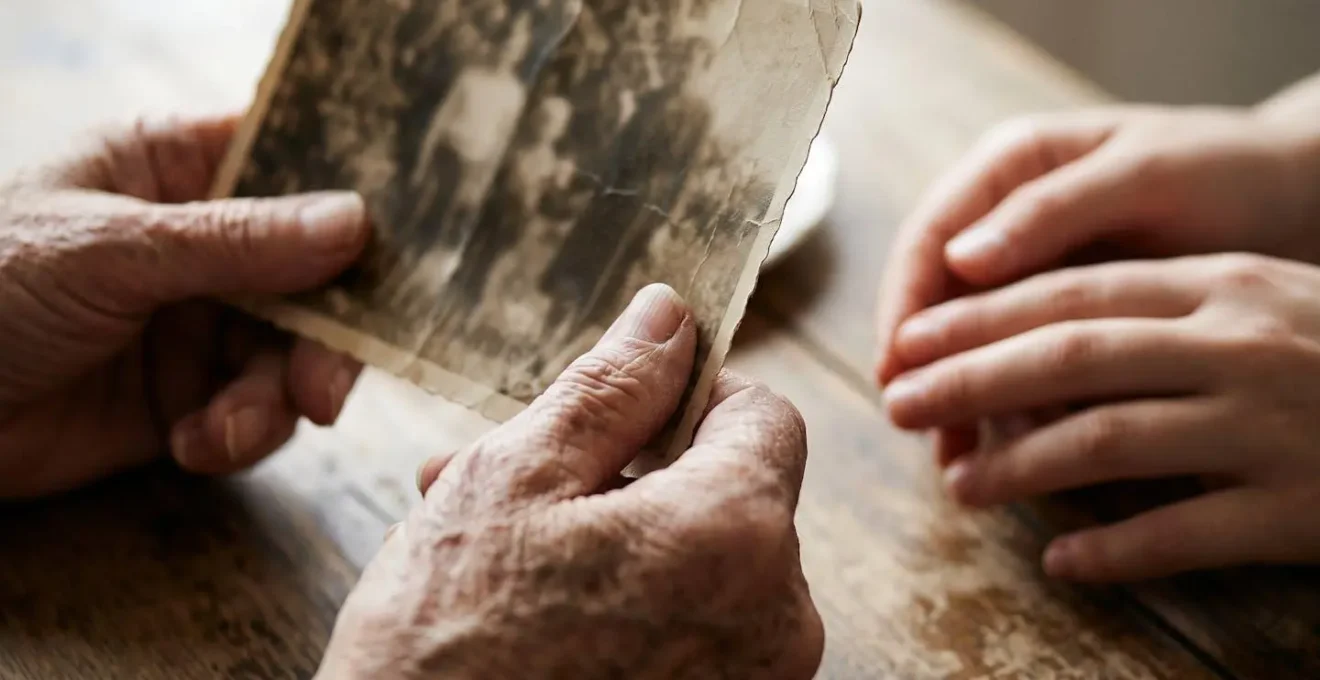
The product of these interviews—be it audio recordings, transcripts, or video—becomes a permanent family asset. For a child learning the heritage language, hearing their own grandmother’s voice telling a story from her childhood is infinitely more compelling than a generic language app. It provides authentic listening material rich with the correct accent, cadence, and vocabulary. It also powerfully demonstrates that the language is the key to accessing the most intimate and important parts of their own family’s identity. This active preservation honors the elders and equips the youth.
How to Practice a Heritage Language for Free at NYC Public Libraries
While often seen as a resource for English learners, New York City’s public libraries—the NYPL, Brooklyn Public Library, and Queens Public Library—are formidable infrastructures for heritage language preservation. These institutions offer a wealth of free resources that can support a family’s language strategy, moving beyond the confines of the home and into a public, academic space. This validates the heritage language and provides access to materials that most families could not afford on their own.
The most obvious resource is the books themselves. The city’s libraries, particularly branches in historic ethnic enclaves like Flushing, Jackson Heights, and Brighton Beach, maintain extensive World Languages collections. These include not just classic literature, but contemporary fiction, children’s books, newspapers, and magazines. Reading a simple children’s story or a current newspaper in the heritage language provides practical vocabulary and reinforces literacy in a low-pressure environment. For a third-generation child, having their own library card and checking out a book in their ancestral language is a powerful act of ownership.
Beyond physical materials, libraries provide free access to powerful digital tools. With a library card, you can use high-end language learning apps like Mango Languages and Rosetta Stone at no cost. These platforms can be used to practice the heritage language, providing structured lessons that can supplement less formal learning at home. Furthermore, libraries are community hubs that offer a wide range of cultural programming that can support your goals:
- Search for heritage-specific events, author talks, and film screenings at branches in relevant neighborhoods.
- Reserve free community rooms to start your own ancestral language conversation group with other families.
- Connect with library staff, who are often aware of under-advertised local programs and can guide you to specific resources.
How Little Italy Shrank to Three Blocks: The History of Language Islands
The story of Manhattan’s Little Italy, which has shrunk from a sprawling immigrant neighborhood to a tourist-centric strip on Mulberry Street, is a visible manifestation of language loss. When an ethnic enclave disperses, the daily, immersive exposure to the heritage language disappears with it. The community’s linguistic “immune system” weakens. This illustrates a key sociolinguistic concept: for a language to survive across generations in an immigrant context, it often requires a critical mass of speakers concentrated in one area. This is why a 2023 study of Greek-English bilingual children in New York City found that heritage language use was significantly reduced by the third generation.
However, some communities have successfully resisted this trend by creating what linguists call “language islands.” These are geographically concentrated communities where social, commercial, and religious life can be conducted almost entirely in the heritage language. As researchers from Penn State note, these islands provide a powerful bulwark against assimilation.
Chinese- and Spanish-speaking communities in New York, Los Angeles, and San Francisco have built what linguists call language islands that help preserve their mother tongue over long periods.
– Penn State Bilingualism Matters Research, Immigrant Languages in the United States – Disappearing or Enduring?
For families who no longer live within such an enclave—a common situation for the more assimilated and economically mobile third generation—the lesson is not to move. Rather, it is to understand the function of these language islands and to artificially recreate their benefits. This means intentionally seeking out the businesses, cultural centers, and social networks that still operate within these areas. It might mean a weekly trip to Flushing for groceries and dim sum, or attending services at a specific church in Astoria. It is about creating a regular, structured immersion that mimics the daily reinforcement that a language island naturally provides. This transforms cultural connection from a passive identity into an active, regular practice.
Key Takeaways
- The “three-generation model” of language loss is a common pattern, but not an inevitability; it can be counteracted with intentional strategies.
- Active engagement with “infrastructures of heritage”—like dual-language schools and authentic community hubs—is more effective than passive exposure at home.
- Bridging the “Silent Gap” requires creating structured opportunities for communication, such as formally interviewing elders to preserve their stories.
How New Yorkers Build Resilient Support Networks for Heritage Preservation
Ultimately, preserving a heritage language into the third generation and beyond is a communal act. It cannot be accomplished by a single family in isolation. Success depends on building a resilient and multifaceted support network—an ecosystem of intentional cultural transmission. This involves piecing together the different infrastructures of heritage discussed throughout this guide: the institutional support of schools, the immersive environment of language islands, the personal connection of family history, and the public resources of libraries. This approach acknowledges that in the face of English’s dominance, a diversified strategy is the only one likely to succeed.
A 2023 study on Greek-English bilingual children in NYC provides a powerful model. It found that all children in the study, regardless of generation, attended both mainstream English school and a heritage Greek language school for four hours per week. This dual-track education was a non-negotiable part of their lives. Crucially, the study also found that even short visits to Greece or visits from Greek relatives significantly counteracted language decline, boosting proficiency and transnational attachments. This shows that combining formal education with authentic, personal connection creates a powerful synergy. The table below, adapted from broader sociolinguistic research, summarizes the generational challenge and the key factors that promote retention.
This comparative data, based on a comprehensive analysis of immigrant trajectories from the Center for Comparative Immigration Studies, clearly shows how support factors must evolve with each generation.
| Generation | Heritage Language Use Pattern | English Dominance Level | Key Retention Factors |
|---|---|---|---|
| First Generation | Immigrants arrive speaking heritage language; acquire English over 10 years | Limited English proficiency initially | Strong heritage language maintenance; adult learning challenges |
| Second Generation | About half are English dominant; largest number of bilinguals | Mixed bilingualism; English increasingly preferred | Dual language programs; heritage language schools; family language policies |
| Third Generation | English dominance or monolingualism is prevalent; 12% speak heritage language well | Near-complete English dominance | Geographic language islands; institutional support (schools, churches); community cohesion |
For a third-generation family, the path forward is clear. It requires a conscious effort to build a network that provides the institutional and community cohesion that previous generations may have taken for granted. This is the work of a cultural strategist: identifying resources, creating routines, and forging connections to ensure that the language of your ancestors remains the language of your children.
Begin today by taking one small, intentional step. Choose one strategy from this guide—whether it’s researching a dual-language program, scheduling an interview with a grandparent, or planning a visit to your local library’s World Languages section—and put it into action this week.