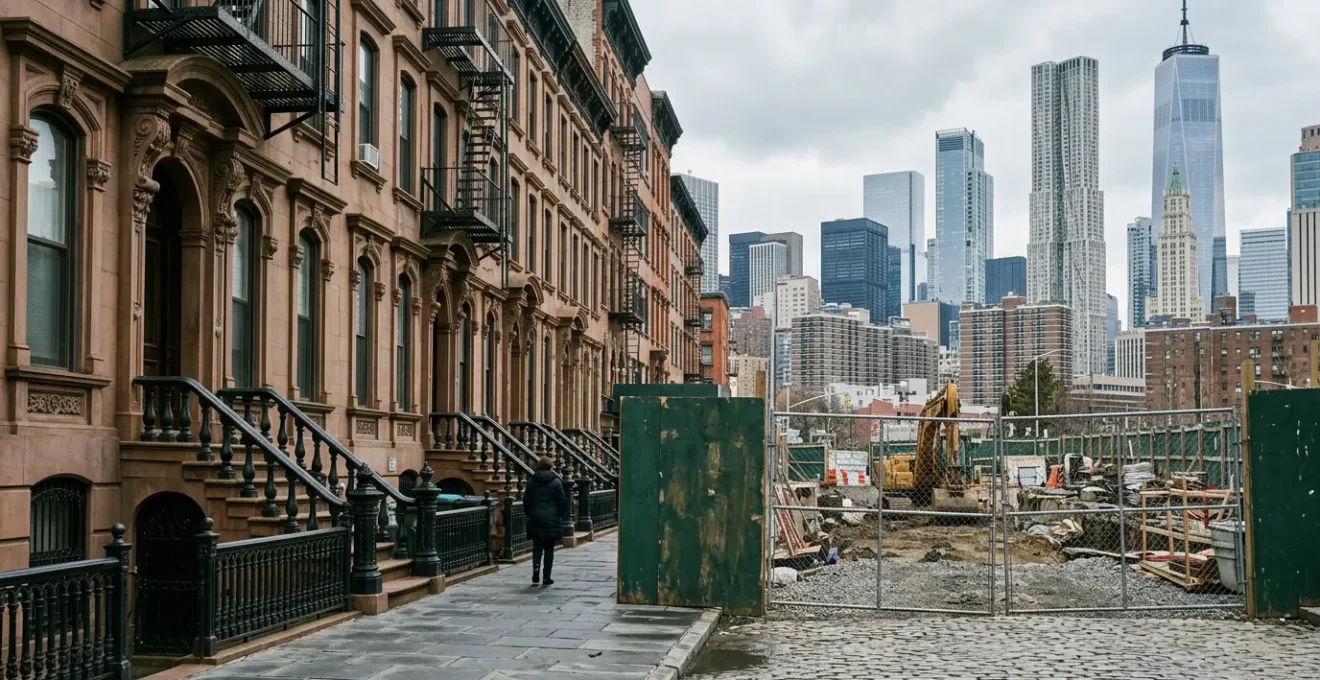
New York City’s historic preservation laws, designed to protect its architectural soul, are paradoxically a primary driver of its housing affordability crisis.
- The system creates immense “regulatory friction,” where subjective rules and bureaucratic delays actively suffocate new housing supply.
- This “cost calculus of history” imposes a significant financial premium on any renovation or new construction, making affordable projects unviable.
Recommendation: For investors and citizens alike, understanding these specific mechanisms is the first step toward advocating for reforms that balance preservation with the urgent need for housing.
For any New Yorker, the sight is familiar: a beautiful, Gilded Age building, perhaps underused or vacant, standing in a neighborhood desperate for more housing. The intuitive question follows: why isn’t more being done? The common answer often involves romantic notions of preserving neighborhood character and architectural heritage. We are told that these laws are a necessary shield against the wrecking ball, protecting the city’s unique identity for future generations. While this intention is noble, it obscures a far more complex and costly reality.
The central argument of this analysis is that beyond its cultural mission, New York’s landmarking system functions as a powerful, yet often invisible, economic brake. It has created a state of supply suffocation, where vast swaths of the city are effectively frozen in time, unable to adapt to the housing needs of a 21st-century population. This isn’t just about “red tape.” It’s about a specific set of rules, processes, and financial penalties that actively block the creation of new homes and make existing ones prohibitively expensive to maintain or upgrade.
We will move beyond the simplistic “preservation vs. progress” debate. Instead, this article will dissect the specific regulatory mechanisms and bureaucratic frictions that don’t just complicate development but actively inflate costs. We will expose how the very laws intended to stabilize neighborhoods can perversely accelerate gentrification and contribute to the housing crisis they are ostensibly separate from. This is an exploration of the true cost of history in a city that can no longer afford the price.
This article examines the core of the conflict, from the decision-making process of the city’s powerful preservation commission to the real-world financial and social consequences for property owners and residents. By understanding the system’s mechanics, we can identify where the true blockages lie.
Summary: The Preservation Paradox: How NYC’s Landmark Laws Cripple Housing Supply
- How the LPC Decides What Gets Saved and What Gets Demolished
- The Bureaucratic Nightmare of Renovating a Landmark: A Survivor’s Guide
- Does Saving Historic Buildings Accelerate Neighborhood Gentrification?
- How to Convert Historic Factories into Lofts Without Destroying Their Soul
- The Battle for the West Village: A Case Study in Preservation vs. Progress
- Why You Can’t Just Change Your Front Door Color in a Historic District
- The Wedding Cake Shape: How 1916 Zoning Laws Sculpted the Skyline
- The Cost of History: Why Heritage Conservation Makes Renovations 30% More Expensive?
How the LPC Decides What Gets Saved and What Gets Demolished
At the heart of New York City’s preservation landscape is the Landmarks Preservation Commission (LPC), a body with immense power to dictate the fate of buildings. The decision to landmark a property is not purely architectural; it is a complex interplay of historical significance, cultural value, and political pressure. For a building to be considered, it must meet specific criteria related to its age, its connection to significant historical events or figures, or its unique architectural merit. However, the process is often perceived as opaque, leaving property owners and developers in a state of uncertainty.
The commission’s mandate is to protect the “aesthetic and historical sense” of the city, but what qualifies as significant can be subjective. An activist group’s passionate campaign or a politician’s support can heavily influence an outcome. This introduces a layer of unpredictability that is anathema to development planning, which relies on clear, foreseeable rules. The rate of designation also fluctuates with political winds; for instance, the Adams administration has seen a slower pace of designations, averaging around 10 landmarks per year, a shift from prior administrations that reflects changing priorities between preservation and development.
Once a building or an entire district is landmarked, the LPC’s control becomes absolute. Every proposed exterior alteration, from a new window to a rooftop addition, requires a permit from the commission. This gatekeeping function is the primary source of what we term regulatory friction. It’s not just a matter of filing paperwork; it’s a negotiation with staff over materials, design, and scale, a process that can add months or even years to a project, dramatically increasing its cost and risk, and ultimately discouraging many from even starting.
The Bureaucratic Nightmare of Renovating a Landmark: A Survivor’s Guide
For an owner of a landmarked property, the dream of renovation quickly collides with a labyrinthine approval process. This is the practical manifestation of regulatory friction, where good intentions are ground down by procedural delays and subjective reviews. The LPC’s staff must approve every detail to ensure it is “appropriate” to the building’s historic character. This standard, while understandable in theory, creates a bottleneck where project timelines and budgets can spiral out of control. It’s a system that prioritizes historical fidelity over practical adaptation, often at enormous expense.
The complexity of navigating both the LPC and the Department of Buildings (DOB) simultaneously is a significant deterrent. Developers must satisfy two separate, and sometimes conflicting, sets of requirements. Recognizing this inefficiency, the city has made efforts to streamline the process. A key initiative was the Portico digital platform, launched to manage applications online. The LPC reports a 30% reduction in average permit processing time since its full implementation, a positive step but one that only slightly mitigates a fundamentally burdensome system.

The core of the “nightmare” lies in the details. The LPC may dictate the specific type of mortar used in brick repointing, the profile of a window sash, or the paint finish on a cornice. These requirements often necessitate sourcing rare materials or hiring expensive artisans who specialize in historic restoration. For a large-scale housing conversion, these accumulated costs can render the project financially unfeasible, leaving a building vacant rather than converted into much-needed homes. This is the cost calculus of history in action, where the price of perfect preservation is a direct reduction in housing supply.
Action Plan: Auditing a Landmark Renovation Project
- Contact Points: Identify and establish communication lines with all required agencies, primarily the LPC and the Department of Buildings (DOB), as well as your architect and a potential expeditor.
- Document Collection: Inventory all existing documentation for the property, including original blueprints, historical photographs, and previous alteration permits, to build a case for your proposed changes.
- Consistency Check: Scrutinize your project plans against the specific Historic District guidelines and LPC’s published rules to proactively identify and address potential points of conflict.
- Uniqueness vs. Generic: In your proposal, clearly distinguish which elements of the building are “character-defining” features that must be preserved versus non-historic elements that allow for more flexible alteration.
- Integration Plan: Develop a strategic roadmap that phases permit applications, prioritizes critical approvals, and outlines a procurement plan for any specialized materials required by the LPC.
Does Saving Historic Buildings Accelerate Neighborhood Gentrification?
The common narrative posits that historic preservation stabilizes neighborhoods, protecting them from rampant, out-of-character development. However, a growing body of research and observation suggests a more troubling outcome: landmark designation can act as an accelerant for gentrification. By severely limiting the supply of new housing in a desirable area, preservation laws create an environment of scarcity. With demand unchanged or increasing, the prices of the existing, finite housing stock inevitably skyrocket. This is the preservation premium at work.
When an area is designated a historic district, it signals to the market that the neighborhood’s “character” is now protected and guaranteed. This makes it more attractive to higher-income buyers and renters, who are drawn to the aesthetic stability and prestige. The result is a pricing out of long-term, often lower-income, residents who can no longer afford the rising rents and property taxes. The very mechanism designed to protect the neighborhood’s fabric ends up displacing its original inhabitants.
This dynamic creates what urban policy experts call a “gilded cage.” The neighborhood is beautiful, clean, and architecturally cohesive, but it lacks economic and social diversity. As Igor Vojnovic, a researcher at Michigan State University, noted in an analysis of the phenomenon, this is a city-wide risk. In his view, “As neighborhoods appealing to different incomes are upgraded, cities can become ubiquitously unaffordable.” Preservation, when applied across large, desirable areas without a corresponding plan to increase housing supply elsewhere, contributes directly to this outcome. It protects buildings but can inadvertently homogenize the population, transforming vibrant communities into exclusive enclaves.
How to Convert Historic Factories into Lofts Without Destroying Their Soul
Amidst the challenges, there is a model where preservation and housing creation can coexist: adaptive reuse. This approach involves converting historically significant but functionally obsolete buildings—such as old factories, warehouses, or schools—into residential lofts or apartments. Done correctly, it’s a win-win, creating unique housing units while saving architecturally significant structures from demolition. It is the most compelling argument against the idea that preservation and development are mutually exclusive.
The key to successful adaptive reuse is honoring the building’s “soul” or industrial character. This means retaining and celebrating elements like exposed brick walls, large factory windows, high ceilings, and original timber or steel beams. Instead of gutting the interior to create generic apartments, the design works with the building’s existing骨架, creating spaces that feel authentic and unique. This method is not only aesthetically pleasing but also environmentally sustainable. By reusing the existing structure, adaptive reuse projects can achieve a 50% reduction in carbon footprint compared to new construction.
Case Study: Chown Pella Lofts, Portland
While outside New York, the conversion of a disused factory warehouse in Portland’s Pearl District into the Chown Pella Lofts serves as a powerful model. Architects at Ankrom Moisan embraced the building’s industrial past, transforming it into a multi-story residential condominium. The project’s success lies in its leveraging of original elements—the very things that made it a warehouse—and giving them new life within a residential context. It demonstrates that a building’s history can be a primary asset in its redevelopment, not a liability to be overcome.
However, even this ideal approach is not immune to the regulatory friction of NYC’s landmark laws. The LPC’s rigorous standards can still apply to exterior modifications, window replacements, and additions, adding layers of cost and complexity. For adaptive reuse to become a scalable solution to the housing crisis, and not just a boutique option, the approval process must become more flexible, recognizing that the “highest and best use” of a historic industrial building is often as new housing.
The Battle for the West Village: A Case Study in Preservation vs. Progress
Perhaps no neighborhood in New York City embodies the fierce debate over preservation more than the West Village. Its charming, irregular street grid and blocks of 19th-century townhouses represent the quintessential ideal of a preserved historic district. The designation of much of the Village has successfully protected it from the large-scale, high-rise development seen in other parts of Manhattan. For residents and admirers, this is an undeniable victory, a sanctuary of human-scale architecture in a city of giants.
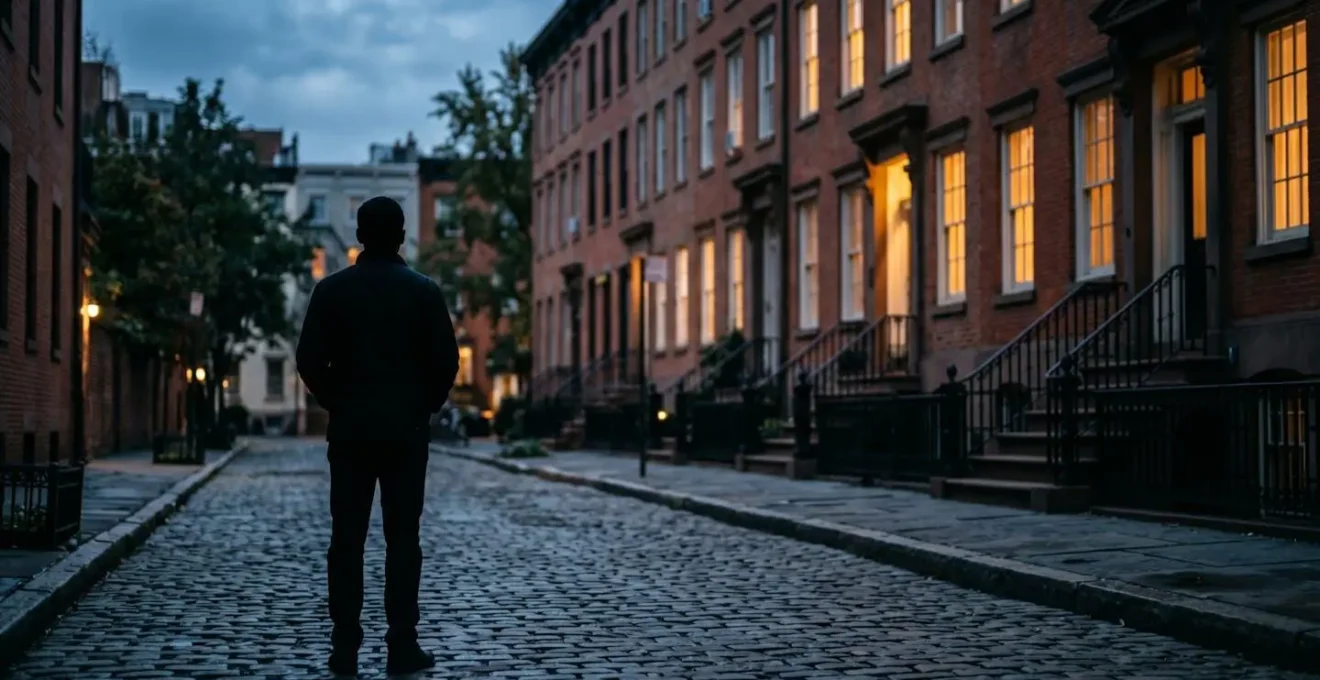
Yet, this victory comes at a cost that exemplifies the core of our argument. The West Village has become one of the most expensive neighborhoods on Earth, a direct consequence of its frozen housing supply. The strict preservation rules create an aesthetic orthodoxy, where any deviation from the historical template is seen as a violation. As the design firm Gallery KBNY notes, the district functions like a delicate symphony orchestra: “One wrong note (a vinyl window, a bright pink door) can spoil the harmony for everyone.” This mentality, while ensuring visual cohesion, makes it nearly impossible to add density or create more affordable housing options.
The “battle” is thus not against developers with wrecking balls, but against a demographic and economic tide. The preservation that makes the neighborhood so desirable also makes it inaccessible to all but the wealthiest. It has, in effect, become a victim of its own success—an urban museum piece rather than a living, evolving community. The West Village stands as a powerful case study of the trade-offs: in the quest to save the physical character of a neighborhood, we risk losing the social and economic diversity that gives it life. It forces a difficult question: who is history being preserved for?
Why You Can’t Just Change Your Front Door Color in a Historic District
The power of the Landmarks Preservation Commission extends from the grand scale of a neighborhood’s skyline down to the most minute architectural detail. For a property owner, this means that seemingly minor changes, like altering the color of a front door or replacing a window, are not personal decisions but matters of public review. This level of micro-management is a core feature of the aesthetic orthodoxy that governs historic districts. The underlying principle is that the collective historic character of a streetscape is composed of hundreds of individual, conforming elements. A single non-conforming detail can, in the eyes of the commission, disrupt that harmony.
This isn’t a rare or isolated phenomenon. The LPC’s jurisdiction is vast. The commission oversees more than 38,000 landmark properties, the majority of which are located within 157 historic districts and their extensions. For anyone living or investing in these areas, the rulebook is thick and unforgiving. Proposing a change requires submitting an application, often with detailed drawings, material samples, and a clear justification for why the change is “appropriate.” LPC staff review the application and can either approve it, deny it, or, more often, request modifications.
For housing, the implications are significant. An owner wanting to install more energy-efficient, modern windows might be required to instead use costly, custom-made wooden replicas that match the original 19th-century design. A developer looking to add an apartment in an unused attic space may find their plans for a modern dormer window rejected in favor of a smaller, “historically appropriate” one that makes the unit less livable. This granular control, multiplied across thousands of properties, represents a subtle but powerful form of supply suffocation. It systematically increases the cost and difficulty of upgrading and adapting existing housing stock, contributing to stagnation and discouraging investment.
The Wedding Cake Shape: How 1916 Zoning Laws Sculpted the Skyline
To understand the immense power of bodies like the LPC today, it’s essential to look back at the origins of land-use regulation in New York City. The iconic “wedding cake” or setback-style skyscrapers that define the pre-war skyline were not an aesthetic choice; they were a direct result of the 1916 Zoning Resolution. This landmark law was the first of its kind in the United States, born out of public outcry over the monolithic Equitable Building, whose shadow plunged neighboring properties into darkness. The law mandated that as buildings rose, they had to step back from the street to allow light and air to reach the ground.
This resolution established a foundational principle: the city had the legal right to regulate private property for the public good. It set a precedent for placing limits on what a developer could build, fundamentally altering the calculus of real estate. While the 1916 law focused on a building’s mass and form, it paved the way for more comprehensive and specific controls over land use, including the creation of the Landmarks Preservation Commission in 1965.
The legal authority of the LPC was cemented by a landmark Supreme Court decision. As documented by the New York Preservation Archive Project, the court upheld the city’s landmarks law in the 1978 *Penn Central Transportation Co. v. New York City* case. The owners of Grand Central Terminal argued that the LPC’s refusal to allow them to build a 55-story office tower on top of the terminal constituted an unjust “taking” of their property without compensation. The Supreme Court disagreed, affirming that cities could enact preservation laws to protect historic structures, even if it limited a property’s maximum economic potential. This decision gave historic preservation a powerful legal shield and solidified the LPC’s authority, which continues to shape the city’s development landscape to this day.
Key Takeaways
- Historic preservation, while culturally valuable, functions as a major economic barrier to new housing by creating “regulatory friction” and “supply suffocation.”
- The “cost calculus of history”—including specialized materials, artisan labor, and procedural delays—makes many renovation and adaptive reuse projects financially unviable.
- By limiting housing supply in desirable areas, landmarking can accelerate gentrification and create a “preservation premium” that prices out long-term residents.
The Cost of History: Why Heritage Conservation Makes Renovations 30% More Expensive
The most significant way historic preservation blocks housing development is through simple economics. The cumulative effect of strict regulations, lengthy approval processes, and specialized requirements creates the cost calculus of history—a tangible financial burden that can make projects prohibitively expensive. Renovation firms in New York City widely agree on this point. As the firm Chapter NYC states, “Pre-war and landmarked buildings generally cost more due to outdated systems, specialty materials, and strict approvals.” This isn’t a small premium; it can often increase a project’s budget by 30% or more compared to a non-landmarked building.
These costs come from several sources. First, there are the “hard costs” of materials and labor. The LPC may mandate the use of historically accurate but expensive materials like true slate for a roof or custom-milled mahogany for window frames, rejecting more affordable, modern equivalents. Second, there are the “soft costs” associated with the process itself. The long delays waiting for LPC approval mean higher carrying costs for developers (interest on loans, taxes). Furthermore, the complexity of the process often requires hiring an “expeditor”—a consultant who specializes in navigating the bureaucracy of the LPC and DOB. These services add a significant expense, with industry standards showing expeditor fees costing $2,000 to $3,000 per permit, and often more for complex landmark projects.
When these added costs are applied to a potential housing project, they can easily make the difference between a viable development and a failed one. For an investor, the numbers must work. If the preservation premium pushes the total cost beyond what the market can bear in rent or sales, the project will be abandoned. The historic building then remains underutilized or vacant, and no new housing is created. This is the ultimate blockage: not a physical barrier, but a financial one, erected by the very laws designed to protect the city’s heritage.
For any citizen or investor trying to understand New York’s housing paradox, the conclusion is clear. The path to creating more housing cannot ignore the economic realities imposed by the city’s preservation framework. Acknowledging the “cost calculus of history” is not an argument for abolishing preservation, but a call for a smarter, more flexible system. It’s time to reform the rules to encourage adaptive reuse, streamline approvals for housing creation, and ensure that in our quest to save our city’s past, we don’t sacrifice its future. The next logical step is to engage with local community boards and city council representatives to advocate for these common-sense reforms.