
In summary:
- Stop waiting in lines; start playing a strategic game using digital lotteries, rush programs, and Standing Room Only (SRO) tickets.
- Improve your odds significantly by targeting weekday and matinee performances, where demand is lower.
- Explore Off-Broadway theaters to discover groundbreaking shows before they become expensive Broadway hits.
- Protect your money by learning to spot the red flags of ticket scams, from payment demands to pressure tactics.
- Understand that a cheap ticket is a trade-off: weigh the value of a low price against factors like leg pain (SRO) or seeing an understudy.
The glittering lights of Broadway call to us all, but the price tag often screams “stay away.” The dream of seeing a blockbuster show feels increasingly out of reach when standard tickets soar past $300. For years, the common advice has been to sacrifice hours in the TKTS line for a discount, but who wants to waste precious New York time staring at the back of someone’s head? Others suggest just entering a digital lottery and hoping for the best, treating it like a Powerball ticket with similarly grim odds.
But what if getting affordable Broadway tickets isn’t about blind luck or endless waiting? What if it’s a strategic game you can learn to play and win? The real secret, known to industry insiders and savvy locals, is that the system is filled with opportunities for those who know where to look and when to act. It’s about understanding the unwritten rules of the theater district, from the real odds of a digital lottery to the art of finding the next “Hamilton” in a tiny, 100-seat theater long before it becomes a cultural phenomenon.
This guide is your new playbook. We’re going to bypass the tourist traps and generic advice. Instead, we’ll dive into the tactical decisions that separate those who pay a fortune from those who see the same show for the price of a movie ticket. This is your masterclass in theatrical arbitrage—exploiting the system to get maximum cultural value for every single dollar. Prepare to transform from a hopeful tourist into a strategic theatergoer.
In the following sections, we’ll break down the exact methods, compare your odds, and give you the tools to navigate everything from ticket scams to the etiquette of Chelsea art galleries. Get ready to unlock a side of New York’s cultural scene you thought was reserved for the wealthy.
Summary: Your Insider’s Playbook to Affordable Broadway and NYC Culture
- Digital Lotteries vs. In-Person Rush: Which Odds Are Actually Better?
- Standing Room Only (SRO): Is Saving $100 Worth the Leg Pain?
- Off-Broadway vs. Broadway: Where to Find the Next “Hamilton” Before It Blows Up
- The Scalper on the Street Corner: How to Spot Fake Tickets in Times Square
- Wednesday Matinee vs. Friday Night: When Do Understudies Perform?
- The Times Square Costume Character Scam: How to Avoid Losing $20
- Cover Charge vs. Drink Minimum: Where Does Your Money Actually Go?
- How to Visit Chelsea Art Galleries Without Feeling Like an Imposter?
Digital Lotteries vs. In-Person Rush: Which Odds Are Actually Better?
The dream of a $45 front-row seat is what powers the Broadway lottery system. But before you start entering every lottery in sight, it’s crucial to understand you’re playing a game of odds, not just luck. While in-person rush requires a time commitment—lining up at the box office before it opens—digital lotteries are a game of volume and timing. The key isn’t to choose one over the other, but to know which strategy to deploy for which situation.
In-person rush often yields better odds for less popular shows or during off-peak times, as the pool of competitors is limited to who is physically there. Digital lotteries, however, are a numbers game on a massive scale. For a hit show like “Wicked” or “Hamilton,” recent data shows that Broadway lottery odds hover around 3-5% on any given day. That sounds low, but you can dramatically increase your chances by adopting a portfolio approach. Don’t just enter your top choice; enter the lottery for every show you’d be happy to see, every single day.
The true insider move is to focus on when you enter. Your odds skyrocket for weekday and matinee performances (especially Tuesday through Thursday evenings) because the tourist and after-work crowds are smaller. Furthermore, if you’re flying solo, always request one ticket instead of two. Theaters need to fill single empty seats scattered throughout the house, so there are often more single-ticket winners. This is strategic patience in action: you aren’t just hoping, you’re making calculated decisions to beat the crowd.
To truly maximize your digital reach, use all available platforms—Broadway Direct, Lucky Seat, Telecharge, and TodayTix. For TodayTix’s 9 AM rush program, set an alarm for 8:59 AM and have your browser’s auto-fill ready. It’s a race, and the prepared fan always wins.
Standing Room Only (SRO): Is Saving $100 Worth the Leg Pain?
So you’ve tried the lotteries and the rush lines, but the show is completely sold out. Is it a lost cause? Not for the truly dedicated. Welcome to the world of Standing Room Only (SRO), Broadway’s best-kept secret for the budget-conscious and physically resilient. SRO tickets are only sold for performances that are 100% sold out, and they are exclusively available at the box office on the day of the show. They represent the ultimate trade-off: an incredibly low price for a guaranteed spot, but no seat.
The price is the main attraction. According to theater industry data, Standing Room Only tickets typically range from $25 to $49, an astonishing bargain for a show that might otherwise cost ten times that amount. You are assigned a numbered spot, the width of a standard seat, at the back of the orchestra section. This isn’t just leaning against a wall; there’s a padded rail for support, which is a small but significant comfort over a three-hour musical.
Before you commit, you must honestly assess the value-per-dollar. Is saving over $100 worth standing for the entire performance, including intermission? The view is surprisingly good—unobstructed and centered—but the physical toll is real. This option is not ideal for everyone, particularly shorter individuals or children who may struggle to see over the partition.
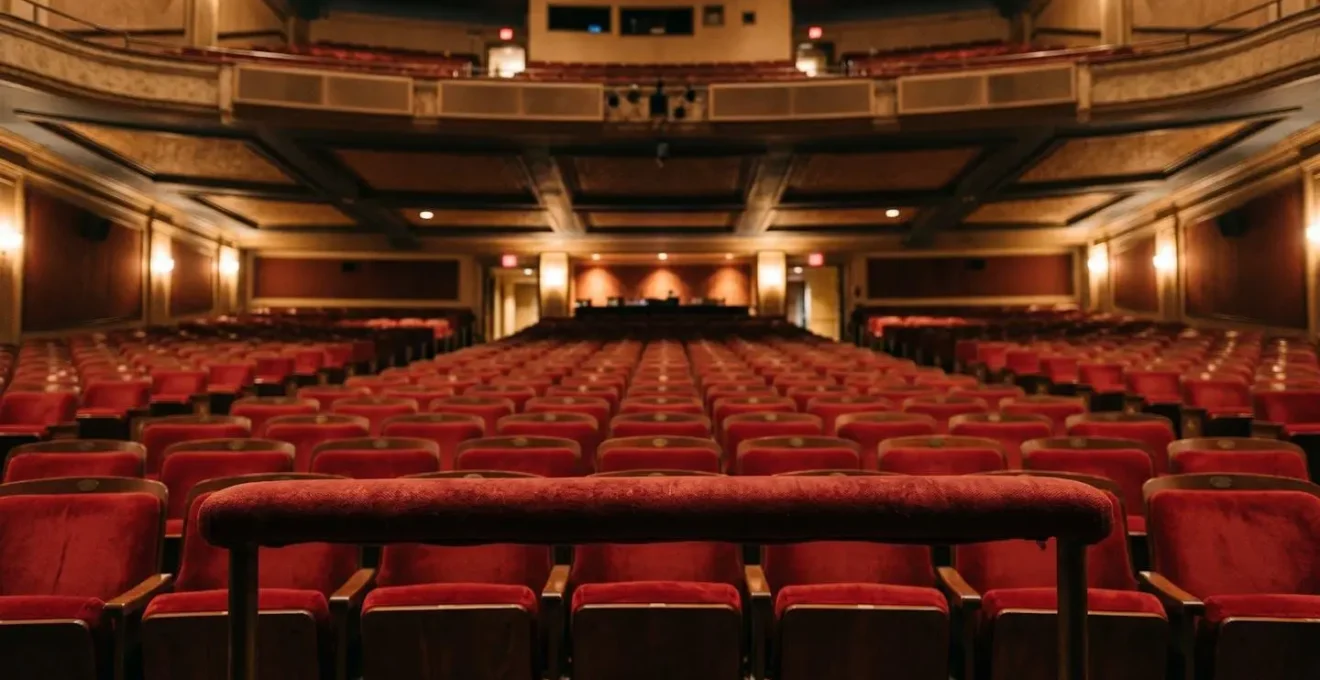
As the image shows, you’re positioned directly behind the last row of the orchestra, offering a full and clear perspective of the stage. The decision to go for SRO comes down to a personal calculation: would you rather watch a sold-out show on your feet or not see it at all? For many die-hard fans, the answer is a resounding yes. It’s a badge of honor, a story to tell, and a brilliant piece of theatrical arbitrage.
Off-Broadway vs. Broadway: Where to Find the Next “Hamilton” Before It Blows Up
While everyone is fighting for tickets to the latest Broadway mega-hit, the smartest theater fans are looking elsewhere: Off-Broadway. This isn’t a lesser-than category; it’s the primary incubator for the most innovative, daring, and exciting new work in American theater. Nearly every groundbreaking show you can name, from “Rent” and “A Chorus Line” to “Hamilton” itself, started its life in a smaller Off-Broadway house. This is where you practice “incubator hunting.”
The advantages are immense. Ticket prices are a fraction of their Broadway counterparts, often ranging from $30 to $90. The venues are more intimate, with seating capacities under 500, meaning there’s literally no bad seat in the house. You’re physically closer to the performance, creating a powerful and immersive experience that’s often lost in the vastness of a 1,500-seat Broadway theater. This is where you’ll see future stars and legendary writers honing their craft before the rest of the world catches on.
The fear is that you might see a dud, but the rewards for finding a gem are unparalleled. You gain not only an affordable, incredible night of theater but also lifetime bragging rights. The key is to pay attention to buzz from sources like the New York Times theater section, Time Out New York, and online theater forums. Look for shows with extended runs and rave reviews.
Case Study: The Off-Broadway to Broadway Pipeline
The 2024 season provided a perfect example of this pipeline in action. As detailed in a TheaterMania analysis of recent transfers, shows like “Oh, Mary!” and “Job” started as buzzy Off-Broadway hits. “Oh, Mary!” enjoyed sold-out runs before its successful transfer to the Lyceum Theatre on Broadway. “Job,” a riveting two-person play, also began in a small downtown theater before making the leap. These examples prove that Off-Broadway isn’t just a stepping stone; it’s where the future of Broadway is being written, and you can get a front-row seat to history for a bargain price.
By shifting a portion of your theater budget and attention to Off-Broadway, you’re not just saving money. You’re investing in the future of the art form and positioning yourself at the cutting edge of New York’s cultural scene.
The Scalper on the Street Corner: How to Spot Fake Tickets in Times Square
In the frantic energy of Times Square, with the clock ticking down to showtime, the man on the corner offering “last-minute” tickets can seem like a savior. He’s not. He’s a predator, and your desperation is his business model. The single most important rule of buying Broadway tickets is to never buy from a scalper on the street. The risk of getting a completely fake or duplicated ticket is astronomically high, and you’ll have zero recourse when you’re turned away at the theater door.
True ticket security comes from knowing how to identify and avoid scams before they happen. This is about proactive scam-proofing your purchase. The safest places to buy are always the official ones: the theater’s box office, or the official primary ticket seller (like Telecharge or Ticketmaster). For resale, stick to verified platforms like Ticketmaster Verified Resale, which guarantees the ticket is legitimate. Anything else is a gamble.
Scammers rely on your urgency and your lack of knowledge. They create high-pressure situations and offer deals that are too good to be true because they are. If you see tickets for a sold-out show at half-price, it’s a giant red flag. A legitimate seller will never pressure you or insist on non-reversible payment methods like Zelle, wire transfers, or gift cards. These methods are a scammer’s best friend because once the money is gone, it’s gone for good. Always use a credit card, which offers fraud protection.

In the digital age, a legitimate seller should be able to prove they own the tickets. Ask for a screen recording of them accessing the tickets in their official Ticketmaster or Telecharge account. A simple screenshot can be easily faked. This simple verification step, shown above, separates the legitimate resellers from the crooks.
Your Action Plan: How to Audit a Ticket Seller
- Check the Payment Method: Do they insist on Zelle, gift cards, or wire transfers? Legitimate sellers accept credit cards. If they refuse, walk away.
- Analyze the Price: Is the ticket priced far below market value for a popular, sold-out show? This is a classic “too-good-to-be-true” warning sign.
- Identify Pressure Tactics: Are they using false urgency like “this is the last pair” or “someone else is about to buy them”? This is a manipulation tactic.
- Verify the Platform: Are you on an official site like Ticketmaster, Telecharge, or at the box office? Avoid sellers on social media or on the street.
- Demand Digital Proof: Can the seller provide a screen recording showing the tickets in their official account? If they refuse or offer only a screenshot, it’s a major red flag.
Wednesday Matinee vs. Friday Night: When Do Understudies Perform?
There’s a whisper of fear among some theatergoers: “What if I pay all this money and the star isn’t performing?” Seeing an understudy, standby, or alternate can feel like a letdown, but for the savvy ticket-buyer, it can also be an opportunity. Understanding when an understudy is most likely to perform is key to either avoiding it or embracing it as a chance to see a future star for a lower price.
First, let’s be clear: an understudy performance is not a lesser performance. These are incredibly talented actors who must know multiple roles inside and out, ready to go on at a moment’s notice. Some of Broadway’s biggest stars got their start as understudies. However, if your heart is set on seeing a specific celebrity, you need to think strategically about scheduling.
The highest probability of seeing an understudy is during matinee performances on two-show days (typically Wednesday, Saturday, and Sunday). Performing eight shows a week is a grueling athletic feat, and these matinees are often when a lead actor will take a scheduled rest. Sickness and emergencies can happen anytime, but for planned absences, this is the prime window. Conversely, Friday and Saturday night performances are the flagship shows of the week, with the highest attendance and ticket prices; it is extremely rare for a star to have a planned absence during these peak times.
Some shows with particularly demanding lead roles will have an “alternate” from the start—an actor scheduled to perform the role for specific shows each week (e.g., one or two of the eight performances). This is not a last-minute replacement; it’s part of the show’s structure. This schedule is almost always publicly available on the show’s official website. Do your research before you buy. If you’re flexible, seeing an alternate or understudy can be a fantastic experience. If you’re not, aim for a Tuesday, Thursday, or Friday evening performance to maximize your chances of seeing the headliner.
The Times Square Costume Character Scam: How to Avoid Losing $20
Beyond the world of theater, Times Square itself presents a unique set of challenges for the unprepared visitor. The most visible of these is the legion of costumed characters, from superheroes to cartoon icons, who roam the pedestrian plazas. While a photo with your favorite character might seem like a fun, spontaneous New York moment, it can quickly turn into an uncomfortable and expensive encounter if you don’t know the rules of engagement.
Here’s the most important fact: these characters are not employed by Disney, Marvel, or the city. They are independent performers, and while they can legally solicit tips, payment is 100% voluntary. They cannot demand a fee or force you to pay for a photo. The scam relies on social pressure and intimidation. Aggressive characters often work in teams, surrounding tourists (especially families with children), taking photos, and then demanding $20 or more per character, creating a sense of obligation.
Your best defense is avoidance and confidence. The most effective strategy is to make no eye contact and keep walking. If a character approaches you, a firm “No, thank you” without breaking your stride is all that’s needed. Do not stop to engage, argue, or explain. If you do choose to take a photo, be aware of the situation. Are they passive and waiting for you to approach, or are they actively pursuing you? The latter is a red flag.
If you find yourself in a situation where you’ve taken a photo and are being pressured for money, stand your ground. State clearly and calmly, “I did not agree to a fee,” and walk away. They may bluster, but they have no legal authority to detain you or force you to pay. This isn’t about being rude; it’s about protecting yourself from a well-known hustle that preys on the politeness and confusion of visitors. Your New York memories should be of the magic on stage, not a shakedown on the street.
Cover Charge vs. Drink Minimum: Where Does Your Money Actually Go?
Your cultural tour of New York doesn’t end with theater. The city is teeming with legendary jazz clubs, comedy cellars, and intimate music venues. But as you plan your evening, you’ll encounter two different pricing models that can be confusing: the cover charge and the drink minimum. Understanding the difference is crucial to managing your budget and choosing the right venue for your desired experience.
A cover charge is a flat fee you pay at the door just for entry. This money typically goes directly toward paying the performers and the venue’s operational costs. It signals that the main event is the performance itself. You are paying for the art. Any drinks you choose to buy are extra, and you’re under no obligation to order anything.
A drink minimum, on the other hand, means you are required to spend a certain amount on beverages (sometimes food) during your time at the venue. There might be no entry fee, but you’re committed to spending, for example, $20 on drinks. This model signals that the venue’s business is heavily reliant on bar sales. The entertainment, while often excellent, serves partly to draw in a drinking crowd. This can lead to a more social, and sometimes louder, atmosphere. Neither model is inherently better, but they cater to different intentions.
To make the right choice, consider your priority. If you want to sit in silence and be captivated by a world-class jazz trio, a venue with a cover charge is likely your best bet. If you’re looking for a lively social evening with a great soundtrack, a place with a drink minimum might be more your speed. The table below breaks down the nuances to help you decide.
| Pricing Model | Typical Cost Range | What It Signals | Best For | Hidden Costs |
|---|---|---|---|---|
| Cover Charge | $10-$40 flat fee | Performance-focused venue prioritizing the show | Serious listening, minimal drinking | Drinks at full price on top of cover |
| Drink Minimum | $15-$50 in required beverage purchases | Bar-sales-focused venue with social atmosphere | Socializing with entertainment backdrop | Premium pricing per drink |
| No Minimum/Cover | Pay per drink only | Casual venue or off-peak nights | Spontaneous visits, budget flexibility | Variable depending on consumption |
This information, often found on a venue’s website, allows you to anticipate the true cost of your night out, ensuring your budget stays on track while you soak in the city’s vibrant nightlife.
Key Takeaways
- The cheapest Broadway tickets are a reward for strategy, not luck. Use digital lotteries, rush programs, and SRO policies to your advantage.
- Timing is everything. Increase your odds by targeting less popular showtimes like weekday nights and matinees.
- Don’t just look at Broadway. Off-Broadway is a goldmine for groundbreaking theater at a fraction of the cost.
How to Visit Chelsea Art Galleries Without Feeling Like an Imposter?
New York’s high-end culture isn’t confined to theaters. The art galleries of Chelsea represent a world-class cultural experience that is, shockingly, almost entirely free. Yet many visitors are too intimidated to walk through the doors. The quiet, cavernous white spaces and the enigmatic staff can make you feel like you don’t belong if you’re not a millionaire collector. This is a myth that needs busting. These galleries are public spaces, and the art is meant to be seen.
The key to enjoying the Chelsea gallery scene is to shed the imposter syndrome. You are not under any obligation to buy anything, know anything about art, or even speak to anyone. Your only job is to look. A simple, quiet “Hello” to the person at the front desk upon entering is perfectly polite and sufficient. After that, you are free to explore at your own pace. Spend two minutes or two hours; there is no correct amount of time.
It’s completely okay if you don’t “get” the art. Art is subjective. Your personal reaction—whether it’s confusion, delight, or indifference—is as valid as any critic’s. The goal isn’t to perform an intellectual analysis; it’s to experience something new. If you are curious, don’t be afraid to ask the gallery staff a question. They are there to provide information. Simply asking “Can you tell me a little about this piece?” can open up a fascinating conversation.
Many galleries have press releases or information sheets near the entrance that explain the artist’s work and intentions. Grabbing one can provide valuable context and make the art more accessible. Ultimately, visiting a Chelsea gallery is an act of curiosity. By walking in with confidence and an open mind, you unlock access to millions of dollars’ worth of contemporary art and a core piece of New York’s cultural fabric, all without spending a dime.
Frequently Asked Questions on Scoring Deals and Avoiding Scams
When are SRO tickets available?
SRO tickets are only sold for completely sold-out performances, exclusively at the box office on the day of the performance. They’re first-come, first-served with no advance sales.
Will I get a chance to sit during an SRO show?
Occasionally a kind usher might allow SRO ticket holders to sit if empty seats are located after intermission, but this is rare and shouldn’t be counted on. You should expect to stand for the full show length.
Are costumed characters in Times Square legally allowed to demand payment?
No. Costumed characters in Times Square can legally solicit tips, but they cannot demand or require a fee for taking photos. Any payment is strictly voluntary.
What should I say if a character pressures me for money after a photo?
Firmly but politely state: “I did not agree to any fee” and walk away. Do not engage in extended discussion or feel obligated to negotiate.
What should I say to gallery staff when I enter a Chelsea gallery?
A simple “Hello” or “Good afternoon” is perfectly sufficient. You’re under no obligation to explain why you’re there or engage in extensive conversation. Gallery staff are there to assist if you have questions.
Is it okay if I don’t understand the art in a gallery?
Absolutely. Art appreciation is subjective and personal. There’s no “correct” way to respond to art. Trust your own reactions and feelings—they’re just as valid as any expert interpretation.