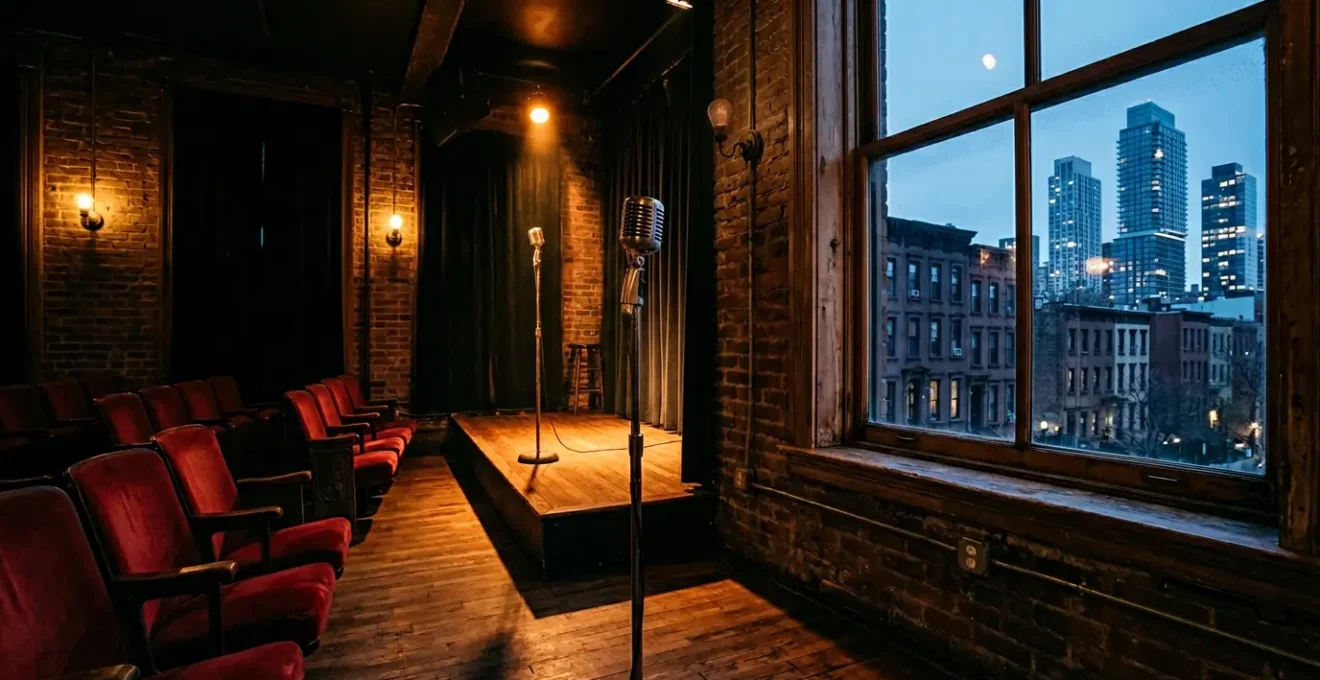
The slow death of Harlem’s jazz clubs isn’t just about rising rents; it’s about the audience’s failure to understand the fragile cultural ecosystem they are now a part of.
- Your cover charge often barely covers the artists, and drink minimums keep the lights on. They are not interchangeable.
- Tipping the band isn’t a bonus; it’s a foundational part of a musician’s income, often making up over 50% of their earnings for the night.
Recommendation: To save this living history, you must shift from being a passive consumer of “authentic experiences” to an active patron who understands and participates in the club’s unique economy.
The story we tell ourselves about Harlem is one of resilience, a cultural capital where the ghosts of Langston Hughes and Duke Ellington still walk the streets. We flock to its historic avenues seeking something real, an antidote to the polished, predictable entertainment of Midtown. We want to sit in a dimly lit room, hear the soulful cry of a saxophone, and feel connected to the legacy of American music. But a quiet crisis is unfolding. The very places we seek out for their authenticity are vanishing, and the common narrative—that gentrification and soaring rents are the sole culprits—is dangerously incomplete. It’s a convenient story, but it’s not the whole truth.
The real threat runs deeper than real estate. It’s the slow erosion of a fragile cultural ecosystem, a complex web of economic and social agreements that allowed this music to flourish for a century. While rising costs are an undeniable pressure, the more insidious problem is the disconnect between what new audiences *want* (authenticity) and what they *support* with their wallets. We are at risk of loving these clubs to death, turning them into museum pieces because we have forgotten how to be active participants in the living, breathing art form they house. We treat a night of jazz like a Broadway show, a finished product to be consumed, rather than a process to be sustained.
This isn’t a eulogy; it’s a call to action. This article will not just mourn what’s being lost. It will dissect the intricate mechanics of a jazz club’s survival, from the history of rent parties to the unspoken rules of the 2 AM jam session. It’s a guide to becoming more than a tourist in Harlem’s hallowed halls. It’s a manual for becoming a conscious patron, an ally, and a guardian of the flame. By understanding the true value of your cover charge, the critical importance of a tip, and the difference between a dinner set and a dive bar jam, you can become part of the solution. You can help ensure that the sound of Harlem doesn’t become a historical echo, but remains a vibrant, living pulse.
In this guide, we will explore the tangible actions and shifts in perspective that can empower you to support this living history. We will move from the economics of the front door to the sacred traditions of the musicians’ after-hours world, providing a complete picture of the ecosystem you are stepping into.
Table of Contents: The Fight for the Soul of Harlem Jazz
- Cover Charge vs. Drink Minimum: Where Does Your Money Actually Go?
- Rent Parties of the 1920s: The Origin of the Harlem Sound
- Dinner Club vs. Dive Bar: Which Jazz Experience Suits Your Mood?
- Why Tipping the Band Is Not Optional in Small Clubs
- The 2 AM Session: Where Musicians Play for Each Other, Not Tourists
- How to Find the “Location TBA” Without Knowing the Promoter
- How Little Italy Shrank to Three Blocks: The History of Expansion
- How to Score Front-Row Broadway Tickets for Under $50 Without Waiting in Line?
Cover Charge vs. Drink Minimum: Where Does Your Money Actually Go?
When you walk up to a small Harlem jazz club, the first financial decision you face is often at the door: a cover charge or a drink minimum. To the average patron, they might seem like two ways of saying the same thing—the price of entry. But in the fragile economy of a jazz club, they serve fundamentally different and equally vital purposes. Mistaking one for the other is the first step in misunderstanding your role in this cultural ecosystem. The cover charge is, in essence, your direct payment to the artists. It’s the ticket price for the live performance you are about to witness.
The economics are stark. According to a 2025 financial analysis of jazz club operations, artist performer fees can consume a staggering 60% of a venue’s total revenue. Your $15 or $20 cover charge isn’t just padding the owner’s pocket; it’s the primary fund that ensures the musicians on stage get paid for their craft. In many “door deal” arrangements, the band receives a percentage of that cover charge. When you try to talk your way out of a cover, you are directly diminishing the income of the very people you came to hear.
The drink minimum, on the other hand, is what keeps the physical space alive. It pays the rent, the electricity bill, the bartender’s salary, and the cost of the liquor itself. In some business models, beverage costs can climb to a shocking 102% of beverage revenue, meaning the club is barely breaking even on drinks. The drink minimum ensures a baseline of income that allows the club to exist as a platform for the music. One fee pays for the art, the other for the stage. Both are non-negotiable for survival.
Rent Parties of the 1920s: The Origin of the Harlem Sound
Before the polished clubs and global recognition, the sound of Harlem jazz was forged in the crucible of economic necessity: the rent party. During the Harlem Renaissance, when discriminatory housing practices and low wages were the norm, families would throw a party in their own apartment to collectively raise money for the month’s rent. For a small admission fee, guests received food, drink, and, most importantly, world-class music from pianists who would later become legends. This wasn’t just a party; it was a community-based, micro-crowdfunding model that provided both economic survival and an incubator for artistic innovation.
These gatherings were the lifeblood of the neighborhood’s burgeoning music scene. As stride piano master Willie ‘The Lion’ Smith recalled in his “Selected Observations from the Harlem Jazz Scene”:
Rent parties were created in order to pay for the month’s rent and with them came the added benefit of the creation of music outlets within apartments. [They] ‘would crowd a hundred or more people into a seven room railroad flat, and the walls would bulge.’
– Willie ‘The Lion’ Smith, Selected Observations from the Harlem Jazz Scene
This model of active patronage—where the community directly and knowingly sustained the artists and spaces they loved—is the historical precedent we have lost. Today, we expect venues to survive on their own, separate from the audience’s direct involvement. The rent party reminds us that the line between audience and patron, consumer and community member, was once beautifully blurred. It was a system of mutual support that built a global art form from the ground up.
This image shows how the spirit of the rent party—direct, community-based support for artists—is being reborn through modern technology, connecting the past to the present struggle for cultural survival.

The challenge today is to rediscover this spirit. It’s about recognizing that our financial contributions, no matter how small, are part of a collective effort to keep the lights on and the music playing. We must see ourselves not as customers buying a product, but as inheritors of the rent party tradition, investing in the cultural infrastructure of a community.
Dinner Club vs. Dive Bar: Which Jazz Experience Suits Your Mood?
Not all jazz clubs are created equal, nor should they be. The ecosystem of Harlem’s music scene thrives on variety, offering different atmospheres that cater to different moods and expectations. Understanding the distinction between a “dinner club” and a “dive bar” is crucial for aligning your expectations with reality and for supporting the right kind of venue for the experience you seek. The choice you make defines your role for the evening: are you there for a performance, or are you there for a session?
The dinner club—think of venues like Minton’s Playhouse in its modern incarnation—offers a more structured, performance-oriented experience. Here, the music is the main event, but it’s presented within a framework of hospitality. You’ll likely have a reservation, a table, and a full menu. The audience is expected to be seated and relatively quiet during the sets. This is the “product” model of jazz: a polished, professional show delivered to a captive audience. It’s an excellent, accessible way to experience top-tier musicians in a comfortable setting. The focus is on appreciation from a respectful distance.
The dive bar or smaller, grittier club, by contrast, offers the “process” model. These are the places where the line between the stage and the audience blurs. The atmosphere is more informal, the crowd might be a mix of locals, musicians waiting for their turn to play, and in-the-know travelers. The music is often more experimental and spontaneous. Here, you are not just an observer; you are part of the room’s energy. Your audible reactions, your focus, and your engagement feed the musicians. These venues are less about a “show” and more about being present for a unique, unrepeatable moment of creation. It’s in these spaces that the raw, improvisational heart of jazz still beats the loudest.
Why Tipping the Band Is Not Optional in Small Clubs
If there is one single action that separates a passive consumer from an active patron, it is tipping the band. In the context of a small, independent jazz club, the tip jar on the stage or passed through the crowd is not a quaint tradition or a bonus for a job well done. It is a fundamental and non-negotiable part of the musicians’ payment structure. To ignore it is to misunderstand the economic reality of being a working jazz musician in the 21st century.
The base pay from the venue, often derived from that modest cover charge, is frequently just enough to be considered a starting point. The rest of a musician’s income for the night is expected to come directly from the audience. As research from the Music and Culture Coalition of New Orleans shows, in clubs with similar economic models to Harlem’s, a five-piece band might earn $600 total for a gig, but $300 of that—a full 50%—comes directly from tips. An “empty jar” night means the musicians go home with half their expected pay.
This reality is often invisible to tourists accustomed to all-inclusive ticket prices. They assume the musicians are salaried employees, but the truth is they are often gig workers in the most literal sense. The Music and Culture Coalition of New Orleans (MaCCNO) put it bluntly in an article for Antigravity Magazine:
Tipping is, for good or bad, a major part of the current way musicians make money, and it is usually under-discussed. If tipping—and tipping well—can be successfully established as a norm rather than an option, it would certainly be beneficial for musicians who work in the cultural economy.
– Music and Culture Coalition of New Orleans (MaCCNO), Antigravity Magazine
So, how much should you tip? Think in terms of what you would pay for a single track on iTunes or Spotify, then multiply it by the number of songs in a set. A $5 or $10 bill per set is a great start. If a song truly moves you, don’t wait. Show your appreciation in the moment. This is the most direct way to cast your vote for the survival of live music.
The 2 AM Session: Where Musicians Play for Each Other, Not Tourists
Long after the dinner crowd has gone home and the last of the tourists have paid their tabs, the real soul of Harlem’s jazz scene often comes to life. This is the time of the late-night jam session, an institution as old as the music itself. These are not performances in the traditional sense. They are musical conversations, workshops, and communal rites where musicians play for an audience of their peers. This is where the music evolves, where young players test their mettle against veterans, and where the art form is pushed forward, far from the commercial pressures of the main set.
Historically, these after-hours gatherings were known as “cutting contests,” intense but respectful duels between musicians. It was in these sessions that the legends were truly made. As one analysis in “Selected Observations from the Harlem Jazz Scene” notes, it was the competitive and collaborative environment of these sessions that defined the culture:
Cutting contests between musicians such as James P. Johnson, Art Tatum, Fats Waller, and Eubie Blake helped foster the birth of the ‘Jam Session.’ These after-hours sessions were where the golden age of Jazz clubs arrived in Harlem and created a new cultural setting.
– Jonah Jonathan, Selected Observations from the Harlem Jazz Scene, Rutgers University
For a non-musician, gaining access to this inner sanctum is a privilege. It requires a different kind of etiquette. This is not the time to make loud requests or expect to hear famous standards. It’s a time to be a fly on the wall, to listen with intensity, and to witness the creative process in its rawest form. Your “ticket” to this experience is the respect you show. Buy a drink, keep your voice down, and put your phone away. Your role is simply to be a respectful presence, adding to the room’s energy without demanding its attention. Witnessing a 2 AM session is the ultimate reward for the true music lover—a glimpse into the heart of the machine.
How to Find the “Location TBA” Without Knowing the Promoter
Some of the most vital and authentic musical experiences in Harlem don’t happen in established clubs with neon signs. They happen in pop-up venues, converted lofts, and community spaces announced only hours before they begin. These “Location TBA” events are the modern-day descendants of the rent party, operating on a network of trust and word-of-mouth. For an outsider, penetrating this world can seem impossible without “knowing someone.” However, with the right approach—one based on genuine interest and respect rather than transactional networking—you can organically find your way in. The key is to embed yourself in the local scene, not just dip your toe in it.
This requires patience and observation. It’s about showing you are there for the music, not just for the Instagram story. By becoming a familiar, respectful face at the established venues, you build social capital. Engaging with the community on its own terms is the only authentic way to gain access to these underground scenes. The following plan outlines concrete steps for the dedicated music lover to find these hidden gems, based on strategies from community curators like the independent platform Harlem Late Night Jazz.
Action Plan: Accessing Harlem’s Underground Jazz Scene
- Follow the Artists, Not Just the Venues: Track individual Harlem-based musicians on Instagram. Underground gigs are often announced via short-lived Instagram Stories 2-4 hours before showtime.
- Build Rapport with Staff: Become a respectful regular at established clubs like Minton’s or Silvana. Show genuine interest in the music to bartenders and door staff over time, rather than directly asking for “secret” spots.
- Identify Musician Hangouts: Locate the diners, coffee shops, and bars near key areas like Marcus Garvey Park where artists congregate. Becoming a quiet, observant regular can organically connect you to their network.
- Monitor Independent Curators: Follow resources like Harlem Late Night Jazz’s calendar and social media, which list authentic gigs based on quality, not on a venue’s ability to pay for advertising.
- Learn to Read Environmental Cues: Pay attention to the neighborhood’s rhythm after midnight. Look for musicians arriving with instrument cases, bartenders telling tourists they’re “closing” while not breaking down, or small groups gathering near side entrances after 1 AM.
Key Takeaways
- Gentrification’s biggest threat isn’t just rent; it’s the erosion of the internal economic and social systems that sustain jazz clubs.
- Your financial support—through cover charges, drink minimums, and especially tips—is not optional. It is a direct and critical part of the musicians’ income.
- To save these venues, you must shift your mindset from that of a “consumer” of entertainment to an “active patron” of a living cultural ecosystem.
How Little Italy Shrank to Three Blocks: The History of Expansion
To understand the existential threat facing Harlem’s cultural landscape, one only needs to look downtown to Mulberry Street. Today, Manhattan’s “Little Italy” is, for all practical purposes, a theme park. It has shrunk to a mere three-block stretch of tourist-trap restaurants, surrounded and swallowed by the relentless expansion of Chinatown and SoHo. It exists as a caricature of itself, its authentic cultural institutions—the bakeries, the social clubs, the multi-generational family businesses—almost entirely gone. It stands as a stark and chilling cautionary tale for what happens when a neighborhood’s cultural identity is commodified and its economic foundations are allowed to crumble.
The story of Little Italy’s decline is a mirror image of the pressures facing Harlem. It began with rising property values that pushed out long-term residents and small businesses. It was accelerated by a new generation that had less connection to the old ways. And it was finalized when the neighborhood’s identity became more valuable as a brand to be sold to tourists than as a living community to be inhabited. The authentic gave way to the marketable, and in the process, the soul of the neighborhood was lost. The restaurants that remain now serve a memory of Italian-American culture, not the real thing.
This visual contrast between Harlem’s historic brownstones and the encroaching modern condominiums is the 21st-century version of Little Italy’s fate—a visual battle for the neighborhood’s soul.
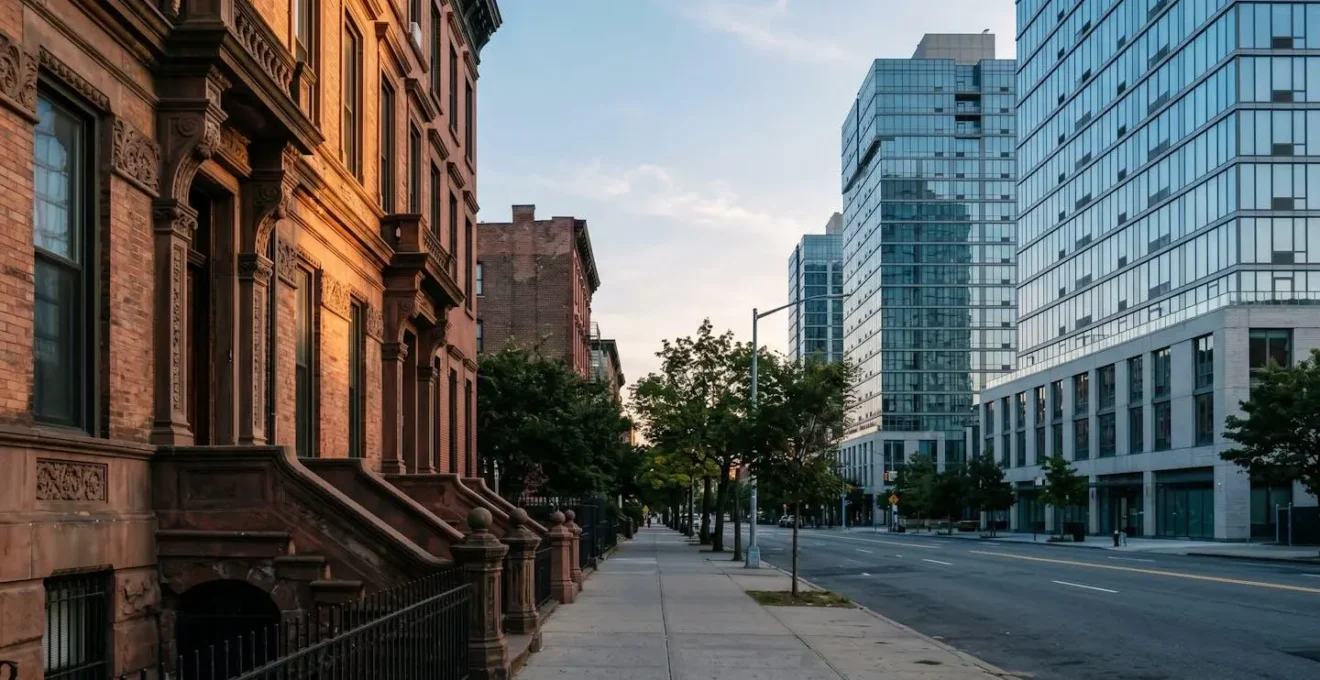
This is precisely the precipice on which Harlem now stands. The arrival of luxury condos, chain stores, and a population that seeks an “authentic Harlem experience” without understanding how to sustain it creates the exact conditions that led to Little Italy’s demise. If the jazz clubs, the soul food restaurants, and the independent shops are not actively and consciously supported by both the new and old communities, they will inevitably be replaced by sterile, high-rent businesses that can better capitalize on the “Harlem” brand. The neighborhood will survive as a name on a map, but its living culture will have been hollowed out.
How to Score Front-Row Broadway Tickets for Under $50 Without Waiting in Line?
The question is a trick. While a savvy theatergoer might know about lotteries or rush tickets, the headline highlights a fundamental difference in value proposition between mainstream entertainment and the world of a Harlem jazz club. The question itself frames the experience as a product to be acquired at the lowest possible price. This is the logic of Broadway, but it is the antithesis of jazz. To understand how to save Harlem’s clubs, we must first unlearn this consumerist mindset and redefine what “value” truly means.
Case Study: Broadway’s ‘Product’ vs. Jazz’s ‘Process’
An analysis from one small venue owner perfectly illustrates the economic and artistic divide. Broadway operates on a highly polished, repeatable ‘product’ model. A show is meticulously rehearsed to deliver an identical experience night after night, and ticket prices of $150-$300+ reflect this guaranteed consistency. In stark contrast, jazz clubs offer a ‘process’ model. As a study of this dynamic on the economics of small venues points out, a $15 cover charge provides access not to a guaranteed product, but to an unrepeatable artistic moment of co-creation between musicians and the audience. Broadway sells polished entertainment; a jazz club sells authentic artistic risk. The cultural return on investment from supporting living history in its home offers an intangible value that Broadway’s commodified model simply cannot replicate.
A $15 cover charge and a two-drink minimum in Harlem are not a “worse deal” than a $300 orchestra seat for a Broadway show. They are an entirely different kind of transaction. You are not purchasing a static product; you are investing in a dynamic process. You are paying for the possibility of magic, for the risk of improvisation, for the privilege of witnessing a fleeting moment of creation that will never happen again in exactly the same way. The value isn’t in the predictable perfection of a rehearsed script, but in the thrilling imperfection of live, spontaneous art.
When we apply the discount-hunting, product-oriented logic of Broadway to a cultural ecosystem built on process and patronage, we starve it. The fight for Harlem’s soul requires us to see our $40 evening not as an expense to be minimized, but as a vital investment in something priceless: living, breathing culture.
The survival of Harlem’s jazz scene rests on this crucial shift in perspective. It is a shared responsibility, a conscious choice to engage with the culture on its own terms. By understanding the flow of money, honoring the etiquette of the space, and valuing the artistic process over a polished product, you cease to be a tourist. You become part of the legacy. You become an active patron, a steward of the flame, ensuring that the unique sound of Harlem continues to echo for generations to come. The next step is not just to visit, but to participate. Start today by seeking out a small club, listening with open ears, and tipping the band like you mean it.