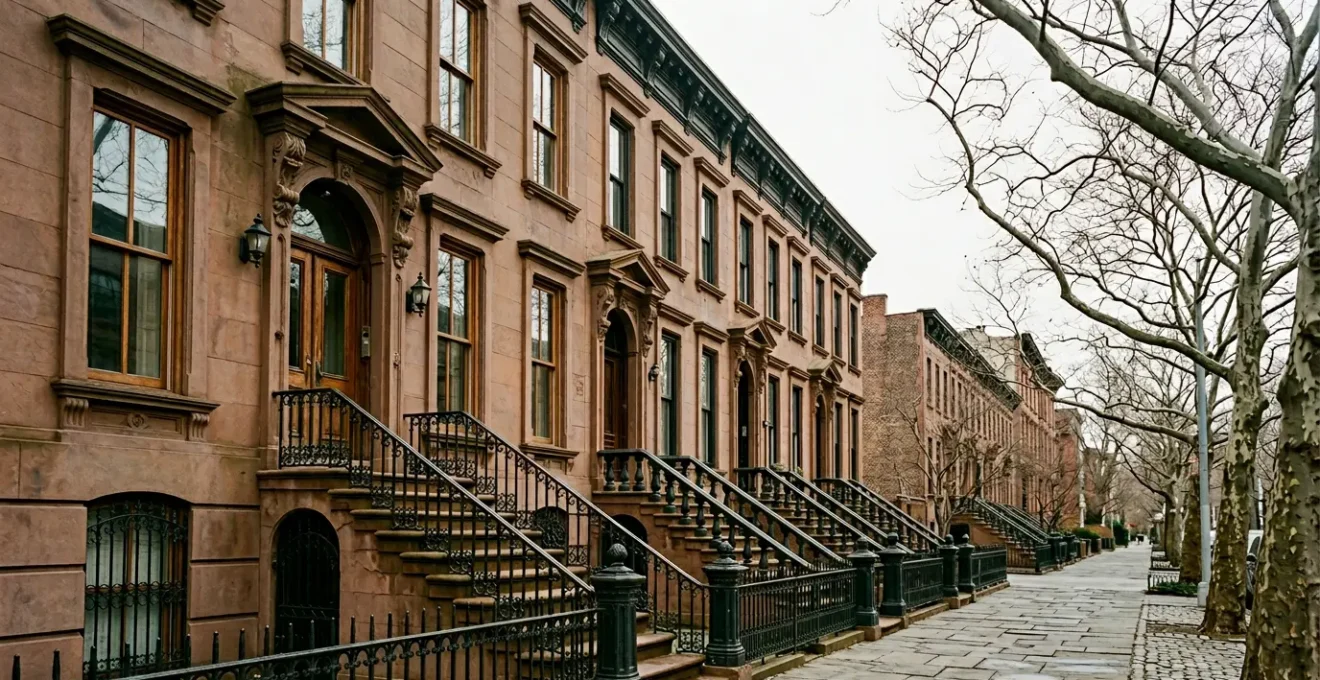
The romantic dream of owning a Brooklyn brownstone is often a financial and bureaucratic trap built on a foundation of crumbling 19th-century materials.
- Your biggest expenses won’t be cosmetic updates but fighting inevitable water intrusion and structural decay.
- Landmark laws mean the city, not you, has the final say on everything from your front door color to essential structural repairs.
Recommendation: Shift your mindset from “homeowner” to “custodian.” Your job is to manage the building’s decline, and your budget must account for systemic failures, not just aesthetic upgrades.
The charm is undeniable. A classic Brooklyn brownstone, with its high ceilings, ornate woodwork, and iconic stoop, represents a piece of New York history. For many, it’s the ultimate real estate dream. You envision hosting dinner parties in a grand parlor and enjoying quiet mornings in a private garden. You’ve factored in the mortgage, property taxes, and maybe a budget for a new kitchen. But the romantic vision sold by real estate agents and lifestyle blogs deliberately ignores a harsh, expensive reality. The true cost of owning a brownstone has very little to do with aesthetics.
As a contractor who has spent decades inside these buildings, I can tell you that you are not just buying a home; you are acquiring a high-maintenance historical artifact. The real costs lie in the constant, losing battle against physics and bureaucracy. It’s a fight against a century of material fatigue and the slow, grinding power of water. It’s a negotiation with the city’s Landmarks Preservation Commission (LPC), a body that treats your property as a public museum piece. This guide isn’t about choosing paint colors. It’s about the structural, systemic, and financial shocks that most new owners are completely unprepared for.
Forget the dream for a moment. We are going to walk through the unglamorous, expensive truths of brownstone ownership. This is the conversation you need to have before you sign any contract. We will dissect the hidden signs of decay, navigate the bureaucratic maze, and calculate the true cost of keeping a 100-year-old building standing in the 21st century.
Summary: The Real Costs of Brownstone Ownership Beyond the Purchase Price
- How to Spot Water Damage in a 100-Year-Old Facade Before Making an Offer
- Why You Can’t Just Change Your Front Door Color in a Historic District
- How to Heat a Drafty Brownstone Without Spending $800 a Month
- Standard vs. Historic Home Insurance: What Happens If Your Stoop Collapses?
- The Renovation Timeline Myth: Why Your Kitchen Will Take 6 Months, Not 6 Weeks
- The Bureaucratic Nightmare of Renovating a Landmark: A Survivor’s Guide
- The “Unused Air Rights” Myth: Why You Probably Can’t Build Up
- Why Historic Preservation Laws in New York Often Block Essential Housing Development?
How to Spot Water Damage in a 100-Year-Old Facade Before Making an Offer
Before you even think about interior layouts, you need to conduct a forensic examination of the building’s exterior. Water is the primary enemy of a brownstone, and the facade is its main point of entry. The soft, porous brownstone and old lime mortar act like a sponge. Look for a white, chalky powder on the masonry or brick. This is called efflorescence, and it’s not just a cosmetic issue. It’s a definitive sign that water is migrating through the wall and depositing mineral salts on the surface as it evaporates. This is your first and most important warning of chronic moisture intrusion.
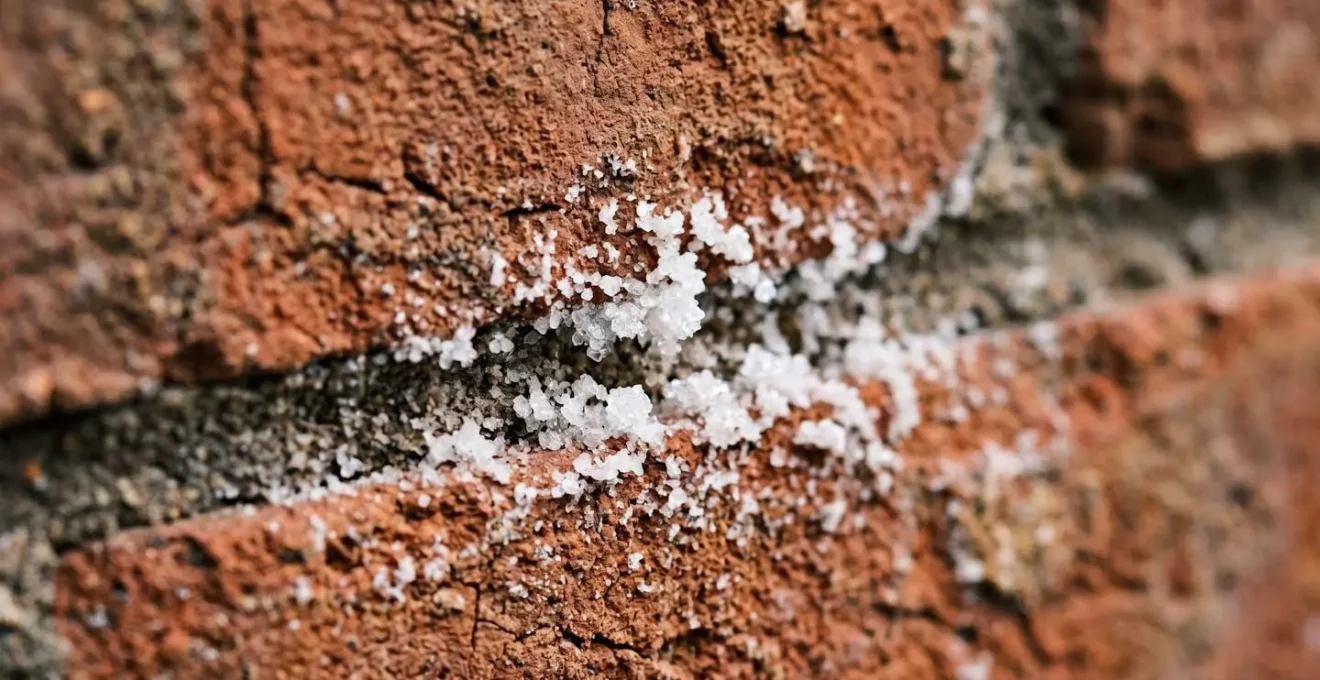
Where there is efflorescence, there is a risk of spalling—a process where the face of the stone or brick flakes off during freeze-thaw cycles. Also, inspect every inch of the mortar joints. Are they recessed or crumbling? This is called repointing, and it’s not a simple patch job. A full facade restoration, which includes repairing the underlying brick, repointing, and addressing any spalling, is one of the most common and significant expenses you will face. Contractor estimates show that comprehensive façade repairs running from $20,000 to over $100,000 are standard. Ignoring these signs means you are buying a problem that will only become more structurally dangerous and expensive over time.
Why You Can’t Just Change Your Front Door Color in a Historic District
If your brownstone is in a designated historic district—and most of them are—you don’t have final say over its appearance. The Landmarks Preservation Commission (LPC) does. This introduces a layer of bureaucratic friction that shocks most new owners. You cannot simply decide to paint your front door a new color, replace your windows with more energy-efficient models, or even install a new light fixture without approval. Any work that affects the building’s protected architectural features requires a permit from the LPC.
There are different levels of permits, and understanding them is key to understanding your future frustrations. Minor interior work might not need LPC review, but anything visible from the street is under their jurisdiction. The process involves submitting detailed plans and material specifications that prove your proposed work is “appropriate” to the building’s historic character. This means no vinyl windows, no modern-style doors, and no unapproved paint colors. You will be required to repair original features rather than replace them, often at a much higher cost.
This process adds significant time and expense to any project. An architect or expeditor who specializes in LPC submissions is often necessary, adding professional fees to your budget before a single hammer is swung. The romantic notion of personalizing your home is replaced by a rigid set of historical rules you must pay to follow.
How to Heat a Drafty Brownstone Without Spending $800 a Month
Brownstones are monuments to thermal inefficiency. These multi-story structures are plagued by a phenomenon known as the “stack effect.” In winter, warm air generated by your heating system rises. It escapes through countless unsealed gaps in the upper floors and roof—around window frames, through recessed lighting fixtures, and where plumbing penetrates walls. This creates a vacuum effect, pulling cold air into the basement and ground floors. Your thermostat works overtime, but the house never feels truly warm, and your heating bills can easily soar past $800 a month.
The solution isn’t just a bigger boiler; it’s a systematic approach to air sealing the entire building envelope. Before you even consider adding insulation, you must hunt down and seal every air leak. This is painstaking work. Thermal imaging can reveal the worst offenders, often uninsulated rim joists in the basement and gaps around window sills that have been painted over for decades. Sealing these penetrations is the single most effective step you can take.
Only after air sealing should you add insulation. For brownstones, this often means dense-pack cellulose blown into wall cavities or closed-cell spray foam, both of which are expensive and disruptive installations. However, the payoff is significant. When properly executed, a combined strategy of air sealing and insulation can lead to an up to 40% reduction in heating and cooling costs. Without it, you are essentially paying to heat the Brooklyn sky.
Standard vs. Historic Home Insurance: What Happens If Your Stoop Collapses?
Your standard homeowner’s insurance policy is woefully inadequate for a landmarked brownstone. The core issue is the concept of “replacement cost.” A standard policy might cover the cost to rebuild a collapsed stoop with modern concrete and standard iron railings. However, the LPC will require you to rebuild it using historically accurate brownstone and custom-fabricated, period-appropriate ironwork. This is the authenticity premium, and the cost difference is immense.
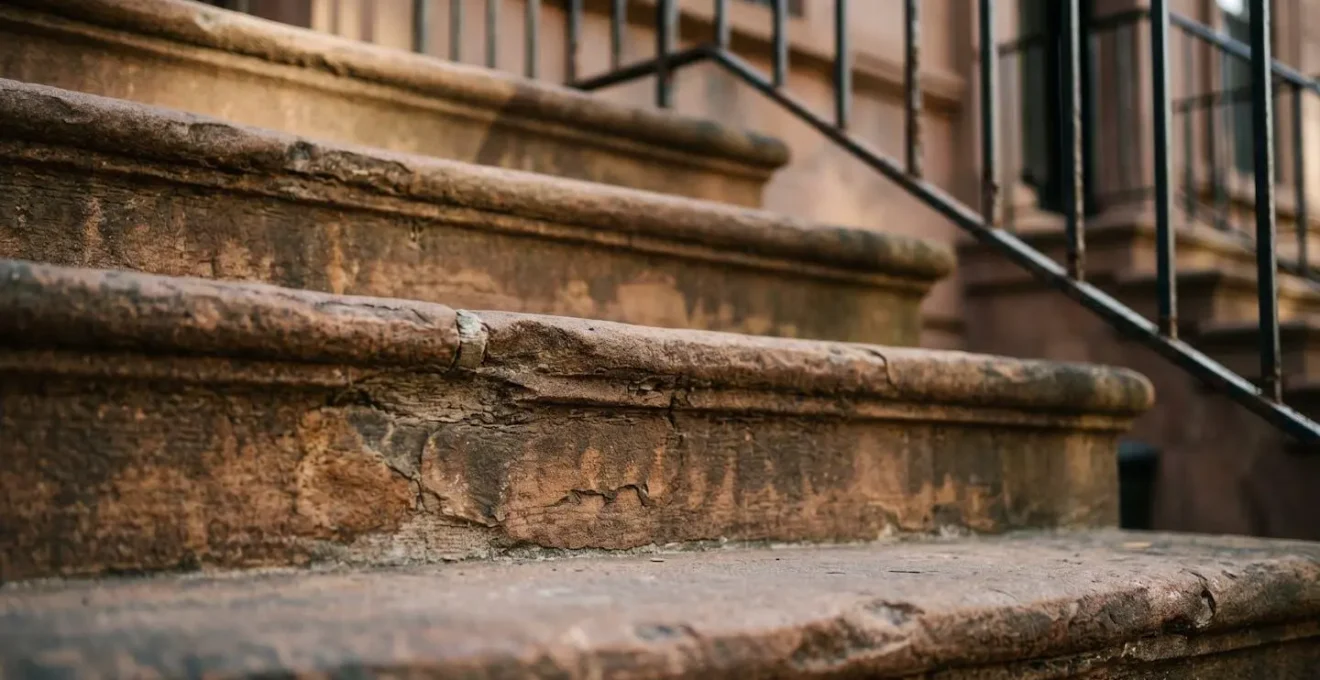
If your policy is based on “Actual Cash Value” (ACV), the insurer will pay for the replacement cost minus depreciation. On a 120-year-old stoop, that payout will be next to nothing. You need specialized historic home insurance that offers “Guaranteed Replacement Cost” coverage. This ensures the insurer will pay the full amount to restore the feature to its original state, with original materials, even if that cost exceeds your policy limit. This coverage is significantly more expensive, but it’s the only thing protecting you from a six-figure bill if a major architectural element fails.
The following table breaks down the crucial differences. A standard policy on a historic home is a form of financial self-sabotage.
| Coverage Type | Payout Method | Depreciation Applied | Historic Material Matching | Best For |
|---|---|---|---|---|
| Actual Cash Value (ACV) | Replacement cost minus depreciation | Yes | No guarantee | Budget-conscious owners accepting modern replacements |
| Replacement Cost Value (RCV) | Full cost to repair/rebuild without depreciation | No | Similar materials | Standard historic homeowners |
| Guaranteed Replacement Cost | Full rebuild to exact original state, even if exceeding policy limit | No | Yes – period-appropriate materials and craftsmanship | High-value landmark properties requiring authentic restoration |
The Renovation Timeline Myth: Why Your Kitchen Will Take 6 Months, Not 6 Weeks
Any renovation timeline you see on a home improvement show is fiction when applied to a brownstone. A simple kitchen gut renovation in a modern condo might take 6-8 weeks. In a brownstone, you should budget for 6 months, at a minimum. The reason is that no project is ever simple. Once you open a wall, you will discover a century of unforeseen problems. You might find crumbling brick, rotted structural joists from a slow leak, or antiquated knob-and-tube wiring that needs to be completely replaced to meet modern code.
These discoveries trigger a cascade of delays and costs. A “simple” kitchen renovation suddenly requires a structural engineer to assess a load-bearing wall, a new plumbing stack running three floors, and a full electrical panel upgrade. Each of these changes may require amended plans to be filed with the Department of Buildings (DOB) and the LPC, adding weeks or months of bureaucratic delays. The project scope and budget will balloon.
The costs are equally shocking. While a standard renovation might cost $200-$300 per square foot, a full gut renovation in a brownstone that involves upgrading the core mechanical, electrical, and plumbing (MEP) systems can reach $600 to $800 per square foot. That “dream kitchen” can easily become a $250,000 project when you account for the systemic upgrades required to support it safely and legally.
The Bureaucratic Nightmare of Renovating a Landmark: A Survivor’s Guide
Renovating a landmarked brownstone is not a two-way conversation between you and your contractor. It is a three-way battle between you, the DOB, and the LPC. These two city agencies have different requirements that are often in conflict. The DOB is concerned with safety and building codes, while the LPC is concerned with historical authenticity. Navigating this dual-approval process is a specialized skill; it is not a DIY endeavor.
Attempting to manage this process yourself is the single biggest mistake an owner can make. You need a team of professionals who speak the language of these agencies and have experience navigating their complex, often contradictory, demands. Your general contractor is just one piece of the puzzle. This is not optional; this team is your front line in the bureaucratic war. Without them, your project will be buried in objections, revisions, and endless delays.
Even with a professional team, the costs for foundational work are staggering. If the DOB or an engineer determines that the original foundation has shifted, underpinning to stabilize the structure is required. This process alone can range from $50,000 to $150,000 just to make the house safe, before any of your desired renovations even begin. This is the reality of working on a landmarked property.
Your Landmark Renovation Battle Plan: Assembling the Team
- Licensed Architect: Prepares drawings and plans that comply with both DOB and LPC requirements, and evaluates the structural feasibility of proposed changes.
- Expeditor: A specialist who navigates the permit submission process, tracks applications, and manages the response to agency objections. They are the key to moving your project through the queue.
- Historic Preservation Consultant: Ensures your proposed work aligns with landmark standards and researches precedent approvals in your district to build a stronger case for your application.
- Structural Engineer: Mandatory for any work involving foundations, load-bearing walls, or rooftop additions. They evaluate existing conditions and design compliant reinforcement solutions.
The “Unused Air Rights” Myth: Why You Probably Can’t Build Up
Some brownstone owners get excited when they discover their property has unused Floor Area Ratio (FAR), a zoning metric that theoretically allows for additional square footage. They envision adding a rooftop penthouse or a rear extension. This is almost always a fantasy. While the zoning law might permit expansion, the LPC’s standard of “appropriateness” is the authority that truly matters, and it almost always wins.
The LPC’s mandate is to preserve the historic character of the building and the streetscape. A visible rooftop addition that alters the historic roofline is a non-starter in most cases. They will deny it on grounds of appropriateness, regardless of your available FAR. You may get approval for a small rear extension if it’s not visible from the street, but even that is not guaranteed.
Furthermore, even if you secure a rare approval, the engineering reality makes it financially unviable. A century-old wood-frame structure was never designed to support an additional floor. You would need to engage in a massive project to reinforce the building’s entire structural load path, from the roof down to the foundation. The cost of this structural work alone often exceeds the market value of the square footage you would gain. The “unused air rights” are, for most owners, a theoretical asset with no practical or financial value.
Key Takeaways
- Brownstone ownership is a battle against water intrusion, thermal inefficiency, and material decay—physical forces that require constant, expensive intervention.
- The Landmarks Preservation Commission (LPC) dictates all exterior work, transforming your property into a regulated museum piece and adding significant cost and time to all projects.
- Standard insurance and renovation budgets are dangerously inadequate; you must plan for systemic failures and the “authenticity premium” on historically accurate materials.
Why Historic Preservation Laws in New York Often Block Essential Housing Development?
The challenges you face as an individual owner are a microcosm of a larger, city-wide issue. The historic preservation movement, while well-intentioned, has evolved into a powerful force that often impedes progress. The LPC’s jurisdiction is vast; its purview now covers over 10% of the total NYC built environment, and up to 20% in a borough like Manhattan. This means a significant portion of the city’s housing stock is frozen in time, subject to rules that make upgrades and expansion prohibitively difficult and expensive.
These regulations, designed to protect architectural heritage, can have the unintended consequence of preventing the creation of new housing units or the adaptation of old buildings for modern families. The cost and complexity of converting a single-family brownstone into two or three modern, code-compliant apartments are often so high that it’s not financially feasible. The very laws meant to preserve the “character” of a neighborhood can contribute to its unaffordability by limiting housing supply.
Owning a brownstone means becoming a participant in this complex debate. Your personal renovation struggles are a direct result of a century-old policy framework wrestling with a 21st-century housing crisis. You are not just a homeowner; you are the on-the-ground custodian of a public trust, with all the financial burdens and regulatory headaches that entails. This is the ultimate, non-negotiable cost of admission to the brownstone club.
Ultimately, buying a historic brownstone requires a fundamental shift in perspective. If you approach it with a clear-eyed understanding of the costs, a deep respect for the building’s physical limitations, and the patience for bureaucratic warfare, it can be a rewarding endeavor. But if you enter the process armed only with a romantic vision, you are setting yourself up for financial and emotional disaster. Your first and most important investment should not be in a designer, but in a structural engineer and an architect who specializes in historic preservation.